Hilo with Kids
Is Hilo good for families? Yes, if you plan it right. Discover kid-friendly spots, when to go out (morning vs rain), and what makes it different from Kona.
Last updated: May 1, 2026
| Onekahakaha Beach Park | ~3 miles / 10 min | Free | All ages; toddlers to teens |
| Pana’ewa Rainforest Zoo | ~3 miles / 10 min | ~$12/person (since Sept 2025); under 3 free | 2-12 years |
| ‘Imiloa Astronomy Center | ~1 mile / 5 min | ~$20/adult; kids under 4 free | 5+ years; planetarium best 5-7 |
| Richardson Ocean Park (turtles) | ~2 miles / 10 min | Free | 6+ years; older kids for snorkeling |
| Rainbow Falls | ~1.5 miles / 10 min | $5/person + $10/vehicle (since Jan 2026) | All ages |
| ‘Akaka Falls State Park | ~13 miles / 30 min | $5/person + $10/vehicle; under 3 free | All ages; stroller-friendly (partial) |
| Mokupapapa Discovery Center | Downtown Hilo | Free | 4-14 years; aquarium + exhibits |
| Hawaii Volcanoes National Park | ~30 miles / 45 min | $30/vehicle; Junior Ranger program free | 5+ years; best 7-12 for Junior Ranger |
| Coconut Island (Mokuola) | ~1.5 miles / 5 min | Free | All ages; calm bay swimming |
| Hilo Farmers Market | Downtown | Free to browse; food from ~$3 | All ages; great for curious eaters |
Prices verified April 14, 2026. Pana’ewa Zoo began charging ~$12/person in September 2025 – previously free.
Is Hilo Good for Families with Kids?
 Yes, but it works differently from a resort trip. Hilo has no major beach resorts and the beaches are black sand rather than white. What it offers instead is a concentration of hands-on, genuinely unusual experiences that most kids find more memorable than a pool: sea turtles resting in tide pools ten minutes from town, an active volcano with a free Junior Ranger program for kids 7-12, the only tropical rainforest zoo in the United States, a planetarium that connects Hawaiian star navigation to modern astronomy, and waterfalls that put you inside the kind of landscape most children have only seen in films. For families willing to embrace a slightly wetter and wilder version of Hawaii, Hilo delivers experiences that Kona and Maui cannot replicate.
The honest caveat: Hilo is not a resort destination. There is no strip of pools and waterslides and beach butlers. The accommodation is simpler – good hotels on Hilo Bay, vacation rentals near the coast, a handful of B&Bs – and the beaches require understanding that black sand gets hot, the swimmable areas are specific spots rather than long open stretches, and lifeguards are at beach parks rather than all along the shoreline. Families who plan for this and bring the right gear (reef shoes, rain ponchos, headlamps for the lava tube) find Hilo extraordinary. Families who show up expecting Kona are often caught off-guard.
First time on the Big Island and genuinely unsure where to base yourself? Here’s our Hilo vs Kona where to stay guide so you don’t end up on the wrong side of the island.
After guiding thousands of families through Hilo since 2014, the consistent pattern is that kids remember Hilo more vividly than any other Hawaii stop. The first sea turtle sighting at Richardson. Getting the Junior Ranger badge at the volcano. The petting zoo at Pana’ewa on a Saturday afternoon. Standing at the edge of the Kilauea crater at dusk watching steam rise from a landscape that looks genuinely alien. These things stick because they are not packaged versions of nature – they are the actual thing.
Want to explore the lush side of the Big Island beyond the standard tourist stops? Here’s our best Hilo nature tours guide so you find the experiences worth your time.
If you want the Hilo family day done right – age-appropriate pacing and the stops that actually work for kids – see the Hilo day tour of volcanoes, waterfalls and black sand beaches.
What Are the Best Things to Do in Hilo with Kids?
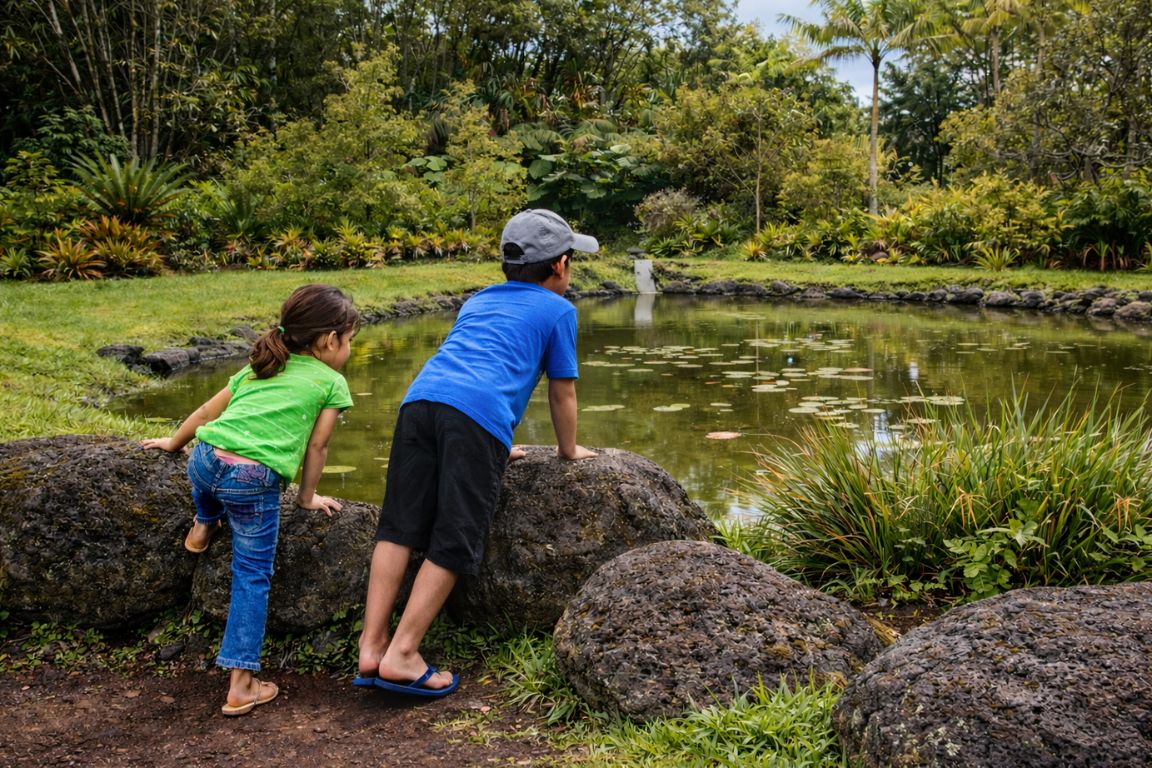 The five experiences that work best for families with children across all ages: Onekahakaha Beach Park (shallow, sand-bottom lagoon with lifeguards and resident sea turtles), Pana’ewa Rainforest Zoo (only tropical rainforest zoo in the US, ~$12/person since September 2025, Saturday petting zoo 1:30-2:30pm), ‘Imiloa Astronomy Center (interactive exhibits, full-dome planetarium, connects Hawaiian culture to modern science), ‘Akaka Falls State Park (stroller-accessible paved trail to a 442-foot waterfall), and Hawaii Volcanoes National Park with the Junior Ranger program (free booklet, badge at the end, best for ages 7-12). Each serves different energy levels and age ranges.
Pana’ewa Rainforest Zoo deserves particular attention. This is the only tropical rainforest zoo in the United States – 80+ species in actual jungle conditions, including a white Bengal tiger, spider monkeys, a pygmy hippo, and free-roaming peacocks. The animals are in genuine rainforest enclosures rather than arid zoo settings, which gives the whole place a wilder, more immersive feel than most mainland zoos. The petting zoo on Saturdays from 1:30-2:30pm is the highlight for young children. Note the fee change: the zoo charged ~$12 per person starting September 2025 after operating as a free donation-based zoo for decades. Worth every dollar, but check the current rate at the zoo’s official site before you go as fees will increase incrementally each year.
The ‘Imiloa Astronomy Center at the University of Hawai’i at Hilo is underused by families and shouldn’t be. The exhibits connect Hawaiian wayfinding – the traditional practice of crossing the Pacific Ocean by stars, swells, and birds – with modern telescope science on Mauna Kea. The full-dome planetarium shows run throughout the day and are particularly good for ages 5-7 who are captivated by the immersive star projections. The interactive exhibits hold older children. There is a restaurant on-site for lunch, and the Native Hawaiian Garden outside with 100+ indigenous plant species makes a good short walk after the exhibits. Open Tuesday through Sunday.
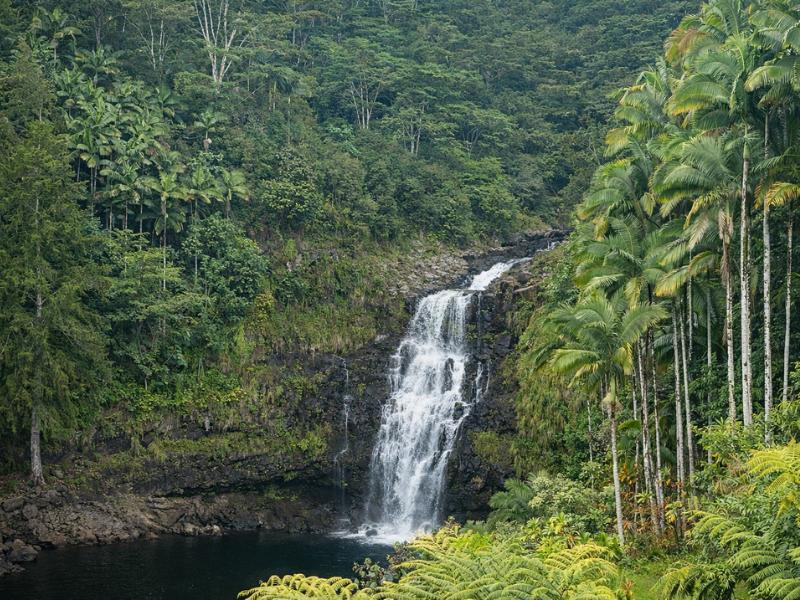
For waterfalls with kids, ‘Akaka Falls is the right call over Rainbow Falls for most families. The paved loop trail through bamboo groves and tropical forest is engaging for children in a way that a single lookout platform is not. The falls itself – 442 feet of uninterrupted free-fall into a green gorge – reliably produces the wide-eyed reaction that parents hope for. The trail is mostly stroller-accessible but has stairs near the Kahuna Falls viewpoint. Bring the carrier for toddlers if you want to do the full loop. Rainbow Falls is worth seeing but requires less time and works better as a quick add-on to the Boiling Pots rather than a destination in itself.
Visiting Hilo and want to make waterfalls a proper part of your trip? Here’s our best waterfalls near Hilo tours guide so you don’t miss the standouts.
Coconut Island (Mokuola), accessible via a short footbridge from Liliuokalani Gardens, is free, calm, and often overlooked. The bay-side swimming here is gentle enough for young children, and the island itself has a small beach and open grassy areas. Kids can jump off the small dock (a local tradition) and the views of Hilo Bay with Mauna Kea behind it on clear days are exceptional. This is a good half-hour add-on when you are already in the Liliuokalani Gardens area.
What Are the Best Beaches Near Hilo for Kids?
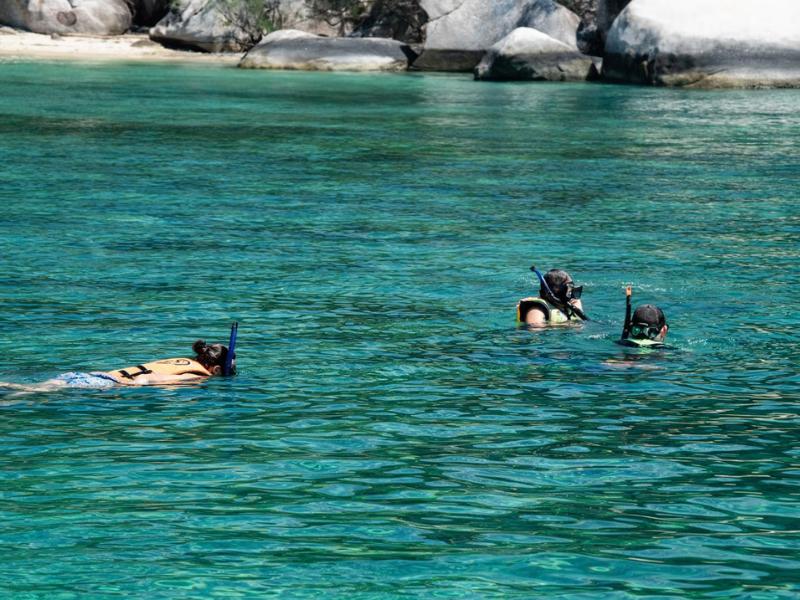
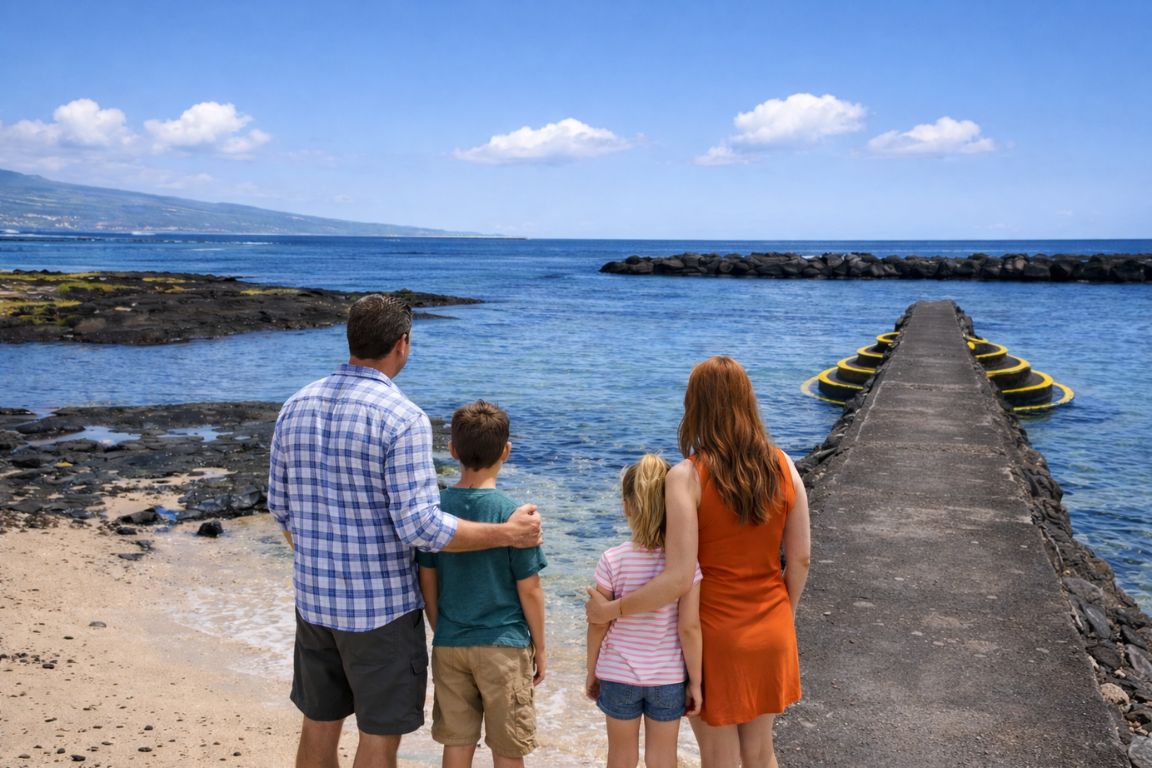 Onekahakaha Beach Park is the best beach in the Hilo area for young children and the safest swimming spot on the east side of the Big Island. A lava rock seawall creates a shallow, sand-bottomed lagoon protected from open-ocean currents and waves. Lifeguards are on duty. The tide pools surrounding the lagoon hold sea urchins, brittle stars, sea cucumbers, and sometimes visiting sea turtles. The park has pavilions, restrooms, showers, and a playground. It is free, about 3 miles from downtown Hilo, open daily from 7am-8pm.
The name Onekahakaha translates to “drawing pictures sand” in Hawaiian, and the sand-bottom lagoon really does behave like a giant calm swimming pool. Unlike most Hilo-area beaches which are rocky black sand with direct ocean exposure, the seawall at Onekahakaha eliminates current and wave action within the protected area. Toddlers can wade safely in knee-deep water while older children snorkel inside the lagoon. The park is a genuine locals’ favorite – on weekends, you will find island families who come here week after week and have done so for generations.
For families with older children who want sea turtles, Richardson Ocean Park is the next step up. About 10 minutes from downtown in the opposite direction from Onekahakaha, Richardson has black and green sand, a spring-fed reef, year-round resident sea turtles hauled out in the tide pools, and lifeguards. The water entry is rockier and requires water shoes, and the snorkeling zone is for confident swimmers rather than beginners. The turtle sightings are more reliable here than anywhere else near Hilo – most visits produce multiple turtles. Stay 10-15 feet from any turtle you see; this is a federal requirement under the Marine Mammal Protection Act and Endangered Species Act.
For a quick, easy water experience downtown, Coconut Island in Hilo Bay is calm, free, and directly accessible from Liliuokalani Gardens. It is not a beach – it is a small island in the bay with dock swimming – but it is a lovely spot for a 30-minute break, and the views are better than at any of the beach parks.
| Onekahakaha Beach Park | Toddlers to pre-teens; safest swimming on east side | Yes, year-round | Free |
| Richardson Ocean Park | Older kids 8+; sea turtles; snorkeling; black/green sand | Yes | Free |
| Coconut Island (Mokuola) | Quick family swim; calm bay; dock jumping; views | No | Free |
| Carlsmith Beach Park | Snorkeling in sheltered coves; sea turtles common | Sometimes | Free |
Is Hawaii Volcanoes National Park Good for Kids?
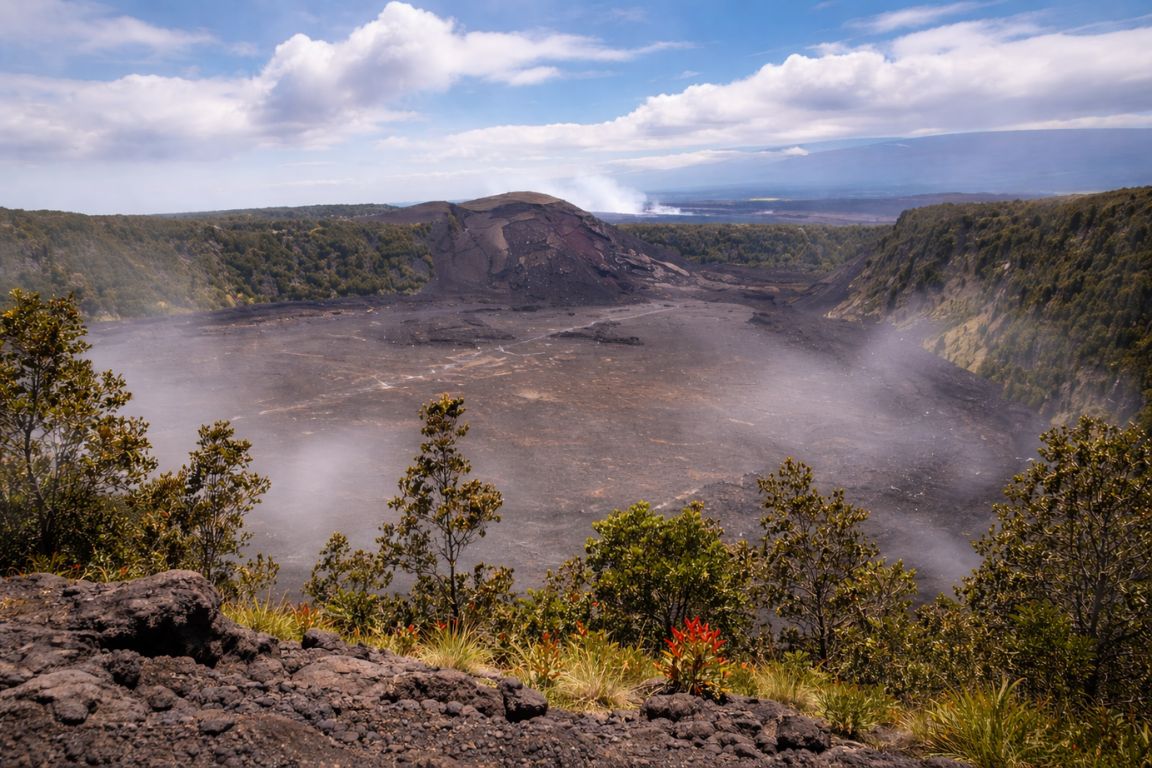
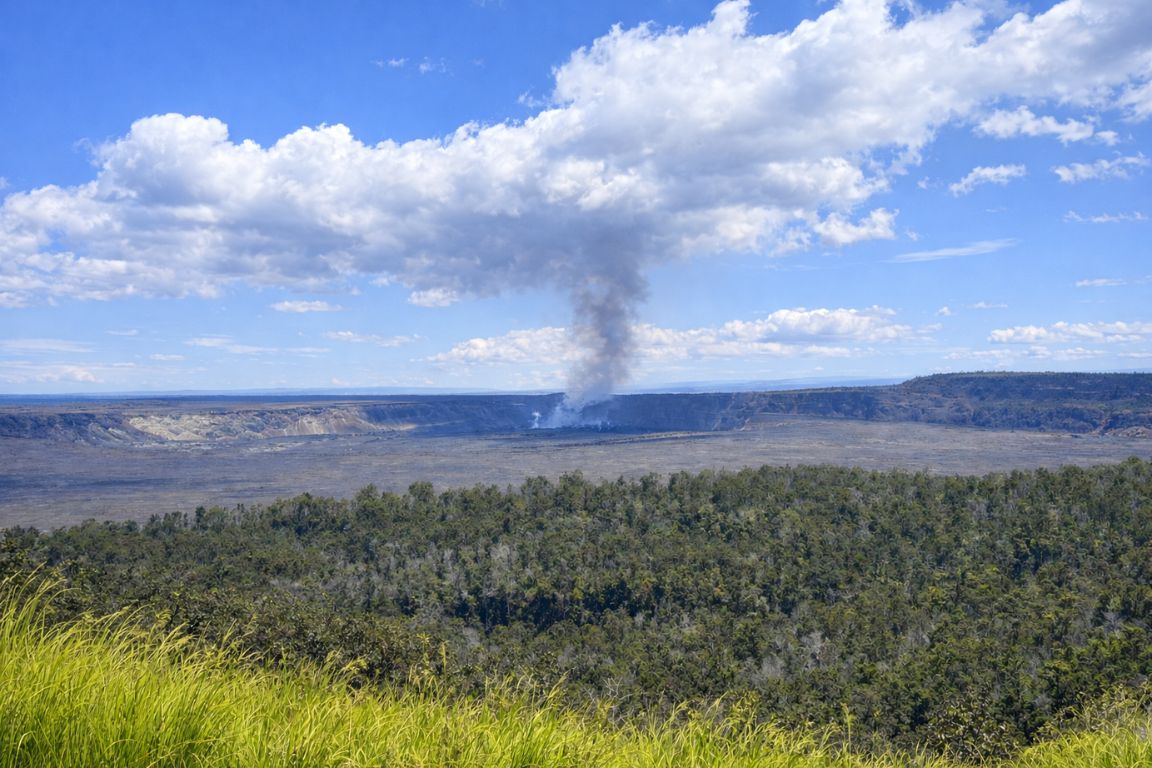 Yes, and particularly so for children ages 7-12 who can engage with the free Junior Ranger program. Pick up the Junior Ranger handbook at Kīlauea Visitor Center, complete the scavenger hunts and activities throughout your visit, and return it to receive an official badge. The park itself offers steam vents kids can stand next to, a walk-through lava tube (Nahuku/Thurston), the Kilauea crater overlook where volcanic gas visibly rises, and Chain of Craters Road winding through successive lava flows to the coast. Kilauea has been erupting episodically since December 2024 with 44 episodes through early April 2026, meaning active lava viewing is a real possibility during your visit.
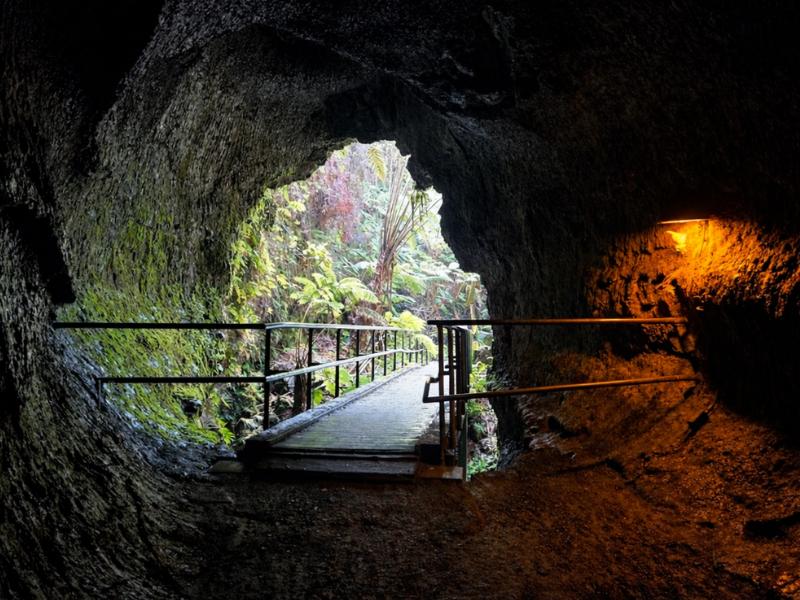
The lava tube is the single most child-captivating stop in the park. Nahuku (Thurston Lava Tube) is a 500-year-old tube formed when lava flowed underground and the outer surface cooled and hardened. You walk in through a fern-lined forest path, enter a tunnel of pāhoehoe lava up to 20 feet high, and emerge on the other side. The paved, lit section takes about 10 minutes to walk through and is appropriate for all ages. Children who understand that this tunnel was once a river of molten rock moving faster than a person can run consistently find this more interesting than they expected.
Steam vents and sulfur banks near the visitor center provide the sensory experience most children want: actual volcanic activity close enough to smell and feel. The sulfur smell is strong and unmistakable – some children are fascinated, some find it unpleasant. A 10-foot drive from the visitor center puts you at the Wahinekapu (Steaming Bluff) viewpoint where steam rises from cracks in the earth and the landscape looks like something from another planet. The Halema’uma’u crater overlook currently gives views into the active summit lava lake when it is erupting, which is a once-in-a-lifetime experience for most children.
Practical notes for families: the park is at approximately 4,000 feet elevation, which can feel cool after the warmth of coastal Hilo. Bring a light layer for everyone. Volcanic smog (vog) can cause respiratory irritation for children with asthma – check USGS current vog conditions before going. Park entry is $30 per vehicle for a 7-day pass, credit card only. The Junior Ranger workbook is free at the visitor center; children 7-12 earn a badge, and a coloring book version is available for children under 6.
Visiting Volcanoes National Park and want to make the most of it? Here’s our best volcano tours from Hilo guide so you don’t miss the highlights.
What Are the Best Rainy Day Activities in Hilo for Kids?
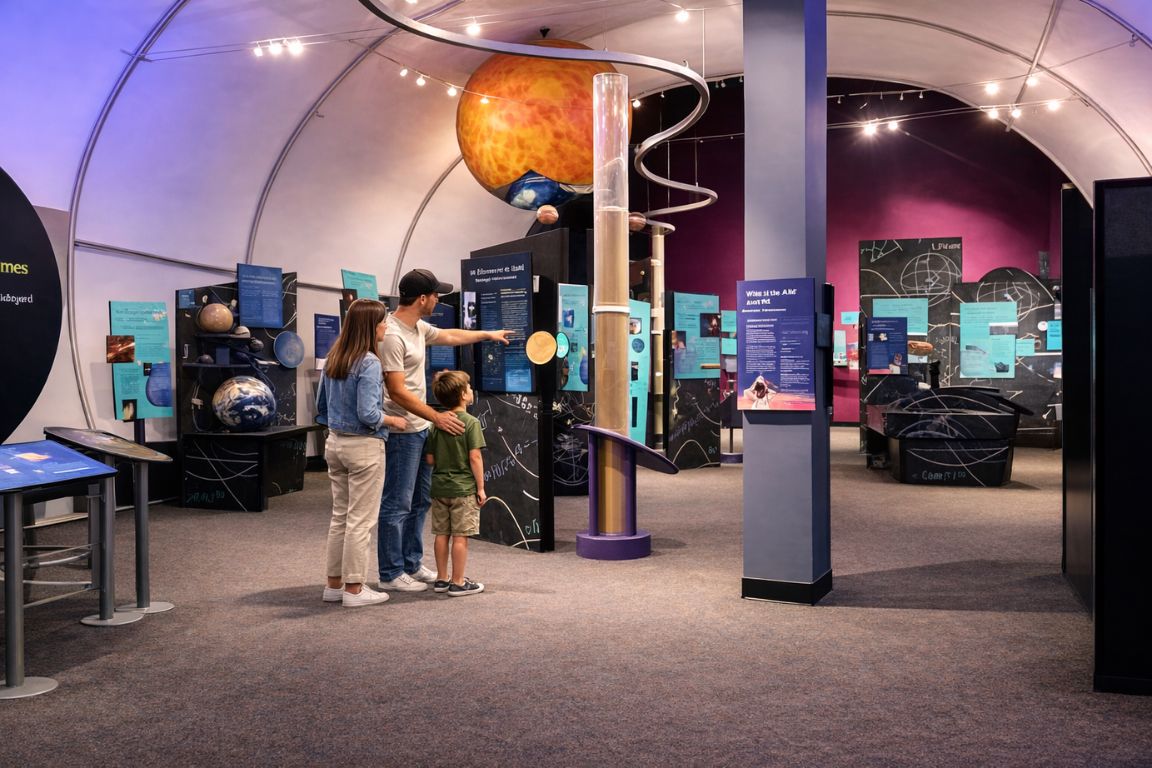 Hilo’s best rainy day options for families are ‘Imiloa Astronomy Center (planetarium shows, interactive exhibits, on-site restaurant, open Tuesday-Sunday), the Mokupapapa Discovery Center (free NOAA marine exhibit with a 3,500-gallon saltwater aquarium on the bayfront, open Tuesday-Saturday 9am-4pm), and the Pacific Tsunami Museum (appropriate for children 8+, photo exhibits, survivor accounts, wave machine). On lighter rain days, waterfalls actually improve – Rainbow Falls and ‘Akaka Falls both run more dramatically and look more spectacular after rain, and the covered portions of both parks provide shelter.
‘Imiloa on a rainy day is a legitimate half-day. The exhibits are genuinely well-made, the planetarium shows run hourly, and the on-site restaurant makes a full midday stop possible without having to move the car. The astronomy exhibits connect Hawaiian wayfinding culture to the telescopes on Mauna Kea in a way that most children find surprising and interesting – it is not a dry science museum, it is a cultural story told through objects and light. Plan 2-3 hours. Tickets run approximately $20 for adults; children under 4 are free, and the membership price often competes with two adult tickets if you plan to visit more than once.
The Mokupapapa Discovery Center on Kamehameha Avenue is free, compact, and underestimated. The 3,500-gallon saltwater aquarium is a legitimate draw for young children, and the life-size animal models – including Hawaiian monk seals and sharks – make good photo opportunities. Budget 45-60 minutes. The building itself is a century-old historic structure with a koa wood staircase, which is a subtle lesson in Hilo history that adults tend to appreciate more than kids. Right on the bayfront next to the Hilo Farmers Market, it pairs well with a plate lunch and a walk along Kamehameha Avenue on a wet morning.
The Pacific Tsunami Museum is best for children 8 and older. The exhibits on the 1946 and 1960 tsunamis that reshaped Hilo include survivor video accounts and photographs that are vivid and emotionally real – too intense for young children but genuinely impactful for older ones. The wave machine demonstration works well for all ages. Adults find this museum more affecting than most children, but children who are curious about natural disasters respond well to it. The building itself survived both tsunamis and is worth pointing out to kids.
On a day of light rain rather than downpour, do not rule out the waterfalls. Both Rainbow Falls and ‘Akaka Falls have covered viewing areas that provide shelter, and rain upstream swells the flow dramatically. A 442-foot waterfall running at full volume after a night of rain is significantly more impressive than the same falls on a dry day. Bring ponchos rather than umbrellas for the ‘Akaka loop trail, where both hands are better free for the descent.
| ‘Imiloa Astronomy Center | ~$20/adult; kids under 4 free | 2-3 hrs | 5+ (planetarium especially 5-7) |
| Mokupapapa Discovery Center | Free | 45-60 min | 4-12 |
| Pacific Tsunami Museum | ~$8/adult; kids discounted | 60-90 min | 8+ years |
| Bayfront shops + shave ice | Minimal; shave ice ~$5 | 1-2 hrs | All ages |
| Waterfalls in light rain (ponchos on) | $5/person + $10/vehicle (Rainbow); $5/person + $10/vehicle (‘Akaka) | 2-4 hrs combined | All ages |
| Hilo Farmers Market (covered stalls) | Free to browse | 30-60 min | All ages; best Wed/Sat |
Family logistics like these are second nature to a crew that has been doing this since 2014. The Akaka Falls, volcanoes and Hilo full-day discovery covers those stops in a single day.
Where Should Families Stay in Hilo?
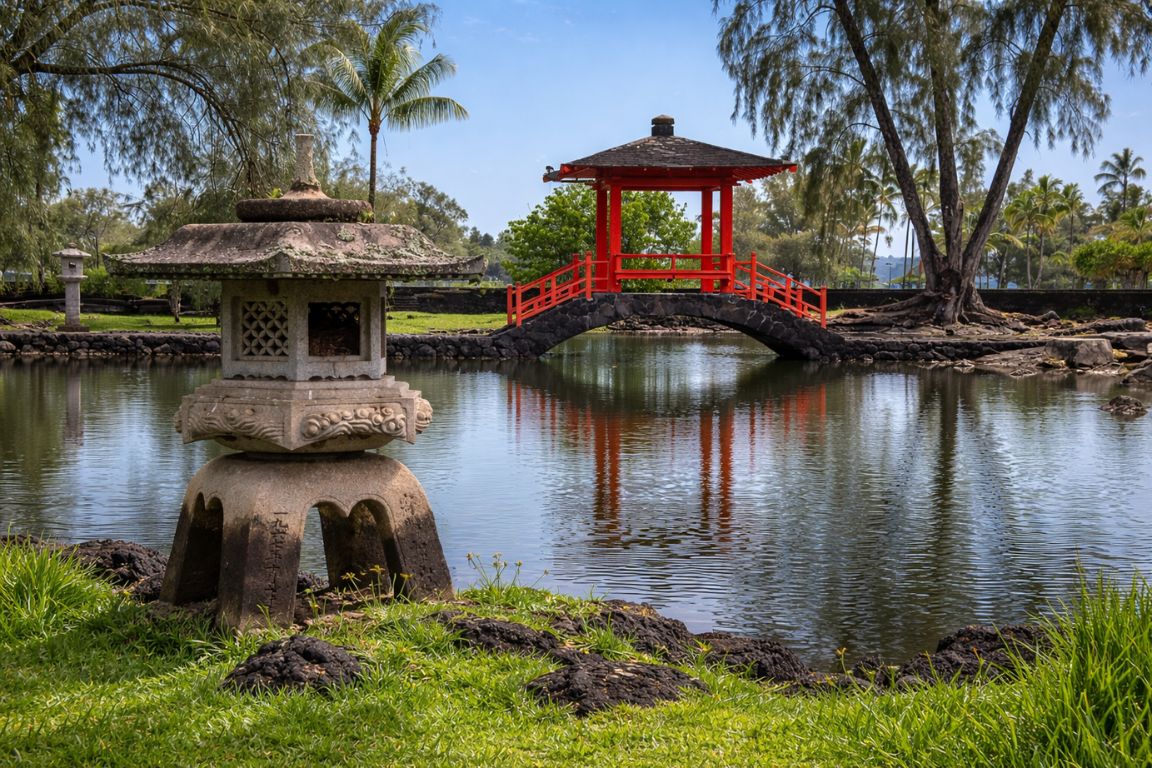 Hilo has two main hotel options along the bay – the Hilo Hawaiian Hotel and the Grand Naniloa Hotel Hilo (a DoubleTree by Hilton) – both on Banyan Drive with bay views, pools, and easy access to the waterfall and beach park circuit. The SCP Hilo Hotel in town is newer, well-reviewed, and central. For families who want more space, vacation rentals near Richardson Ocean Park or Onekahakaha Beach Park provide kitchen facilities and proximity to the best family swimming spots. The Inn at Kulaniapia Falls is the most unusual option – a private eco-lodge with a 120-foot swimmable waterfall on the property.
The Hilo Hawaiian Hotel on Banyan Drive is the most classically Hilo choice. The property sits directly on the bay, has an outdoor pool, and positions you within a few minutes of Liliuokalani Gardens, Coconut Island, and the downtown area. It is older and modestly appointed – nobody should expect Mauna Lani caliber – but the location, the views, and the honest old-Hawaii character make it comfortable for families. Cribs are available and connecting rooms help for larger groups.
The Grand Naniloa Hotel Hilo (DoubleTree by Hilton) on Banyan Drive is the other Hilo bay hotel, slightly more polished than the Hilo Hawaiian and with similar positioning. The pool is accessible for children, connecting rooms are available, and the bayfront setting is excellent. Both bay hotels are within a 10-minute drive of Onekahakaha Beach Park, Richardson, and Rainbow Falls.
For families wanting kitchen space – which matters significantly with young children and the variable cost of restaurant dining in Hawaii – vacation rentals in the Keaukaha neighborhood near Richardson Ocean Park give you direct proximity to the best family beach and a more residential, quieter setting than the hotel strip. Several properties in this area are specifically described as walking distance to Richardson. Book early, particularly for stays during summer and holiday weeks when availability tightens quickly.
One consideration families often miss: Hilo is genuinely close to Hawaii Volcanoes National Park (45 minutes), which some families prefer to make into a longer volcano stay. The small town of Volcano, at 3,700 feet elevation about 30 miles from Hilo, has several B&Bs and the Kilauea Military Camp – both provide a different base for families whose primary objective is the park. If your main priority is the beach activities and town experiences, stay in Hilo. If your priority is the volcano, consider splitting the trip between Hilo and a Volcano area property.
What Should You Know Before Visiting Hilo with Young Children?
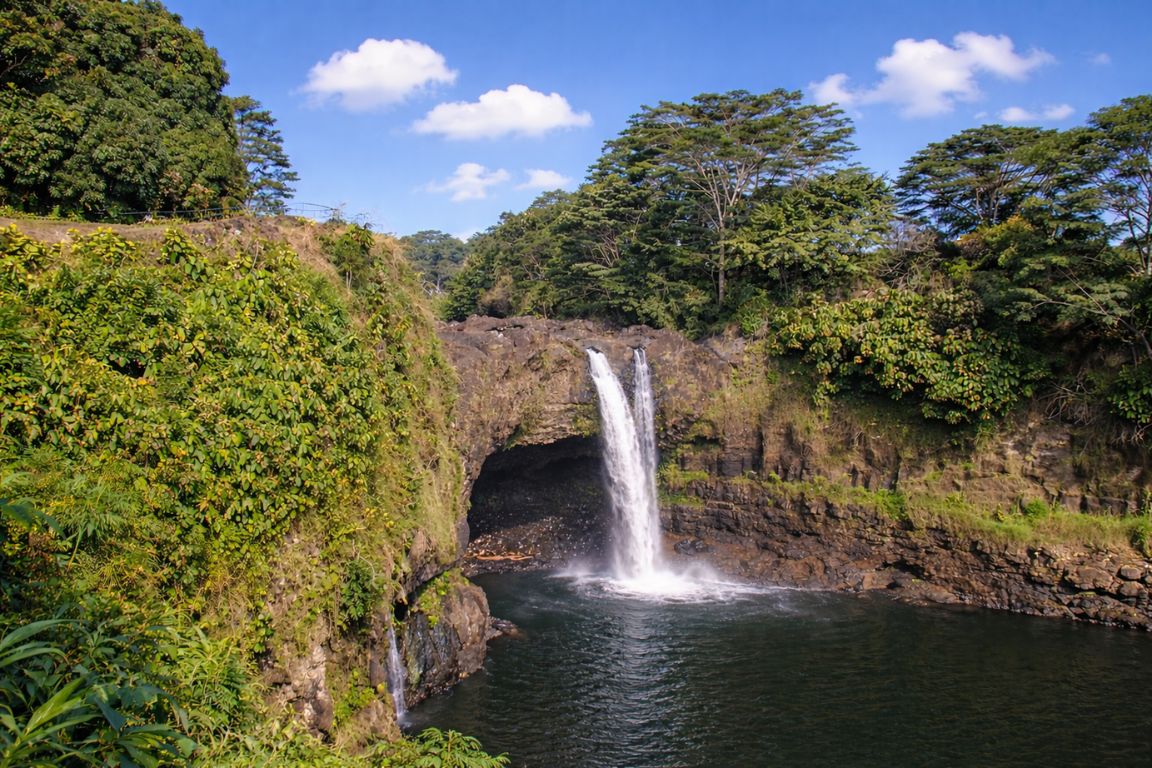 Five things consistently catch families off-guard in Hilo: the afternoon rain pattern (plan outdoor activities for mornings, indoor options for afternoons), the recent fee change at Pana’ewa Zoo (~$12/person since September 2025 – many sites still list it as free), the fee change at Rainbow Falls ($5/person + $10/vehicle since January 2026 – previously free), the no-swimming rules at Wailuku River waterfalls (Rainbow Falls, Boiling Pots – genuinely dangerous for all ages), and the heat of black sand beaches (reef shoes are essential, not optional, for young feet).
The rain rhythm matters for pacing a family day. Rain in Hilo mostly arrives in afternoon bursts – the morning window is the reliable outdoor time. Build your days around this: beach or waterfall or zoo in the morning, ‘Imiloa or Mokupapapa or farmers market browsing in the afternoon when showers appear. This rhythm also matches the energy pattern of young children, who tend to be sharper and more engaged in the morning anyway. Afternoon rain at the park or the beach is not a disaster if you have ponchos; it is a genuine problem if you have no indoor backup plan.
Black sand beaches require proper footwear for young children in a way that mainland families often do not expect. Black volcanic sand absorbs heat dramatically – by midday in summer, the sand at Richardson Ocean Park can be uncomfortably hot for bare feet. Water shoes or reef shoes are essential gear for Hilo beaches and should be packed before you leave home rather than hunted down in Hilo. The lava rock entries at Richardson also require shoes for safe water entry regardless of temperature.
The no-swimming rule at Rainbow Falls, Boiling Pots, and Pe’epe’e Falls applies to all ages including children. The Wailuku River flash floods without warning when rain falls upstream – even when Hilo town is sunny – and the Boiling Pots section has underground lava tube channels that have trapped and killed swimmers. These are viewpoint experiences only. Emphasize this to older children who may want to explore further than the viewing platforms. Stay behind the safety railings and barriers.
The Pana’ewa Zoo fee change catches many families because a large number of websites, travel guides, and blog posts written before September 2025 still list it as free. It is not free as of September 2025. The current fee is approximately $12 per person. Children under 3 are free. Confirm the current rate at the zoo’s official page before budgeting your day. The zoo is still excellent value and the Saturday petting zoo (1:30-2:30pm) is a genuine highlight for young children.
Want to make sure you’re not missing anything before you book? Check out our how to plan a trip to Hilo tours guide so everything lines up properly.
What Age Groups Does Hilo Work Best For?
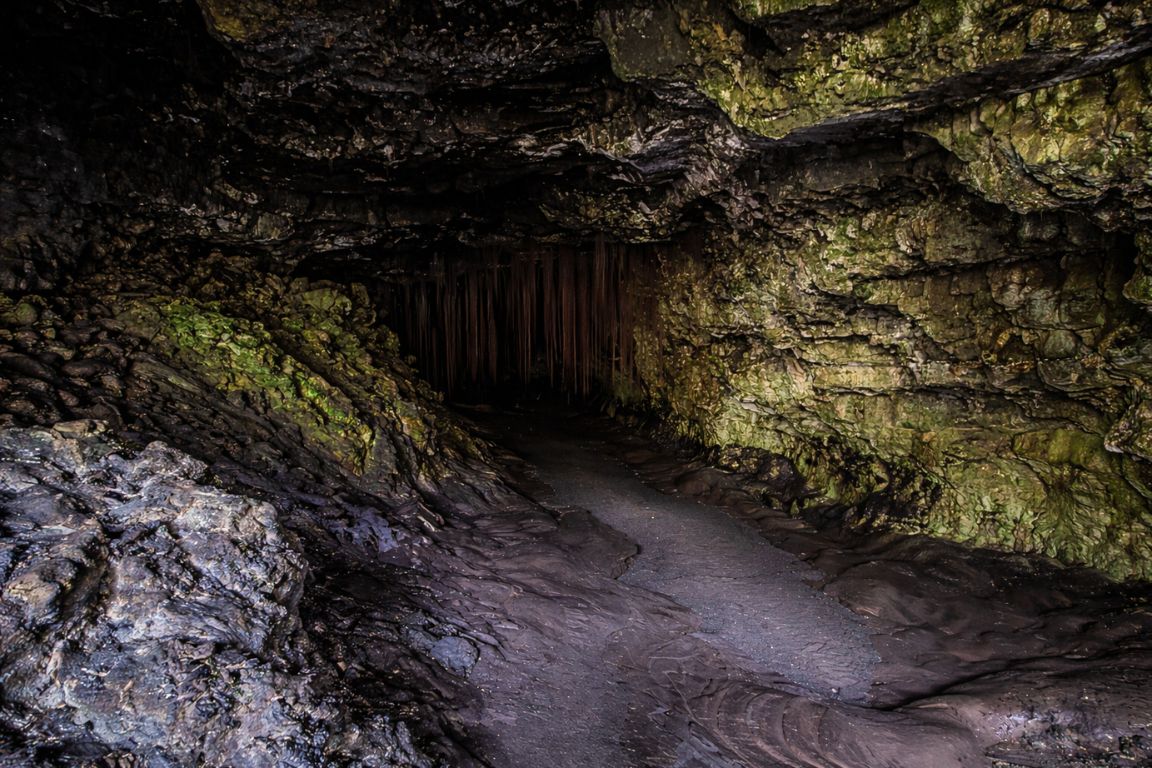 Hilo works well across age ranges but in different ways. Toddlers and preschoolers (ages 1-4) do best at Onekahakaha Beach Park, Pana’ewa Zoo, Coconut Island, and the farmers market – all low-stimulation, easy-exit options without long hikes or complex logistics. School-age children (5-12) unlock the full Hilo experience: the Junior Ranger program at the volcano, the ‘Imiloa planetarium, Kaumana Caves with headlamps, and ‘Akaka Falls. Teenagers benefit most from the volcano, snorkeling at Richardson, lava tube exploration, and the helicopter option if budget allows. Hilo is probably least well-suited to children under 2 who are past the carrier stage but not yet steady walkers on uneven terrain.
The sweet spot for Hilo is ages 6-14. This is the window where the Junior Ranger program delivers full payoff, where a child can handle the ‘Akaka Falls loop trail without being carried, where the caves and tide pools and volcanic landscapes produce genuine wonder without requiring nap schedules to be managed around. Children in this range respond to the storytelling that makes Hilo more than just pretty scenery – the mythology behind Rainbow Falls, the history of the lava tube that saved the town, the cultural significance of the taro fields in Waipio Valley.
For families with toddlers, the key adjustments are realistic. Onekahakaha Beach Park is nearly perfectly suited to the 18-month to 4-year age range: enclosed, shallow, soft sand bottom, lifeguards, shaded pavilions for napping parents. Pana’ewa Zoo moves slowly, allows strollers on paved paths, and has a genuine playground at the end for burning energy. ‘Imiloa has a dedicated children’s section and the planetarium shows are short enough not to outlast a toddler’s attention. Rainbow Falls is a quick 15-minute stop that toddlers enjoy at the viewing platform without any hiking requirement. These four can fill a solid morning without any of them demanding more than a child under 3 can handle.
Teenagers who find family trips insufficiently interesting tend to respond to Hilo’s adventure dimension. Kaumana Caves without a guide – headlamps, uneven lava floors, genuine darkness beyond the first 50 feet – is the kind of thing teenagers actually want. The ziplines at Botanical World Adventures (16 miles north) cross directly over triple-tiered waterfalls. Helicopter tours from Hilo offer a perspective that even world-weary teenagers find difficult to be unmoved by. And Richardson Ocean Park with good snorkel gear provides a sea turtle encounter that registers at any age.
We’ve put together a full cost breakdown in our Hilo tours on a budget guide so you know exactly where to spend and where to save.
Planning a Hilo family trip and want a short outing that fits around beach time? The private tide pools hike runs about two hours.
Frequently Asked Questions
Is Pana’ewa Rainforest Zoo still free?
No. Pana’ewa Rainforest Zoo began charging approximately $12 per person in September 2025. It operated as a free, donation-based zoo for many years, and a large number of travel sites still list it as free – those listings are outdated. Children under 3 are free. The zoo is open daily 10am-4pm, except Christmas Day, New Year’s Day, and the first Thursday of each month. The Saturday petting zoo runs 1:30-2:30pm and is included with admission.
What is the safest beach near Hilo for young children?
Onekahakaha Beach Park, about 3 miles from downtown Hilo. A lava rock seawall creates a shallow, sand-bottomed lagoon protected from ocean currents and waves. Lifeguards are on duty year-round. The tide pools surrounding the lagoon offer sea urchins, brittle stars, and occasional sea turtle visits. The park has restrooms, showers, pavilions, and a playground. Entry is free. Water shoes are recommended for lava rock sections outside the lagoon.
Is Hawaii Volcanoes National Park appropriate for young kids?
Yes, with some age-specific caveats. The steam vents, lava tube, and crater overlooks work for all ages. The Junior Ranger program is designed for ages 7-12 but has a coloring book version for younger children. Volcanic gases (vog) can irritate airways – check current conditions if your child has asthma. The park is at approximately 4,000 feet elevation and cooler than coastal Hilo; bring a layer for everyone. Entry is $30 per vehicle (7-day pass), credit card only.
What should I pack for Hilo with kids?
The essentials that most families forget: reef shoes or water shoes (black sand gets hot; lava rock requires grip), rain ponchos for everyone (umbrellas are awkward on trails), headlamps for Kaumana Caves, insect repellent (mosquitoes are aggressive near the lava tubes and rainforest), reef-safe sunscreen only for any beach swimming, and a light layer for the volcano. If you have toddlers, bring a soft carrier in addition to a stroller – the ‘Akaka Falls loop has stairs that require carrying a young child.
How old should kids be for Kaumana Caves?
Most families with kids aged 8 and up handle Kaumana Caves fine. The cave requires descending steep concrete stairs, walking on uneven lava floors, ducking in sections, and moving through near-total darkness with headlamps. Kids under 5 are not practical here. Kids 6-7 are doable with a confident adult but require careful management on the uneven terrain. Teenagers tend to love it. Bring a headlamp per person, closed-toe shoes with grip, and insect repellent applied before you exit the car – the mosquitoes at the cave entrance are aggressive.
Hilo Tours has run family tours here since 2014.