Best Waterfalls Near Hilo
Hilo’s waterfalls are the payoff for its rain. Discover the best falls to visit, when to go for rainbows, and what you need to know before getting close.
Last updated: May 1, 2026
| Rainbow Falls (Waiānuenue) | 1.5 miles / ~5 min | 80 ft | $5/person + $10/vehicle (Jan 2026) | None – viewpoint 100 ft from parking |
| Pe’epe’e Falls + Boiling Pots | ~3 miles / ~10 min | ~60-80 ft | Included with Rainbow Falls fee | Short walk to viewpoint |
| ‘Akaka Falls | ~11 miles / ~25–35 min | 442 ft | $5/person + $10/vehicle | 0.4-mile paved loop, easy |
| Kahuna Falls | ~11 miles / ~25–35 min | ~100 ft | Included with ‘Akaka Falls | Along ‘Akaka loop trail |
| Umauma Falls | ~16 miles / ~25 min | ~300 ft (3 tiers) | ~$12 garden admission | Short walk to viewpoint |
| Kulaniapia Falls | ~4 miles / ~15 min | 120 ft | Day pass required (private property) | Short trail to base (swimmable) |
| Hi’ilawe Falls (Waipio Valley) | ~50 miles / ~1 hr | 1,450 ft | Free (lookout); 4WD or tour for valley | Valley lookout easy; valley descent serious |
All fees verified against official Hawaii DLNR and park sources, April 14, 2026. Credit card only at all state parks.
What Are the Best Waterfalls Near Hilo, Hawaii?
 The Hilo side of the Big Island is home to the greatest concentration of accessible waterfalls in Hawaii – a direct result of the 130+ inches of annual rainfall that make this the wettest city in the United States. The top five within easy reach of Hilo are Rainbow Falls (5 minutes away), Pe’epe’e Falls and Boiling Pots (10 minutes), ‘Akaka Falls (35 minutes), Umauma Falls (25 minutes north), and Kulaniapia Falls (15 minutes, private property). Each delivers something different: scale, mythology, trail experience, or the rare chance to actually swim.
Guides who have spent years walking travelers through these falls know a few things the internet does not capture. Rainbow Falls photographs better than it feels in person which is not a criticism, it is just that the mist, the sound, and the smell of the river hit you differently than a wide-angle photo suggests. ‘Akaka Falls is the reverse: photographs do not do it justice. Standing at the viewpoint and watching 442 feet of free-falling water disappear into a green-walled gorge with mist rising from below is an experience that requires no filter and produces real silence in most visitors.
The falls near Hilo are also tied to some of the most vivid Hawaiian mythology on the island. The cave behind Rainbow Falls is said to be the home of Hina, mother of the demigod Maui. The ‘Akaka Falls legend traces back to a chief overcome with grief whose tears became the waterfall. Boiling Pots has its own story connected to the battle between Maui and a giant mo’o (lizard). These stories are not trivia – they shape how locals understand this land, and a good guide brings them into the experience in a way that changes what you see.
Family trips to Hilo need a different kind of planning – our Hilo tours with kids guide breaks down the best age-appropriate experiences on the rainy side of the island.
If you want the waterfall story told properly – mythology, geology, and all the stops most itineraries skip – the Akaka Falls and Hilo full-day tour is the version we send people on.
How Do You Get to the Waterfalls Near Hilo?
A rental car is the most practical way to see multiple waterfalls in a single day. Rainbow Falls and Pe’epe’e Falls are reachable from downtown Hilo in under 10 minutes. ‘Akaka Falls requires a 35-minute drive north on Highway 19 past the small town of Honomu. All four main falls – Rainbow, Pe’epe’e, ‘Akaka, and Umauma – can be done in one full day from Hilo without rushing, and the Hamakua Coast drive connecting them is one of the most scenic stretches of road on the island.
The one-day waterfall route that works best: start early at Rainbow Falls (before 9am for the rainbow effect), walk across to the Boiling Pots viewpoint, then drive north on Highway 19. The Pepe’ekeo Scenic Route – a 4-mile stretch of old highway that loops through dense jungle and coastal views before rejoining Highway 19 – adds about 15 minutes and is worth every one of them. Continue to ‘Akaka Falls State Park, do the loop trail, then push another five miles north to the small town of Honomu for coffee and a break. Umauma Falls is 20 minutes farther north at World Botanical Gardens if you have the afternoon for it.
Bus service from Hilo to the general Honomu area exists on the Hele-On system, but schedules are infrequent and the last stretch to ‘Akaka Falls Road requires either a taxi or a very long walk. For the casual visitor, a rental car is genuinely necessary for anything beyond Rainbow Falls. If you prefer not to drive, guided waterfall tours handle everything – pickup, logistics, and narration on the cultural stories behind each falls.
One thing worth knowing: both Rainbow Falls and ‘Akaka Falls are state parks and both now require payment by credit card only. There are no cash options at either location. Cell service at ‘Akaka Falls parking is unreliable – download the ParkMobile app and add payment information before leaving Hilo if you plan to pay by phone. At Rainbow Falls, payment is handled on-site via QR code, which requires decent cell signal.
Not sure where to start with planning a Big Island trip? Here’s our how to plan a trip to Hilo tours guide so you don’t waste time figuring it out on the fly.
Is Rainbow Falls Worth Visiting?
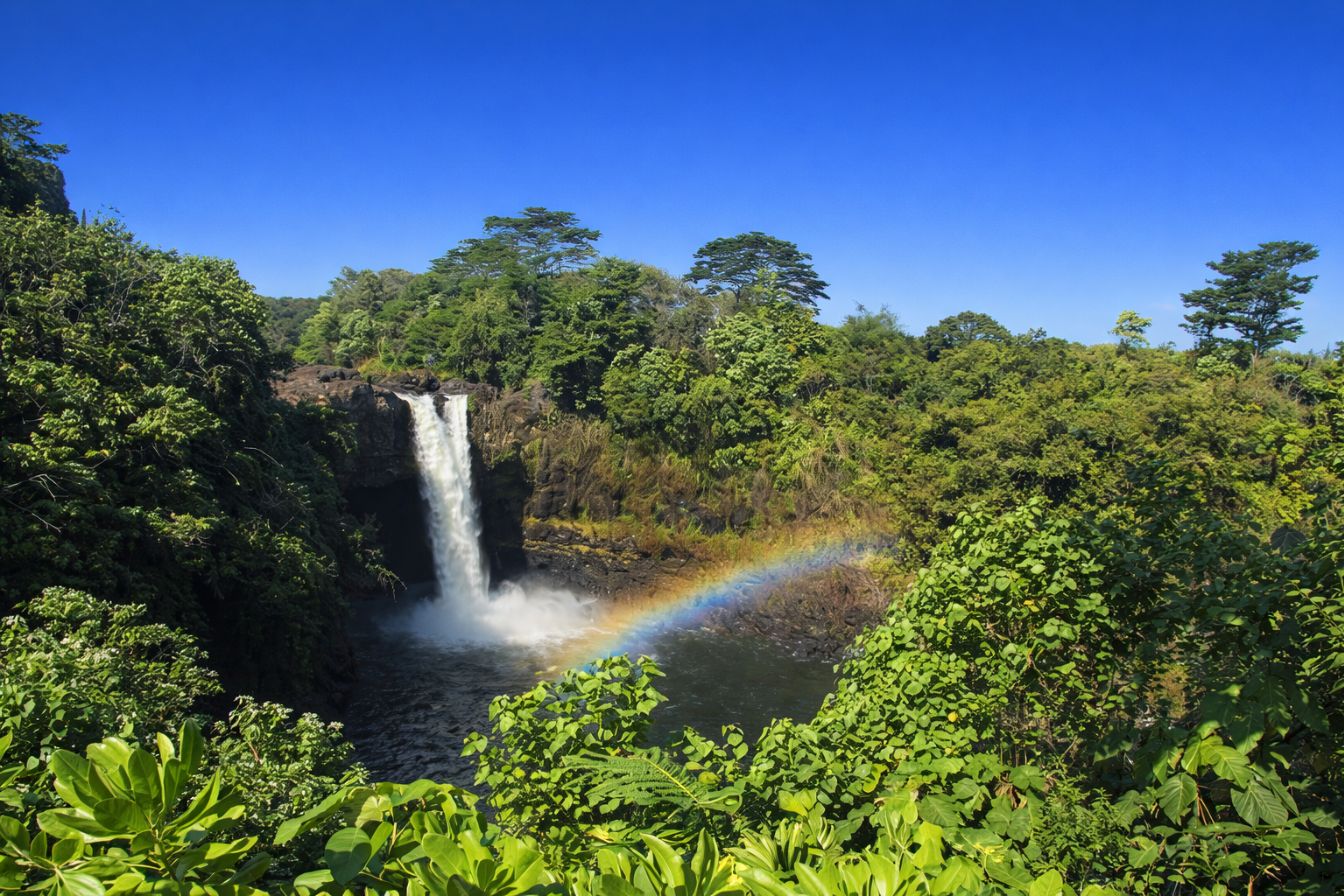
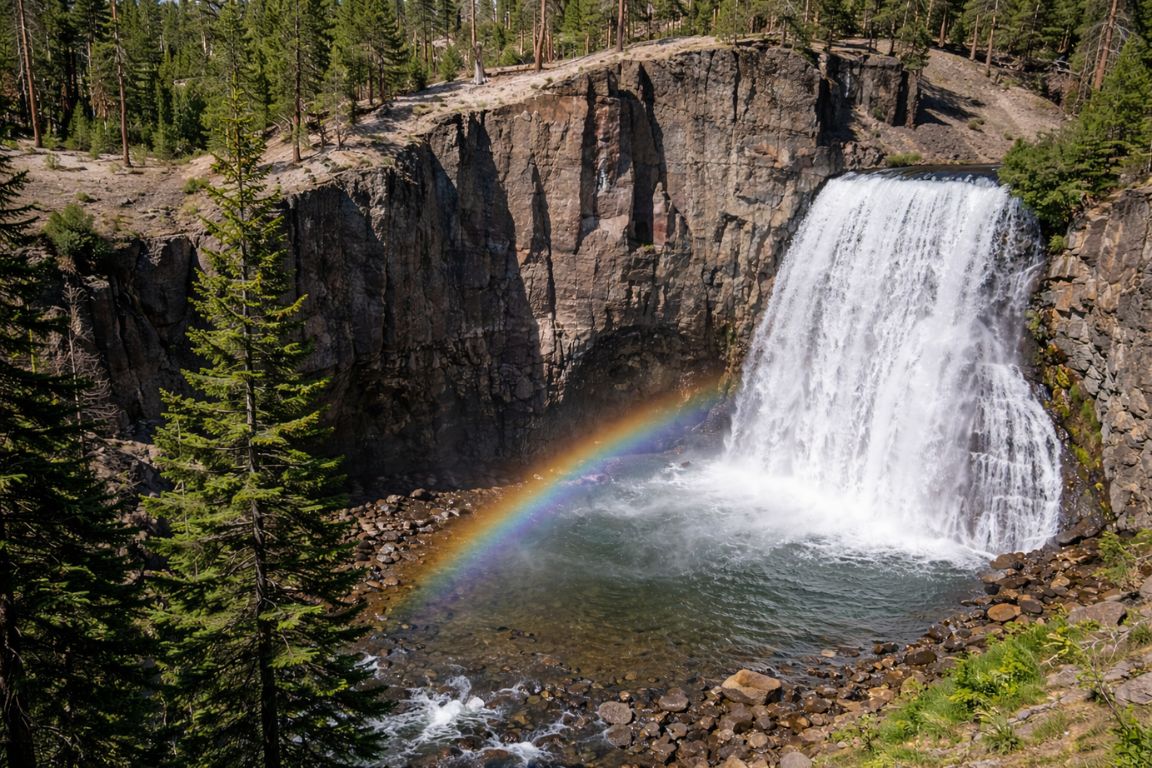 Yes, and it is one of the few waterfalls in Hawaii where the mythological story is as interesting as the falls itself. Rainbow Falls (Waiānuenue in Hawaiian, meaning “rainbow seen in water”) is an 80-foot cascade over a basalt lava cave said to be the home of Hina, the Hawaiian moon goddess. On clear mornings, usually between 9 and 10am, sunlight hits the mist and throws a vivid rainbow across the pool below. The whole visit takes 30-45 minutes and requires almost no walking. As of January 2026, there is an entry fee of $5 per person plus $10 per vehicle – confirmed through Hawaii DLNR.
The cave behind the falls is the detail most visitors miss. Stand at the main viewing platform and look below and slightly left – the lava overhang behind the falling curtain of water forms a natural cave. According to Hawaiian tradition, Hina lived there, and the battle between her son Maui and the giant mo’o Kuna who tried to flood her home is what gives the Wailuku River – wailuku means “river of destruction” in Hawaiian – its name. That mythology is not decoration. It is how Hawaiians read this landscape, and knowing it before you arrive changes what you look at.
Beyond the main overlook, a short trail to the left climbs roughly 30 steps to the top of the falls. Up there, the view reverses entirely – you look down the river from above, with massive ancient banyan trees on either side and a smaller secondary viewpoint over the falls’ crest. Most visitors skip this trail. They should not. It takes five minutes and delivers a completely different perspective on the falls.
Rainbow Falls is also the launching point for the Boiling Pots, just 1.6 miles farther up Wainuenue Avenue. The single fee covers both sites. Do not skip the Boiling Pots – explained below – just because they share a parking pass with a more famous waterfall.
Is ‘Akaka Falls Worth the Drive from Hilo?
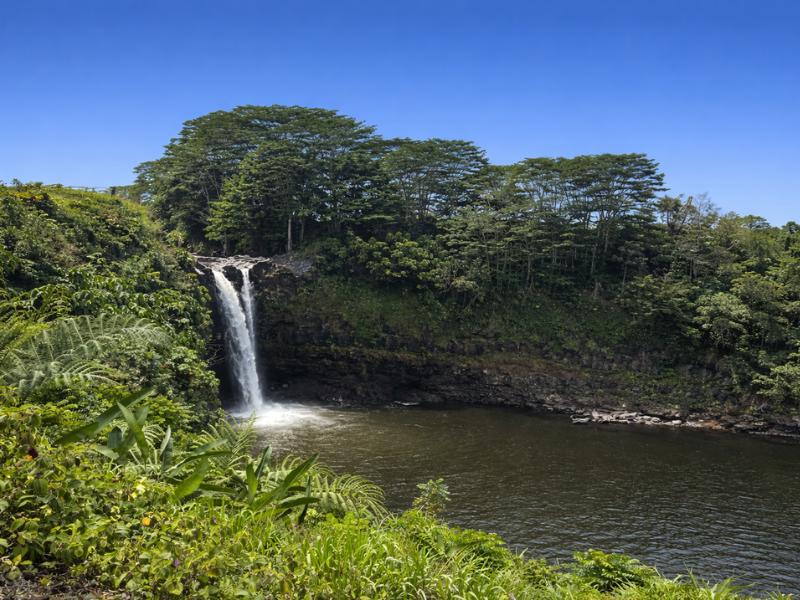
Absolutely. ‘Akaka Falls is 442 feet of free-fall – one of the tallest accessible waterfalls in the state of Hawaii – plunging in a single uninterrupted vertical drop into a deep rainforest gorge. The 0.4-mile paved loop trail passes through bamboo groves, wild orchids, giant ferns, and rainbow eucalyptus trees before delivering you to the viewpoint. It takes about 30 minutes at an easy pace. The drive from Hilo through the Hamakua Coast is scenic enough to justify the trip on its own. Entry is $5 per person plus $10 per vehicle. Hours are 8:30am-5pm daily.
The difference between Rainbow Falls and ‘Akaka Falls is the difference between a beautiful painting and something that makes you stop thinking for a moment. Rainbow Falls is wide and accessible and genuinely lovely. ‘Akaka Falls is something else – the gorge walls rise on both sides, laced with ferns and hanging plants, and the falls drops so far that the mist starts fifty feet below the base and keeps rising. The sound arrives before the sight. When you round the corner on the trail and the falls opens up in front of you through the green frame of the jungle, most people go quiet.
The trail includes Kahuna Falls along the upper portion of the loop – a 100-foot cascade that would be a destination in its own right almost anywhere else in Hawaii. Here it plays second to ‘Akaka and barely gets mentioned in most guides. Find the small lookout on the upper trail and give it 30 seconds. It is worth it.
Practical notes: the parking lot fills between 10am and 2pm when tour buses arrive. Get there at opening (8:30am) if you want the trail to yourself. Pay at Recreation.gov in advance or use ParkMobile zone #808030 – the kiosk at the park is credit card only and cell service is spotty. Water and comfort station are currently closed (as of the latest DLNR update); portable toilets are available. The park is stroller-accessible on the paved section, though stairs near Kahuna Falls make the full loop difficult with a stroller.
Stop in Honomu on the way there. The tiny town just off Highway 19 has a handful of coffee shops, galleries, and plate lunch spots that have been there for decades. Shark’s Coffee is a consistent local recommendation. It takes ten minutes and adds genuine texture to the drive.
This Rainbow-to-Honomu route is one Hilo Tours has run since 2014, long enough to know exactly where the tour buses cluster and when. The Hilo day tour covers this route.
‘Akaka Falls vs Rainbow Falls: Which Should You See First?
If you only have time for one, pick based on what you want: Rainbow Falls delivers more per minute – a 30-45 minute stop with almost no walking, timed for the rainbow effect between 9 and 10am. ‘Akaka Falls is the bigger spectacle – 442 feet of free-fall reached by a 0.4-mile rainforest loop trail, about 35 minutes north of town. Most one-day itineraries fit in both: Rainbow Falls first thing, then the drive up to ‘Akaka before the tour buses fill the lot after 10am.
| Height | 80 feet | 442 feet |
| Distance from downtown Hilo | Under 10 minutes | About 35 minutes on Highway 19 |
| Walking required | Almost none, paved overlook | 0.4-mile paved loop, about 30 minutes |
| Entry fee (as of Jan. 2026) | $5/person + $10/vehicle | $5/person + $10/vehicle |
| Best time to arrive | 9-10am for the rainbow effect | 8:30am opening, before tour buses |
| Best for | Short stops, limited mobility, tight schedules | Travelers who want the taller, more dramatic waterfall |
Neither replaces the other, and you do not have to choose just one. On a single morning, Rainbow Falls costs almost no time since it requires no real walking, then the drive up to ‘Akaka before 10am avoids the worst of the tour-bus crowds at both.
What Are the Lesser-Known Waterfalls Near Hilo Most Tourists Miss?
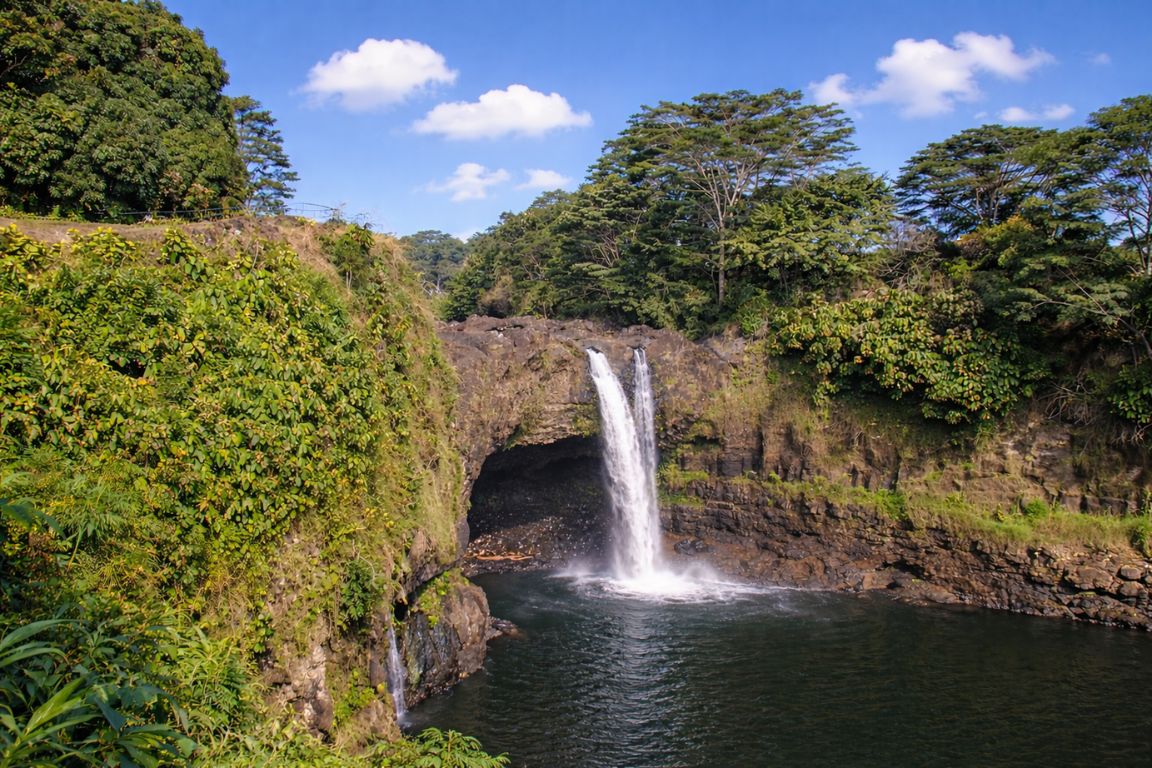 The most overlooked waterfall cluster near Hilo is Pe’epe’e Falls and Boiling Pots – technically the same stop as Rainbow Falls and covered by the same fee, yet consistently skipped because visitors drive away after the main lookout. Umauma Falls, 16 miles north, is arguably the most visually spectacular waterfall near Hilo and nearly always has fewer crowds than ‘Akaka. Kulaniapia Falls is the only easily accessible fall near Hilo where you can legally swim in the base pool. Hi’ilawe Falls, an hour north in Waipio Valley, is the tallest waterfall in Hawaii and visible from a roadside lookout.
Pe’epe’e Falls and Boiling Pots: Drive 1.6 miles past Rainbow Falls on Wainuenue Avenue and turn onto Pe’epe’e Falls Road. The Boiling Pots are a series of basalt pools in the Wailuku River, carved by lava flows and connected by underground channels. When the river is running hard, water churns through the connections and the pools genuinely appear to boil. Pe’epe’e Falls – pronounced “peh-eh peh-eh” – cascades into the pools from above, partially obscured by jungle. The viewpoint is 50 feet from the parking area. Almost nobody stays here longer than ten minutes. That ten minutes rewards you.
The mythology here is worth knowing: after Maui defeated the giant mo’o Kuna at Rainbow Falls, the creature escaped upstream and hid in the deep pools. Maui called on Pele for help, who sent molten lava into the river. The pools boiled and the mo’o was destroyed. The Boiling Pots have been boiling ever since, at least in legend.
Umauma Falls: About 16 miles north of Hilo on Highway 19, the Umauma Experience property hosts the only triple-tiered waterfall on the Big Island. Three cascades, each with its own plunge pool, stacked within a single gorge. The property charges about $12 for garden and waterfall access, which includes a botanical walk through some genuinely impressive coastal rainforest. The zipline tour – nine lines, one of which sweeps directly over the falls – runs around $191. A private waterfall swim experience runs $50. The views and the crowds are dramatically thinner here than at ‘Akaka Falls, and the setting is more dramatic. Most visitors skip it because it requires a small admission fee to a private property. That is exactly why you should go.
Kulaniapia Falls: A 120-foot waterfall on private property about 15 minutes from downtown Hilo, at an inn that operates as an eco-lodge. Day passes allow non-guests to visit and swim in the pool at the base of the falls. The 22-acre property also has bamboo gardens and river trails. This is one of the rare places near Hilo where you can legitimately and safely swim next to a waterfall. The pool is calm compared to the dangerous Wailuku River falls, and the setting is genuinely beautiful. Book a Kulaniapia Falls day pass ahead – availability is limited.
Hi’ilawe Falls (Waipio Valley): The tallest waterfall in Hawaii at 1,450 feet, visible from the Waipio Valley Lookout at the end of Highway 240 about 50 miles north of Hilo. From the lookout you see the white thread of water dropping down the back cliff face of the valley. Descending into Waipio Valley to see it up close requires a 4WD vehicle (the road is a 25% grade) or a guided ATV tour – the steep descent on foot is doable but the return climb is brutal. Most visitors see Hi’ilawe from the lookout and are satisfied. It is enough.
| Pe’epe’e Falls + Boiling Pots | Boiling cauldron pools; same fee as Rainbow Falls | Visitors leave after Rainbow Falls without driving the extra mile |
| Umauma Falls | Only triple-tiered waterfall on the island; dramatic setting; zipline option | Private property; small admission fee; less well-known |
| Kulaniapia Falls | One of the few swimmable falls near Hilo; 120 ft; peaceful setting | Private inn property; day pass required; not widely advertised |
| Kahuna Falls | ~100 ft; on the ‘Akaka loop trail; free with ‘Akaka admission | Overshadowed by ‘Akaka; partially obscured by vegetation |
| Hi’ilawe Falls (Waipio Valley) | Tallest waterfall in Hawaii at 1,450 ft; free viewpoint | Far from Hilo; valley descent challenging without 4WD |
What Is the Best Time of Day to Visit Hilo’s Waterfalls?
Early morning is best for every Hilo waterfall, for two reasons: the rainbow effect at Waiānuenue (Rainbow Falls) only appears when morning sun hits the mist, typically between 9 and 10am on clear days, and crowds at both Rainbow Falls and ‘Akaka Falls build significantly after 10am when tour buses and cruise ship visitors arrive. Get to Rainbow Falls before 9am, reach ‘Akaka Falls at opening (8:30am), and you will have both waterfalls largely to yourself.
The rainbow at Rainbow Falls deserves its own explanation. The falls face east, and the morning sun hits the mist rising from the pool at roughly the right angle between 8:30am and 10am on clear or partly cloudy days. Later in the morning, the sun has moved and the rainbow effect disappears from the main viewing platform though you can still catch it from the upper trail lookout for a bit longer. Overcast mornings do not produce the rainbow but the falls remain beautiful. Rain swells the volume of the falls and makes them more dramatic. There is no bad time, but the rainbow is specifically a morning phenomenon.
At ‘Akaka Falls, morning also gives you the best photography light. The gorge orientation means morning sun (8-10am) reaches the falls at the most favorable angle before the sun moves overhead and creates harsh shadows. After 10am, tour buses and organized groups start filling the small parking lot. By noon in summer months, people park on the roadside because the lot is full. Arrive at 8:30am when the park opens and you may have the trail entirely to yourself.
One thing our guides have learned over years of bringing groups to these falls: Hilo’s rain is mostly an afternoon phenomenon. Mornings in Hilo – even in the wetter months – are frequently clear, with clouds building through midday and rain arriving in the afternoon. Plan waterfalls in the morning and save indoor activities or the volcano for the afternoon. That rhythm solves most of Hilo’s weather variability.
First time planning a trip to the rainy side of the Big Island? Here’s our best time to visit Hilo tours guide so you pack right and plan smarter.
Can You Swim at the Waterfalls Near Hilo?
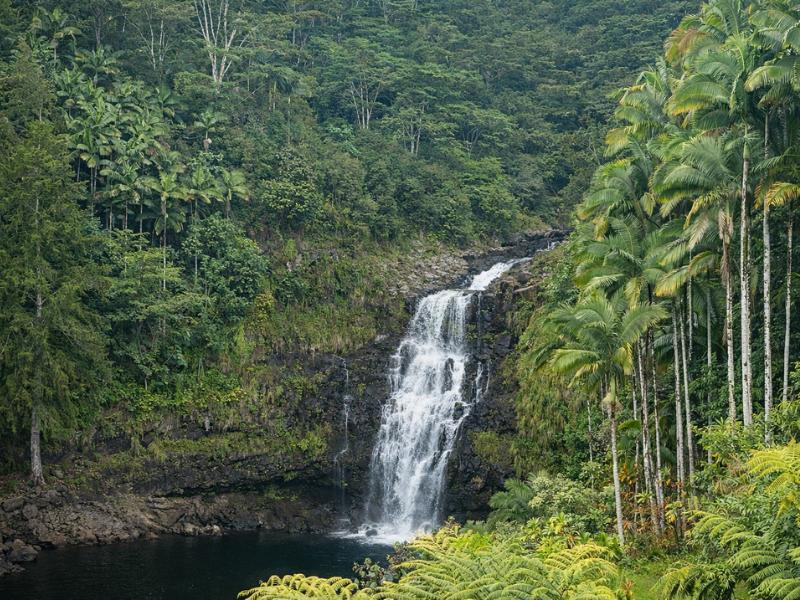
At Rainbow Falls, Pe’epe’e Falls, Boiling Pots, and ‘Akaka Falls: no, and the reasons are real. The Wailuku River flash floods without warning when it rains upstream – which it often does even when Hilo town is dry, and the Boiling Pots have subterranean lava tube channels that trap people underwater. Multiple drownings have occurred in these areas, including strong swimmers and locals who should have known better. Swimming is explicitly prohibited at all these sites. The waterfalls where swimming is genuinely available near Hilo are Kulaniapia Falls (day pass, private property) and Umauma Falls (paid tour).
The Wailuku River looks calm on a sunny afternoon. Locals will tell you, and it is worth taking seriously that this specific river is not what it looks like. The water level can rise dramatically within minutes of heavy rain falling high on Mauna Kea, even when no rain is falling in Hilo town itself. The Boiling Pots section is particularly lethal: the underground lava tube connections between pools can pull a swimmer down and trap them in channels below the surface. The name of the river – Wailuku, meaning “river of destruction” – reflects its history, not its appearance.
Leptospirosis is a separate and real concern throughout Hawaii’s freshwater systems. The bacterial infection is carried by animals (particularly wild pigs and rats) and enters water through their urine. It can infect humans through any break in the skin – a scratch, a blister, a small cut. The risk is not zero at any of the waterfall areas, and people with open wounds should not enter any freshwater near Hilo.
For a genuinely safe and beautiful waterfall swim near Hilo, Kulaniapia Falls is the best option. The inn manages the property and the pool at the base, conditions are monitored, and the 120-foot falls creates a proper swimming environment. Book a day pass in advance. Umauma Falls at World Botanical Gardens offers a paid private swim experience in the pool below the falls – worth considering if a waterfall swim is high on your list.
What Should You Know Before Visiting Hilo’s Waterfalls?
Three things catch visitors off guard every season: the new entry fees at Rainbow Falls (as of January 2026, $5/person plus $10/vehicle – previously free), the credit-card-only payment requirement at ‘Akaka Falls with unreliable cell service, and the genuine flood danger at the Wailuku River sites. Beyond those: wear closed-toe shoes on any trail near the falls, bring more water than you think you need, and do not step past safety barriers – the viewpoints are designed to show you everything worth seeing.
The Rainbow Falls fee change is recent and still surprises many visitors who researched the site before January 2026. The fee covers access to both Rainbow Falls and Boiling Pots/Pe’epe’e Falls as a single combined entry. Hawaii residents enter free with a valid Hawaii ID or driver’s license. Payment is handled on-site via QR code at the parking area. If your phone has poor signal at that location, have your payment app loaded before you arrive.
The ‘Akaka Falls payment situation deserves advance planning. Cell service at the parking lot off Akaka Falls Road is genuinely unreliable. The kiosk accepts credit cards but app-based payment through ParkMobile (zone #808030) is the most reliable option. Download the app and add a payment method before you leave Hilo. The state DLNR explicitly recommends paying before arrival for this reason.
Footwear matters more than people expect. The trails at both Rainbow Falls and ‘Akaka are paved, but they get wet and slippery when it rains – which it often does. Running shoes are fine. Flip flops on wet volcanic rock are a problem. The upper trail at Rainbow Falls has a set of stairs that get slick. The ‘Akaka loop has sections where water runs across the path. Grip matters.
Finally: do not pick flowers, plants, or rocks. Removing lava rock is widely considered culturally disrespectful – the concept of “Pele’s Curse” is well known among locals and reflects a genuine value about leaving the land as you found it. Stay on the trails. Read the interpretive signs – the Hawaiian mythology posted at Rainbow Falls and ‘Akaka is genuinely interesting and changes what you understand about what you are looking at. These are not just pretty waterfalls. They are storied places.
| Arrive at Rainbow Falls before 9am | Best light for rainbow effect; crowds arrive after 10am |
| Arrive at ‘Akaka Falls at 8:30am opening | Parking fills by 10am; trail is empty at opening |
| Download ParkMobile before leaving Hilo | Cell service at ‘Akaka parking is unreliable; zone #808030 |
| Pay Rainbow Falls by QR code at parking area | New fee as of Jan 2026; $5/person + $10/vehicle; credit card only |
| Walk the upper trail at Rainbow Falls | Different perspective; massive banyan trees; most visitors skip it |
| Drive 1.6 miles past Rainbow Falls to Boiling Pots | Same fee; almost no extra time; most visitors never go |
| Do not swim in Wailuku River falls | Flash floods, leptospirosis, subterranean lava tubes; multiple deaths |
| Wear closed-toe shoes with grip | Wet lava rock and paved trails in rain are slippery |
| Stop in Honomu on the way to ‘Akaka | Tiny town with coffee, plate lunch, and local shops; five extra minutes |
Entry fees verified against Hawaii DLNR official sources, April 14, 2026. Credit card only at all state parks – no cash accepted.
If your waterfall itinerary raises questions the FAQ below doesn't answer, our team is reachable directly. In the meantime, see current nature tours.
Frequently Asked Questions
Is Rainbow Falls free to visit?
As of January 2026, no. Wailuku River State Park, which includes Rainbow Falls and the Boiling Pots, now charges $5 per person plus $10 per vehicle for non-residents. Hawaii residents enter free with a valid Hawaii ID or driver’s license. Payment is handled on-site by QR code. The park is open daily during daylight hours.
How long does it take to visit ‘Akaka Falls?
The loop trail is 0.4 miles and takes 20-30 minutes at an easy pace with time for photos. Add 30 minutes for the drive from Hilo and another 30 for the return, plus parking. Budget 1.5-2 hours total for the full ‘Akaka Falls experience. The park is open daily 8:30am-5pm.
Can you see a rainbow at Rainbow Falls?
On clear mornings, yes, typically between about 8:30am and 10am when sunlight hits the mist at the right angle. The rainbow appears most reliably from the main viewing platform. Overcast days do not produce the rainbow effect, though the falls are still beautiful. After 10am the sun angle changes and the rainbow disappears from the main platform, though the upper trail viewpoint can catch it a bit longer.
How far is ‘Akaka Falls from Hilo?
About 11 miles north of Hilo, roughly a 25-35 minute drive on Highway 19. The park is at the end of ‘Akaka Falls Road off Highway 19 near the small town of Honomu. The scenic Pepe’ekeo route adds about 15 minutes but is well worth it for the coastal jungle views.
Can you swim at any waterfalls near Hilo?
Not at the main tourist waterfalls – Rainbow Falls, Boiling Pots, and ‘Akaka Falls are all explicitly no-swimming zones due to flash flood danger, leptospirosis risk, and strong currents. The two genuinely swimmable options near Hilo are Kulaniapia Falls (private property, day pass required, about 15 minutes from town) and Umauma Falls (paid private swim tour at World Botanical Gardens, about 25 minutes north).
What is the tallest waterfall near Hilo?
Hi’ilawe Falls in Waipio Valley is the tallest waterfall in Hawaii at roughly 1,450 feet, located about 50 miles north of Hilo. You can see it from the Waipio Valley Lookout at the end of Highway 240 without descending into the valley. Getting to the base requires a 4WD vehicle or a guided ATV tour on private land. ‘Akaka Falls, at 442 feet, is the tallest waterfall easily accessible on a public trail near Hilo.