Hilo on a Budget
Hilo is Hawaii’s best budget base - cheap stays, free transit, and low-cost food. See how to spend just $30-$50/day and still have an amazing trip.
Last updated: May 1, 2026
| Accommodation (dorm) | Howzit Hostels, Big Island Hostel, Arnott’s Lodge | $40-$60/night per bed |
| Accommodation (private budget) | SCP Hilo Hotel, Hilo Reeds Bay Hotel, Dolphin Bay | $90-$140/night |
| Breakfast | Farmers market fruit + coffee; grocery store | $5-$10 |
| Lunch | Plate lunch (Cafe 100, Hawaiian Style Cafe, Puka Puka) | $10-$14 |
| Dinner | Suisan Fish Market poke bowl; bento; grocery cook-in | $13-$20 |
| Transport (bus) | Hele-On Bus – free until December 31, 2028 | Free |
| Transport (rental car) | Economy car booked 6-8 weeks out | $45-$80/day |
| Main attraction (volcano) | Hawaii Volcanoes NP vehicle pass (7-day) | $30/vehicle |
| Waterfalls | Rainbow Falls + Boiling Pots (same fee); ‘Akaka Falls | $5/person + $10/vehicle each |
| Free beaches | Onekahakaha, Richardson, Coconut Island | Free |
| Free activities | Kaumana Caves, Liliuokalani Gardens, Mokupapapa Center, farmers market | Free |
Prices verified April 14, 2026. Hele-On Bus free until Dec 31, 2028 per official Hawaii County fare page.
Is Hilo Actually Affordable Compared to the Rest of Hawaii?
 Yes, significantly. Hilo is the cheapest base in the entire Hawaiian island chain for budget travelers. Hotel rooms start under $100/night, hostel dorm beds run $40-$60, the public bus is free until the end of 2028, the best beaches are free, and the plate lunch culture means you can eat well for $10-$14 a meal. The Big Island overall ranks as the cheapest Hawaiian island, and Hilo is the cheapest part of the Big Island. Maui accommodations run 20-30% higher for comparable rooms, Waikiki is in a different pricing universe entirely.
The comparison that matters most for budget planning: the average Hawaii visitor spends around $393 per day. In Hilo, a well-organized budget traveler spending $80-$120 per day is having a genuinely full experience – beaches, waterfalls, local food, and the volcano. That is not deprivation travel. It is Hilo as locals experience it, which happens to be cheaper and more authentic than the resort-driven version of Hawaii elsewhere.
Why is Hilo cheaper? Because it never became a resort town. There are no beachside mega-resorts competing for prime oceanfront real estate, no developer-inflated dining strips, no $30 cocktails at sunset pools. Hilo has a real town economy – restaurants that serve construction workers and teachers and university students, not primarily tourists. The plate lunch counter prices reflect that reality. The grocery stores are stocked for residents who live there year-round. The public parks are maintained for the people who use them every week.
This also means Hilo rewards travelers who think like locals rather than tourists. Shopping at the farmers market on Wednesday morning is how residents eat. Taking the Hele-On Bus to Onekahakaha Beach is how Hilo families get to the beach. Getting a bento at Suisan Fish Market is what people do for lunch. None of these involve tour operators or visitor-economy pricing, and all of them are better than their expensive equivalents elsewhere in Hawaii.
When you do want a guided experience in Hilo – the volcano, the Hamakua Coast, a waterfall day – the 7-hour Hilo day tour covers those stops with transport included.
What Are the Best Free Things to Do in Hilo?
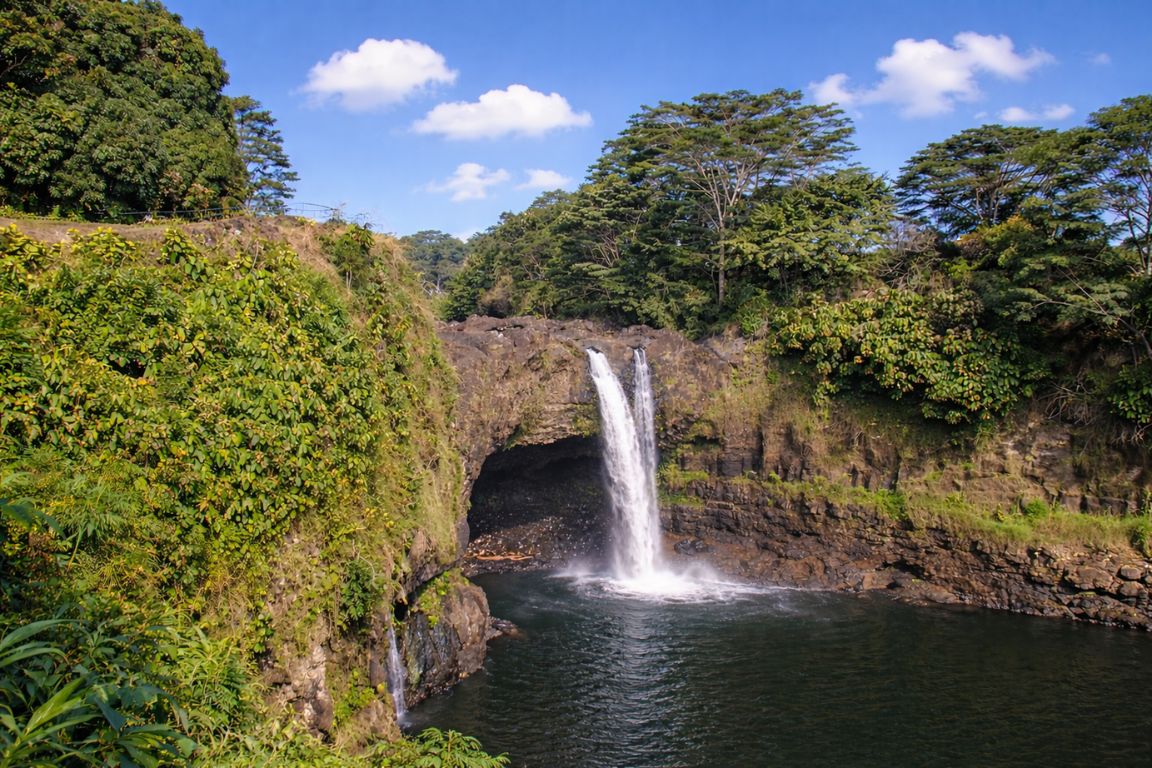 Hilo has more genuinely excellent free activities than any other Hawaii destination. The complete free list: Richardson Ocean Park (sea turtles, snorkeling, lifeguards), Onekahakaha Beach Park (best safe swimming on the east side, lifeguards), Kaumana Caves lava tube (formed by the 1881 Mauna Loa eruption), Liliuokalani Gardens and Coconut Island, Mokupapapa Discovery Center (free NOAA marine exhibits and 3,500-gallon aquarium, downtown), Pe’epe’e Falls and Boiling Pots viewpoint, Hilo Farmers Market browsing, Banyan Drive, and the Hilo Bayfront walkway. A full day built around these costs nothing beyond food.
Richardson Ocean Park is the free experience that surprises visitors most. A 10-minute drive from downtown Hilo on Kalanianaole Avenue, this black and green sand beach has a spring-fed reef with genuinely clear water, a resident population of Hawaiian green sea turtles that haul out daily in the tide pools, parrotfish, butterflyfish, triggerfish, and occasional monk seals. Lifeguards are on duty. Free parking. This is better marine wildlife access than most paid snorkel tours elsewhere in Hawaii provide.
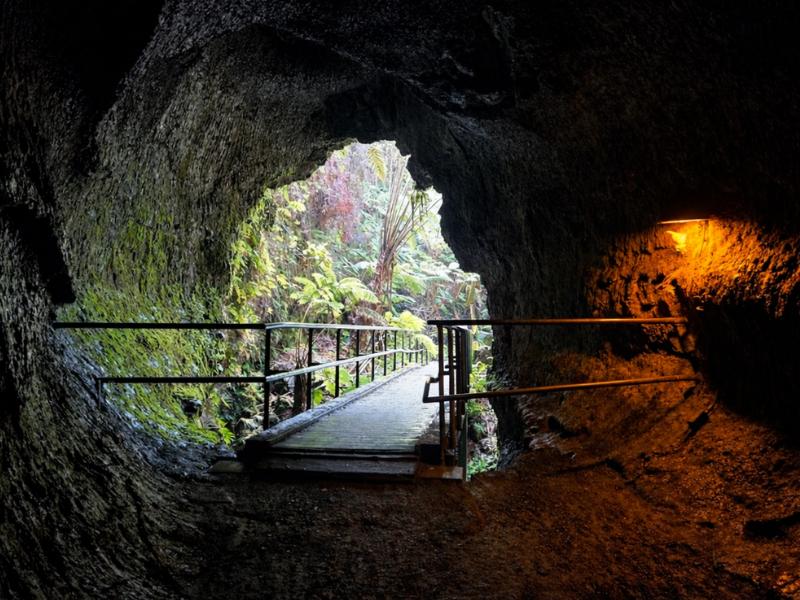
Kaumana Caves is the free adventure experience. Four miles up Kaumana Drive from downtown – a 10-minute drive or a long uphill walk – the cave entrance descends via concrete staircase into a collapsed skylight of the 1881 Mauna Loa lava tube. The accessible sections run for about 2 miles of underground exploration. You need a headlamp (essential – bring one per person), closed-toe shoes, and insect repellent. Free parking, free entry, free restrooms on site. This is one of the most accessible lava tube systems in the state and almost nobody knows about it.
The Mokupapapa Discovery Center on Kamehameha Avenue downtown is free, air-conditioned, and genuinely interesting. It is a NOAA interpretive center for the Northwestern Hawaiian Islands with a 3,500-gallon live saltwater aquarium, life-size animal models of Hawaiian monk seals and sharks, interactive exhibits, and panels in both Hawaiian and English. Open Tuesday through Saturday, 9am-4pm. Budget 45-60 minutes. On a rainy afternoon, this is one of the best free 45 minutes in Hilo.
Liliuokalani Gardens and Coconut Island together take about an hour and cost nothing. The formal Japanese garden is the largest outside Japan, with koi ponds, footbridges, pagodas, and views of Hilo Bay. The footbridge to Coconut Island (Mokuola) leads to a small island in the bay with a dock and calm swimming – a traditional healing place in Hawaiian culture. Walk Banyan Drive on the way, where famous banyans planted by Babe Ruth, Amelia Earhart, and Louis Armstrong arch over the road like a living tunnel.
| Richardson Ocean Park | Sea turtles, snorkeling, black/green sand, lifeguards | 2-4 hrs |
| Onekahakaha Beach Park | Shallow sand-bottom lagoon, tide pools, lifeguards, playground | 2-4 hrs |
| Kaumana Caves lava tube | 1881 Mauna Loa tube, dark exploration, free parking (bring headlamp) | 30 min – 2 hrs |
| Liliuokalani Gardens + Coconut Island | Japanese gardens, bay views, dock swimming, footbridge walk | 45-90 min |
| Mokupapapa Discovery Center | Free NOAA aquarium, interactive marine exhibits (Tue-Sat) | 45-60 min |
| Pe’epe’e Falls + Boiling Pots | Volcanic lava pool formations, covered viewpoint (same fee area as Rainbow Falls – viewpoint itself viewable) | 20-30 min |
| Hilo Bayfront + Banyan Drive | Historic banyans, bay views, walking path, public art | 30-60 min |
| Hilo Farmers Market browsing | Free to walk; tropical fruits, local crafts, street food | 30-60 min |
| Wailoa River State Park | King Kamehameha statue, fish ponds, quiet waterway walk | 30-45 min |
Where Can You Eat Cheap in Hilo?
The plate lunch is Hilo’s answer to budget eating – a local institution that delivers rice, mac salad, and a protein (teriyaki beef, chicken katsu, kalua pork, ahi, shoyu chicken) for $10-$14, in portions large enough to share. Cafe 100, credited with inventing the loco moco, is the historic starting point – a no-frills drive-in on Kilauea Avenue open from 6:45am with plates starting around $7. Hawaiian Style Cafe on Manono Street is renowned for portions so large that locals warn first-timers to eat light before arriving. Suisan Fish Market has a poke counter with $13 bowls described by regulars as large enough for two people.
Cafe 100 deserves its own paragraph. This is one of Hilo’s most storied institutions, a drive-in style counter restaurant that has been feeding the town since 1946 and claims to have invented the loco moco – a rice bowl topped with a hamburger patty, fried egg, and brown gravy. A Cafe 100 loco moco runs around $7-$9. Mixed plates with teriyaki beef, chicken katsu, and mahi mahi are similarly priced. It is not fancy. It is not designed for Instagram. It is exactly what it has always been: reliable, filling, affordable, local food from a place that has been here for 80 years.
For poke on a budget, Suisan Fish Market at the Wailoa River end of Kamehameha Avenue has a counter in the back of the seafood market where the poke bowls run about $13 and are legendarily large – one bowl regularly feeds two people who have not been eating lightly. The seafood is straight from local fishing boats. There is outdoor seating adjacent to the koi ponds. On a hot Hilo morning, a poke bowl at the Suisan counter with a view of the fishing boats in Hilo Bay is about as good as budget eating in Hawaii gets.
The Hilo Farmers Market on Wednesday and Saturday is a breakfast and snack destination as much as a market. Tropical fruits at the produce stalls run $1-$3 per piece for things that cost four times as much at a hotel breakfast buffet – rambutan, lychee, papaya, starfruit, dragon fruit. Food stalls sell plate lunches, malasadas (Portuguese donuts), fresh coconut water, and shave ice. A full farmers market breakfast costs $8-$12 and is the best meal deal in Hilo. Even on small market days (Monday, Tuesday, Thursday, Friday, Sunday), there are food vendors worth stopping for.
Ken’s House of Pancakes on Kamehameha Avenue is the 24-hour local diner option – open all night, familiar American-style comfort food with Hawaiian twists, macadamia nut pancakes, loco moco, big portions, and the nostalgic warmth of a place that has been serving Hilo through decades of change. Breakfast runs $10-$15. It is not the cheapest option in town but it is reliable, full of locals, and open when nothing else is.
For self-catering, KTA Super Store and Safeway in Hilo are well-stocked supermarkets where a day’s food can be assembled for $15-$20. Spam musubi ($2-$3 at gas stations, convenience stores, and the ABC store downtown) is Hawaii’s most iconic grab-and-go food, and in Hilo you will find varieties – mochiko chicken, egg, kalua pork – that go well beyond the spam-only version. One musubi and a papaya from the market is a perfectly viable breakfast for $5.
How Do You Get Around Hilo Without a Rental Car?
 The Hele-On Bus is free until December 31, 2028 per the official Hawaii County fare page – a remarkable deal that makes carless Hilo travel genuinely viable for town-based experiences. Routes cover downtown Hilo, the university area, Keaukaha Beach parks (Route 101), and a cross-island route to Kona. The limitation is that the bus does not serve ‘Akaka Falls or Hawaii Volcanoes National Park on a schedule practical for tourists – those destinations require either a rental car, a guided tour, or a taxi. For downtown Hilo and the beach parks, the bus is completely sufficient.
The Hele-On free fare covers the core Hilo traveler circuit without any additional expense. Route 101 (Keaukaha) runs from Mo’oheau Bus Terminal on Kamehameha Avenue to the Keaukaha beach park area, putting you near Richardson Ocean Park and Onekahakaha Beach Park for free. The downtown routes cover all the walkable Hilo attractions including the farmers market corner, Liliuokalani Gardens access, and the bayfront. The cross-island Route 1 runs Hilo to Kona via Waimea – useful for the rare budget traveler doing both sides of the island by bus, though this takes the better part of a day each way.
Wondering whether Hilo or Kona puts you closer to the experiences you actually came for? This Hilo vs Kona where to stay guide covers what most Big Island itineraries get wrong.
The bus schedule is designed for local commuters, not tourists. Most routes run early and mid-morning with afternoon service, and frequency is once an hour on most routes. This means you plan your day around the bus schedule rather than your own timing. For flexible, spontaneous travel the bus is frustrating. For planned budget itineraries where you know what time you are going and when you need to be back, it works fine.
For the volcano, ‘Akaka Falls, and the Hamakua Coast, the practical budget options are a rental car or a guided tour. Rental cars booked 6-8 weeks in advance from Hilo International Airport (10 minutes from downtown) run $45-$80/day for economy vehicles – substantially cheaper than Kona rentals and the best per-day value in the state. Book early; Hilo rental inventory is limited and last-minute rates can double. The $30 Hawaii Volcanoes NP vehicle pass is valid for 7 days, dropping the per-day cost to about $4-5.
One overlooked option: the America the Beautiful Annual Pass at $80 covers Hawaii Volcanoes National Park entry (and every other US national park) for 12 months. If you are visiting multiple national parks on your trip, or plan to visit Volcanoes more than once, this pass pays for itself in a single multi-day visit. Available at the park entrance or online at the USGS store.
Not sure where to start with planning a Big Island trip? Here’s our how to plan a trip to Hilo tours guide so you don’t waste time figuring it out on the fly.
What Are the Cheapest Paid Attractions in Hilo?
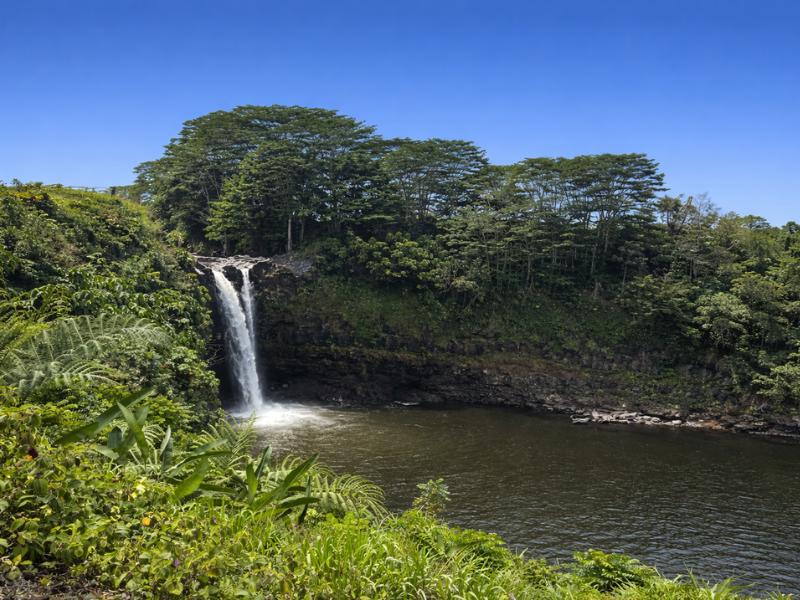
 The three best-value paid attractions in Hilo: Hawaii Volcanoes National Park at $30 per vehicle for a 7-day pass (roughly $4-5/day per carload), Pana’ewa Rainforest Zoo at ~$12/person (the only tropical rainforest zoo in the US, and one of the most unusual animal experiences in Hawaii), and ‘Akaka Falls State Park at $5/person plus $10/vehicle for a 442-foot waterfall and a genuinely beautiful rainforest trail. Rainbow Falls is $5/person plus $10/vehicle since January 2026 – still good value for one of the most photographed waterfalls in Hawaii.
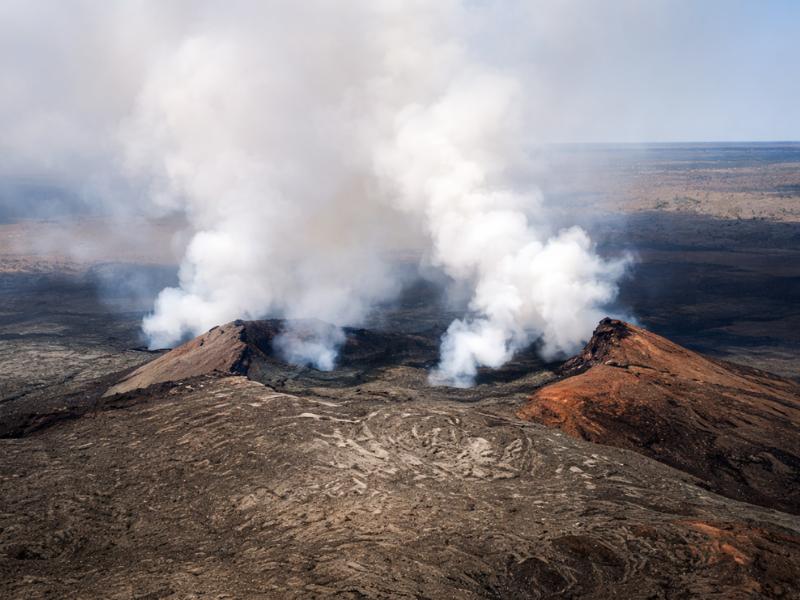
Hawaii Volcanoes National Park is the best-value attraction in all of Hawaii on a per-experience basis. Thirty dollars gets an entire carload in for 7 days. The park has active volcanic craters, steam vents, a 500-year-old lava tube, Chain of Craters Road winding 20 miles through successive lava flows to the coast, the Kilauea Iki trail across a hardened lava lake, and the Halemaumau crater overlook where active eruption episodes produce glowing lava visible from the rim. Kilauea has been erupting episodically since December 2024 – this is one of the most active periods in recent years, making the current window for lava viewing unusually good. Even without active lava, a day in the park for $4-5 per person is extraordinary value.
The America the Beautiful Pass ($80/year) covers Volcanoes National Park entry and every other US national park for 12 months. If you are visiting more than two national parks in a year, the annual pass pays for itself.
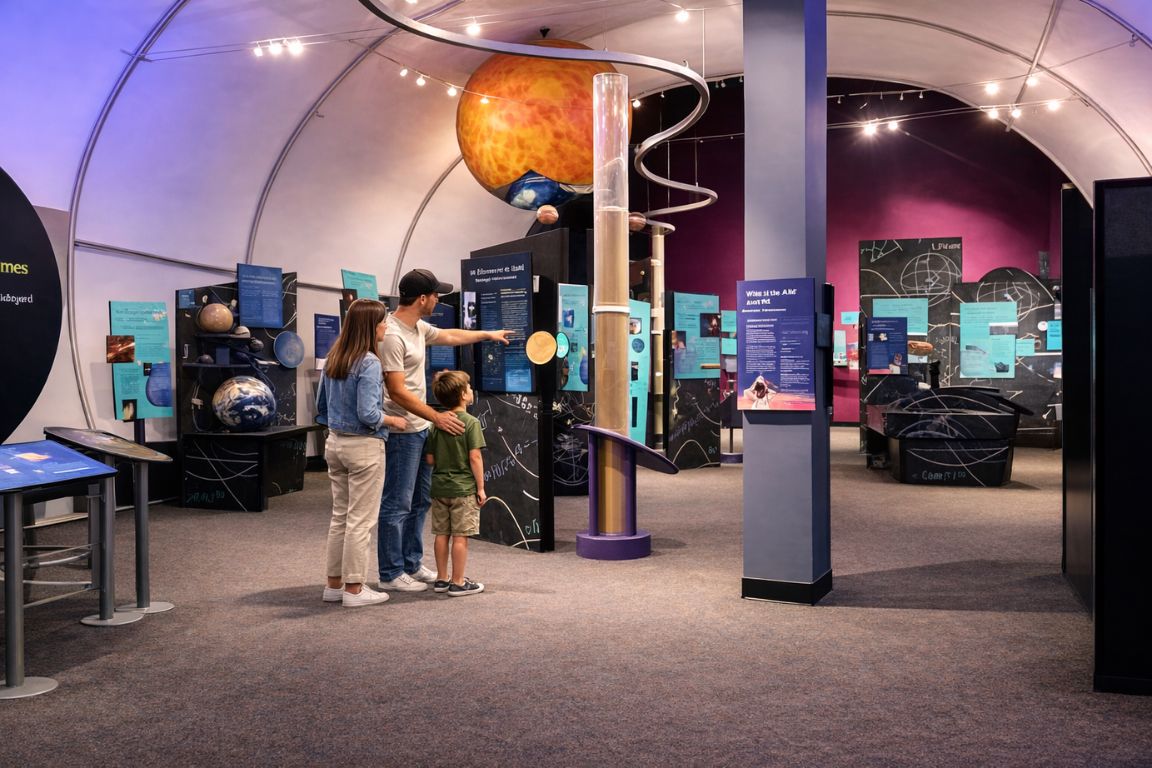
For visitors staying 3+ days, ‘Imiloa Astronomy Center offers a membership that sometimes costs only slightly more than two adult admission tickets (~$20 each) – making it worth considering if you plan to visit more than once. The planetarium shows, interactive exhibits, and on-site restaurant make it a half-day destination. Open Tuesday through Sunday.
| Hawaii Volcanoes National Park | $30/vehicle (7-day); pedestrian $15 | America the Beautiful Pass ($80/yr) covers this + all national parks |
| Pana’ewa Rainforest Zoo | ~$12/person (since Sept 2025); under 3 free | Only tropical rainforest zoo in US; Saturday petting zoo included |
| ‘Akaka Falls State Park | $5/person + $10/vehicle; under 3 free | Two waterfalls in one loop trail; Kahuna Falls included |
| Rainbow Falls + Boiling Pots | $5/person + $10/vehicle (same fee covers both) | Go early for rainbow effect; Boiling Pots is same fee, extra mile up the road |
| ‘Imiloa Astronomy Center | ~$20/adult; membership sometimes only marginally more | Planetarium + exhibits + restaurant; membership worth it for 2+ visits |
| Hawaii Tropical Bioreserve | ~$32/adult | Over 2,000 species; 90 min-3 hrs; one of the best botanical gardens in the Pacific |
| Mokupapapa Discovery Center | Free | NOAA marine exhibits, 3,500-gallon aquarium, downtown Tue–Sat |
Note: Pana’ewa Zoo was free until September 2025 – many travel sites still list it incorrectly as free. Verify current pricing at their official site before visiting.
Want one experience worth splurging on? The Hamakua Coast waterfall and volcano day with a local guide is it. The 8-hour ‘Akaka Falls, volcanoes, and Hilo tour is the itinerary that matches that day.
We’ve put together a full breakdown in our best waterfalls near Hilo tours guide so you know exactly which falls to prioritize and how to get there.
Where Should Budget Travelers Stay in Hilo?
The best budget accommodation options in Hilo: Howzit Hostels Hawaii and Big Island Hostel for dorm beds ($40-$60/night), Arnott’s Lodge for a mix of dorm, private, and camping options in a social backpacker atmosphere near Richardson Beach, and the SCP Hilo Hotel for the best budget private room in town (well-reviewed, central, modern). Vacation rentals near Richardson Ocean Park or Onekahakaha Beach are worth checking for groups of 2+ where a kitchen dramatically cuts food costs. Avoid peak season (June-August and December-January) when even Hilo prices jump 20-40%.
Howzit Hostels Hawaii in downtown Hilo has become the most consistently recommended hostel on the Big Island. Private bunks with blackout curtains and personal charging outlets, free WiFi, communal living space, and daily tours to beaches and natural attractions are included. The location puts you walking distance from the farmers market, Kamehameha Avenue, and the bayfront. Beds start around $40-$50/night. This is unusually good value for Hawaii and competitive with hostels in far cheaper parts of the mainland US.
Arnott’s Lodge is the adventure-focused budget option, designed specifically for travelers who came to Hilo to do things rather than sit by a pool. They offer dorm beds, private rooms, semi-private apartments, and actual tent camping on tropical grounds – the camping option being genuinely the cheapest sleep in Hilo. The lodge is near Richardson Ocean Park, runs guided Mauna Kea summit stargazing tours (one of the more reasonably priced on the island), and has a staff that genuinely knows what is happening around Hilo day to day. A good choice for solo travelers and anyone prioritizing the natural and outdoor side of the Big Island.
For private rooms under $100, the SCP Hilo Hotel is the most talked-about recent addition to Hilo’s accommodation scene. A converted older hotel with a modern renovation, good reviews, central location, and honest pricing without resort fees. Around $90-$130/night for a private room and it behaves like a proper hotel rather than a hostel. Worth checking rates against vacation rentals for stays of 4+ nights where rental prices often undercut hotels significantly.
One important note on Hilo accommodation pricing: the town has no resort fee culture (unlike Kona or Waikiki where fees add $30-$50 to every hotel night regardless of what is listed online). What you see is generally what you pay. Hotel tax runs about 18-19% in Hawaii and applies everywhere, but the base prices in Hilo are honest enough that this remains manageable.
First time exploring Hawaii’s wildest and wettest corner? Here’s our best Hilo nature tours guide so you make the most of what the rainforest side has to offer.
| Howzit Hostels Hawaii | Hostel (dorm) | $40-$55/bed | Solo travelers, social atmosphere, downtown location |
| Big Island Hostel | Hostel (dorm + private) | $40-$60/bed; private ~$90 | Backpackers; mix of room types |
| Arnott’s Lodge | Lodge + camping | Camping ~$25; dorm ~$45; private ~$85 | Adventurous travelers; near Richardson Beach |
| SCP Hilo Hotel | Budget hotel (private) | $90-$130/room | Couples, private room seekers; best budget hotel in town |
| Vacation rental (Keaukaha area) | Apartment / house | $100-$160/night (split for 2+) | Groups or couples; kitchen access; near best beaches |
| Hilo Hawaiian Hotel | Mid-range hotel | $130-$180/room | Bay views, pool; step up from budget; no resort fees |
What Is a Realistic Daily Budget for Hilo?
 A realistic daily budget for Hilo at three tiers: a true backpacker day (hostel + bus + free activities + farmer market food) runs $55-$75. A comfortable budget day (private room + rental car share + plate lunch + one paid attraction) runs $80-$120. A mid-range day adding a guided excursion and dinner out runs $150-$200. The Big Island sits at roughly $149/day for budget travelers according to aggregated traveler data – Hilo comes in at the low end of that range because of the free transit and concentration of free attractions.
The backpacker day looks like this: $45-$55 for a hostel dorm bed. Free bus to Onekahakaha Beach or Richardson Ocean Park. Breakfast from the farmers market ($8). Lunch at Cafe 100 plate lunch ($10). Afternoon at Kaumana Caves (free, bring your own headlamp). Dinner – bento from KTA Super Store or Suisan Fish Market poke bowl ($13-$16). Total: $76-$89 before alcohol and incidentals. On a free activity day with grocery breakfast and lunch, you can push this to $60-$70.
The comfortable budget day: $90-$130 for a private budget room or Airbnb. Rental car share (split $50-$80/day between 2 people = $25-$40 per person). Breakfast from the grocery store or gas station musubi ($5-$8). Plate lunch ($12). Hawaii Volcanoes NP vehicle entry split across the car ($30/car for 7 days = $4-5/day per carload). Dinner at a local restaurant ($18-$25 per person). Total: $100-$130 per person. This includes a full volcano day – one of the most extraordinary things you can do in Hawaii – for not much more than a meal in Waikiki.
The one category where Hilo budget travelers often overspend is rental cars. Hilo airport inventory is limited and last-minute bookings can be $80-$120/day for the cheapest vehicle. Booking 6-8 weeks out regularly gets you $45-$60/day. This single difference is worth $200+ over a week-long trip. Book early.
What Budget Mistakes Do Visitors Make in Hilo?
 The five most consistent budget mistakes in Hilo: renting a car last-minute (can double the daily rate), eating at tourist-facing restaurants instead of plate lunch counters, booking accommodation during peak season without noticing the price jump, visiting Pana’ewa Zoo expecting it to be free (it is not, since September 2025), and paying for guided tours to free destinations like Kaumana Caves and Onekahakaha Beach that genuinely do not need guides. The sixth mistake, which affects many visitors: not using the free Hele-On Bus at all and taking taxis everywhere instead.
Rental car timing is the biggest avoidable expense. Hilo’s rental car inventory at the airport is small. When demand exceeds supply – which happens regularly – prices spike hard. A car that costs $50/day when booked eight weeks out can be $100-$120 or more when booked a week out. For a week-long trip, this difference is $350-$490. Set a calendar reminder and book as soon as your flights are confirmed.
Eating at tourist-oriented restaurants versus plate lunch counters is a gap that compounds daily. A meal at a sit-down tourist restaurant in downtown Hilo runs $20-$35 per person. A plate lunch at Cafe 100, Hawaiian Style Cafe, or Puka Puka Kitchen runs $10-$14 with portions that rival anything you will get at the pricier places. Switching even two meals a day to local counters saves $20-$40/day per person – $140-$280 over a week.
Peak season pricing in Hilo is real but easy to avoid. June through August and the weeks around Christmas and New Year see accommodation prices rise 20-40% even at budget properties. May, September, and October are consistently the best value months – good weather, lower prices, and thinner crowds at the volcano and waterfalls.
Want to know which months give you the best experience in Hilo? Here’s our best time to visit Hilo tours guide so you don’t book the wrong time of year.
Assuming Pana’ewa Zoo is free is the specific Hilo budget gotcha. The zoo operated as a free, donation-based zoo for decades and is still listed as free on dozens of travel sites, blog posts, and review pages written before September 2025. The current fee is approximately $12/person. Budget for it. It is worth the price, but it is not free.
Not using the Hele-On Bus is a pure money-leaving-on-the-table mistake. The bus is free until December 2028. For town-based days – beaches, downtown, the farmers market, Liliuokalani Gardens – the bus replaces $12-$16 taxis for zero cost. A carless traveler in Hilo who uses the bus for town days and rents a car only for the volcano and ‘Akaka Falls saves significant money versus using taxis for everything.
| Book rental car 6-8 weeks out, not last-minute | $200-$490 over a week |
| Eat plate lunches and farmers market food vs tourist restaurants | $20-$40/day per person |
| Travel in May, Sep, or Oct instead of peak season | 20-40% on accommodation |
| Use free Hele-On Bus for town days instead of taxis | $12-$30/day per person |
| Buy America the Beautiful Pass if visiting 3+ national parks | Pays off after 2-3 park visits ($80 vs $30+ per visit) |
| Cook 1-2 meals/day from KTA Super Store or grocery | $15-$25/day |
| Bring snorkel gear from home vs renting daily | $10-$20/day if you snorkel regularly |
| Budget for Pana’ewa Zoo at ~$12/person (not free since Sept 2025) | Avoids surprise cost at the gate |
Prices verified April 14, 2026. Hele-On Bus free until December 31, 2028 per official Hawaii County fare page.
When you are ready for the one splurge that earns it, the 7-hour guided volcano, waterfall, and black sand day from Hilo is it.
Frequently Asked Questions
Is the Hele-On Bus actually free?
Yes. The Hele-On Bus is free for all passengers until December 31, 2028, per the official Hawaii County Mass Transit Agency fare page. This was confirmed as of April 2026. The bus covers downtown Hilo, the university area, Keaukaha (near Richardson Ocean Park and Onekahakaha Beach Park), and routes across the island to Kona. For town-based days, it completely replaces taxis at zero cost. The volcano and ‘Akaka Falls are not on practical bus schedules for tourists and still require a rental car or tour.
What is the cheapest way to see Hawaii Volcanoes National Park?
Drive yourself in a rental car and split the $30 vehicle entry fee across your group that is $10 per person for a carload of three, valid for 7 days. If you plan to visit more than two or three national parks during your trip, the America the Beautiful Annual Pass ($80) covers unlimited entry to all US national parks for 12 months, making it the better deal for active travelers. The park itself is free once you are inside – no additional fees for the lava tube, crater rim walk, or Chain of Craters Road.
What does a plate lunch cost in Hilo?
Most plate lunches in Hilo run $10-$14 and include a protein (teriyaki beef, chicken katsu, kalua pork, fried fish, shoyu chicken), two scoops of white rice, and macaroni salad. Portions are large. Cafe 100 on Kilauea Avenue has plates from about $7. Hawaiian Style Cafe on Manono Street is known for portions so generous that sharing is practical. Puka Puka Kitchen near the farmers market serves slightly more upscale local plates for $12-$15. Suisan Fish Market poke bowls run $13-$19 and are described by locals as large enough for two people.
Is Hilo cheaper than Kona?
Yes, consistently. Hilo hotel prices run 15-25% lower than comparable Kona properties. The rental car market is slightly cheaper (more supply relative to demand). Food is similar at the local level but Kona has a larger tourist-facing restaurant scene that drives up average spending. The main activities in Hilo – waterfalls, beaches, lava tube, volcano – are cheaper or free, while Kona’s main draws (manta ray night snorkeling, Kealakekua Bay snorkeling, white sand beaches with amenities) carry higher activity costs. For a budget trip, Hilo is the right base.
Can you do Hilo without a rental car?
For a town-focused trip: yes, surprisingly well. The free Hele-On Bus covers downtown, the farmers market, the bayfront, and the Keaukaha beach parks. The best free activities – Richardson Ocean Park, Onekahakaha Beach, Liliuokalani Gardens, Kaumana Caves, and the Mokupapapa Center – are all reachable by bus or a short taxi ride. For the volcano, ‘Akaka Falls, and the Hamakua Coast: not practically, no. Those destinations require a rental car or guided tour.