Punaluʻu Black Sand Beach: What to Know Before You Go
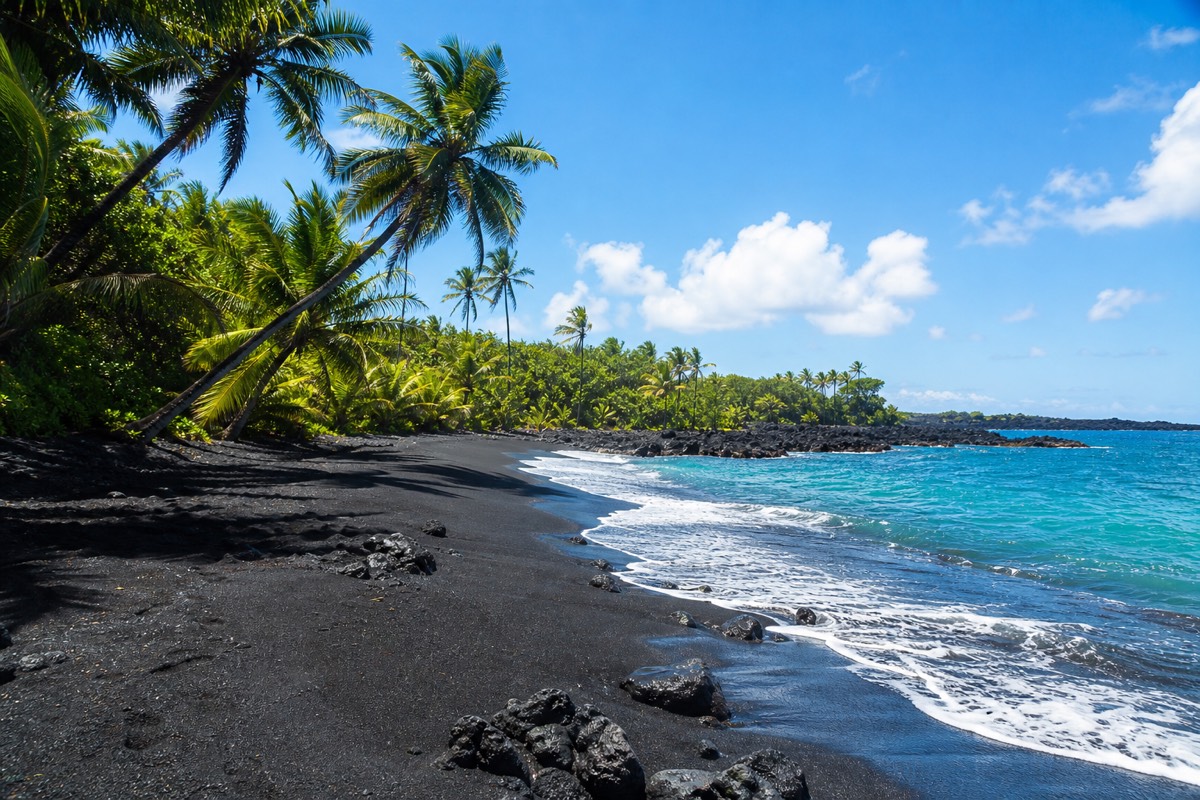
The sand at Punaluʻu is not painted or trucked in. It is the ground-down remains of lava that met the ocean and exploded into glass, and it comes with its own honest rules for how to visit it well.
At a glance: how the black sand forms
A simplified version of the process USGS documents as a littoral explosion, where lava meets seawater at the shoreline.
What is Punaluʻu Black Sand Beach?
Punaluʻu is a black sand beach in the Kaʻu district of Hawaiʻi Island, between the towns of Pāhala and Nāʻalehu, roughly an hour and a half south of Hilo. It is a county park with a freshwater pond, a palm grove, and a reputation for reliable sea turtle sightings.
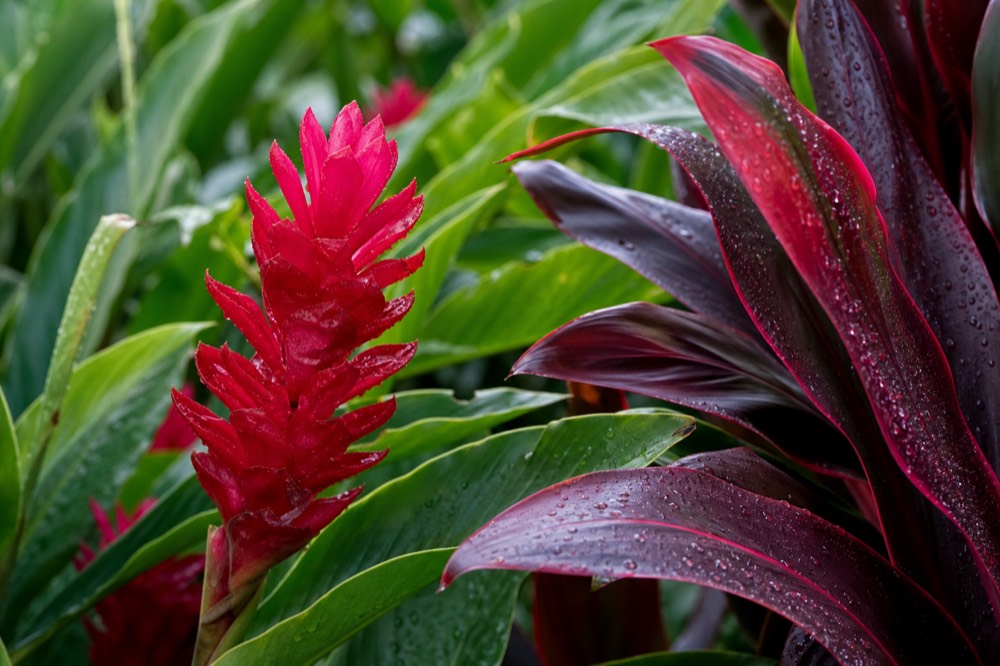
It sits well off the route most first-time visitors expect, south of Hawaii Volcanoes National Park rather than in Hilo itself, which is exactly why it gets paired with a volcano-day itinerary rather than visited on its own. The beach itself is short, backed by coconut palms and a large brackish pond, with the black sand giving way to lava rock at both ends of the cove.
Hawaii County's Department of Parks and Recreation manages the site, with parking, restrooms, showers, and a couple of covered pavilions available on site, detailed further down. It is a working public park, not a resort beach, and it looks and feels like one: unmanicured, a little rough at the edges, genuinely wild rather than landscaped for visitors.
The name itself gives a clue to what the site has meant locally for far longer than it has been a stop on any tour itinerary. Punaluʻu translates roughly to "diving spring," a reference to freshwater springs that surface both onshore and offshore here, cold enough in places to feel distinctly different from the surrounding seawater when you wade through them. Hawaiian families have fished and gathered at this shoreline for generations, and the pond behind the beach was historically used for raising fish, a use that still shapes how the site is laid out today. The turtles and the marine life here are part of the same broader coastal ecosystem covered in our best nature tours guide, which looks at marine wildlife spots across the wider Hilo side of the island.
What makes the sand black?
The sand is fragmented basalt, created when molten lava from an eruption reached the ocean and the seawater flash-boiled its surface into fine glassy fragments, a process the U.S. Geological Survey calls a littoral explosion. Waves then grind those fragments down into the fine black grains you see today.
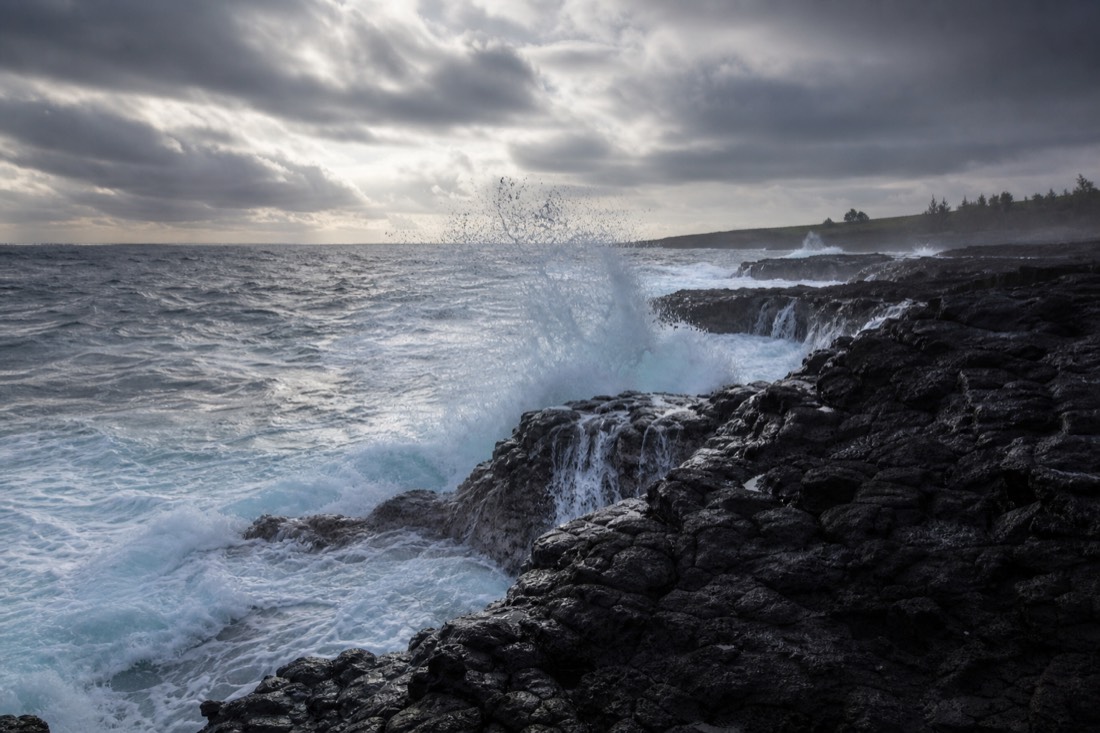
This is not sand in the ordinary sense of eroded quartz or coral. It began as molten rock. When a lava flow enters the ocean, the extreme temperature difference causes explosive steam events at the shoreline, shattering the glassy outer skin of the lava into shards ranging from fine dust to small pebbles. Ocean waves do the rest of the work over years and decades, sorting and grinding the coarser fragments into the soft, dark sand that now covers Punaluʻu's shore.
The lava that built this particular beach came from past activity on Mauna Loa, not from anything currently active at this shoreline, so nothing here is warm or dangerous in a volcanic sense. Because the process depends on fresh lava reaching the coast, black sand beaches are also temporary on a geological timescale: ocean currents slowly carry the loose grains away faster than an inactive shoreline can replace them, which is part of why Hawaiʻi's black sand beaches are treated as a genuinely finite feature rather than a permanent fixture of the coastline. It is simply the finished, cooled result of a process that played out here long before the beach became a stop on anyone's itinerary. Hawaiʻi's other colored beaches share the same basic logic: the island's famous green sand beach nearby is the same littoral-explosion process, but concentrated in olivine, a mineral that survives the grinding better than basalt glass does.
| Sand color | What it is | Where to see it |
|---|---|---|
| Black | Ground basalt glass from a littoral explosion | Punaluʻu, Kaimū |
| Green | Concentrated olivine crystal, same explosive origin | Papakōlea (Green Sand Beach), Kaʻu |
| White | Coral and shell fragments, unrelated to lava | Most resort beaches elsewhere on the island chain |
Will you see sea turtles?
Very likely. Punaluʻu is one of the most reliable places on the island to see green sea turtles (honu) and occasionally endangered hawksbill turtles basking directly on the black sand, a behavior that is normal and not a sign of distress.
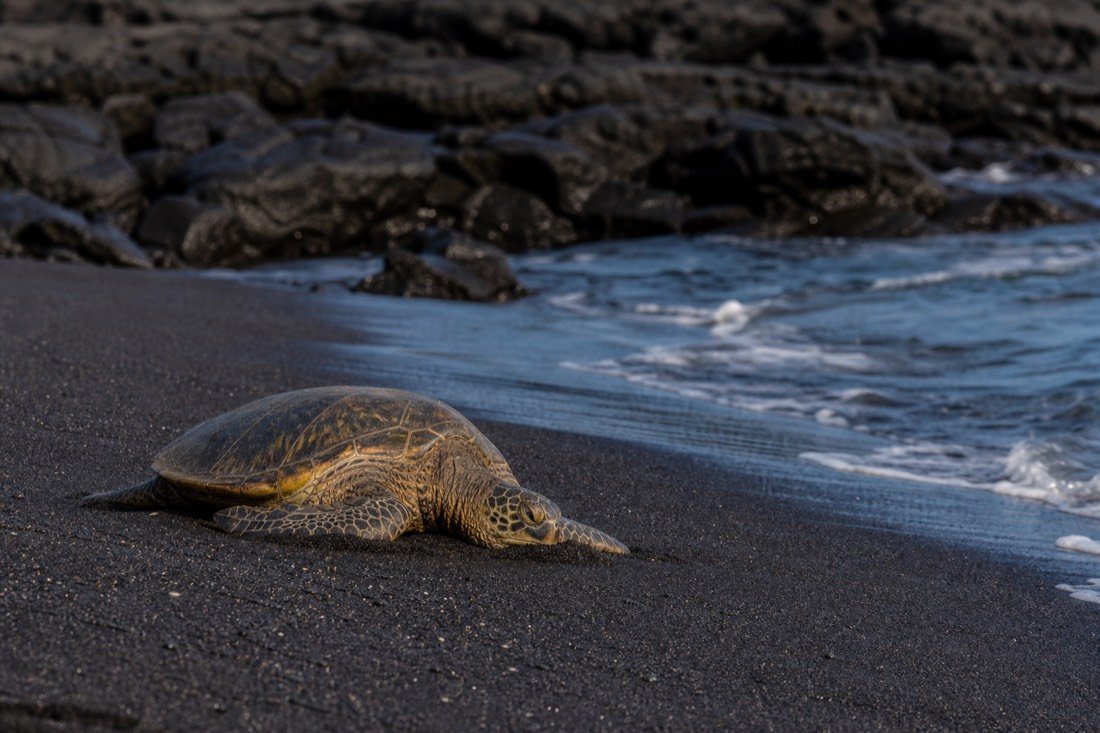
Turtles haul out here to warm themselves, a natural behavior seen at only a handful of beaches statewide, and it is a large part of why Punaluʻu draws visitors who have no particular interest in the geology. Sightings are frequent enough that most visits produce at least one turtle, though nothing in nature is guaranteed on any single day.
The basking behavior itself is worth understanding, since it looks alarming to a first-time visitor who does not expect to see a large marine animal lying motionless on dry sand. Turtles regulate their body temperature partly through basking, and a turtle hauled out on the beach is resting, not stranded or in distress. It is one of only a few beaches statewide where this happens regularly enough to expect it rather than treat it as a rare stroke of luck, and morning and late afternoon tend to be the more reliable windows, when the sand has cooled from full midday heat but is still warm enough to be worth the effort of climbing out of the water.
What matters more than whether you will see a turtle is how to behave once you do, which is the subject of the next section, because the wrong instinct here (getting close for a photo) is exactly the one to resist.
How close can you get to the turtles?
NOAA's guidance for Hawaiʻi is a minimum of 10 feet from sea turtles, on land and in the water, and never to touch, chase, feed, or otherwise disturb them. Hawaiian green sea turtles are protected under state and federal law.
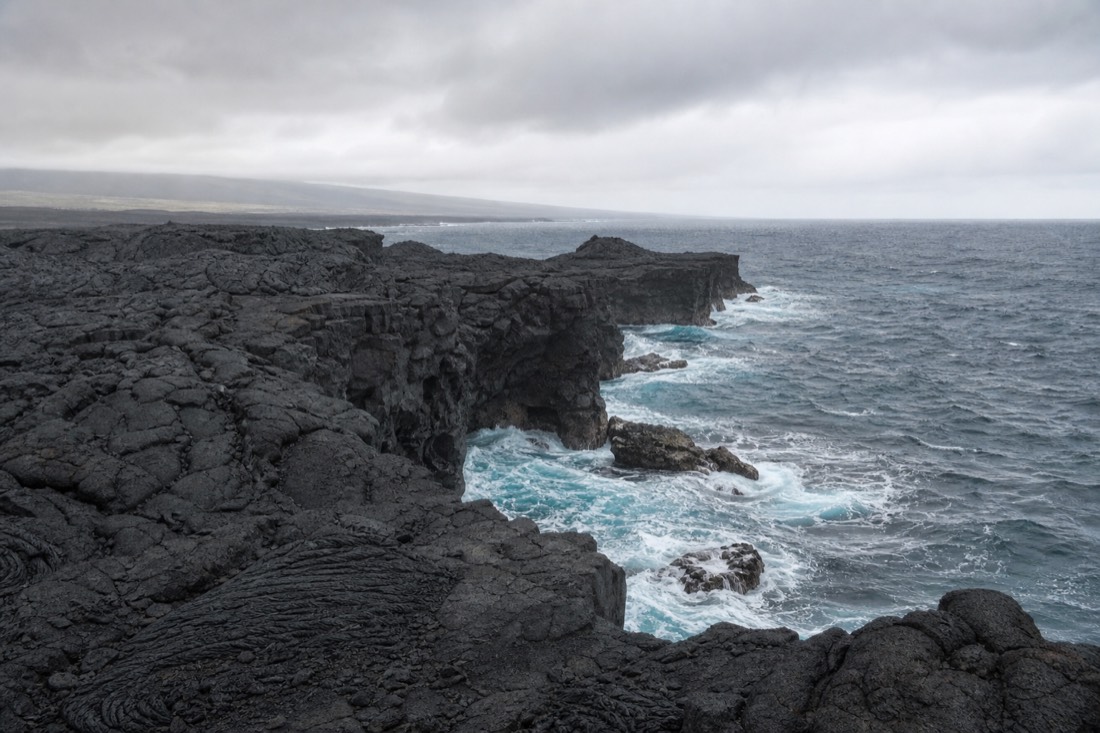
The rule exists because a startled turtle returning to the water expends real energy and interrupts genuine rest, not because a person standing nearby causes obvious harm in the moment. A camera zoom or a pair of binoculars gets a far better photo than crowding the animal ever will, and it keeps you clearly on the right side of both the law and basic wildlife etiquette.
| Do | Don't |
|---|---|
| Stay at least 10 feet away, on sand or in water | Approach for a closer photo or selfie |
| Use a zoom lens or binoculars | Touch, poke, or attempt to move a turtle |
| Let a resting turtle stay where it is | Chase a turtle back toward the water |
| Keep dogs leashed and well back | Feed turtles anything, ever |
NOAA recommends at least 50 feet from Hawaiian monk seals, and at least 150 feet from mothers with pups. Stay behind any posted barriers. The 10-foot turtle recommendation does not apply to seals.
Is it safe to swim?
Swimming conditions vary. Hawaiʻi Ocean Safety lists lifeguard coverage here; check with the on-duty lifeguard before entering. The rocky lava shelf at each end of the cove and occasional strong currents make this a beach for wading and photos more than a serious swim, especially with children.
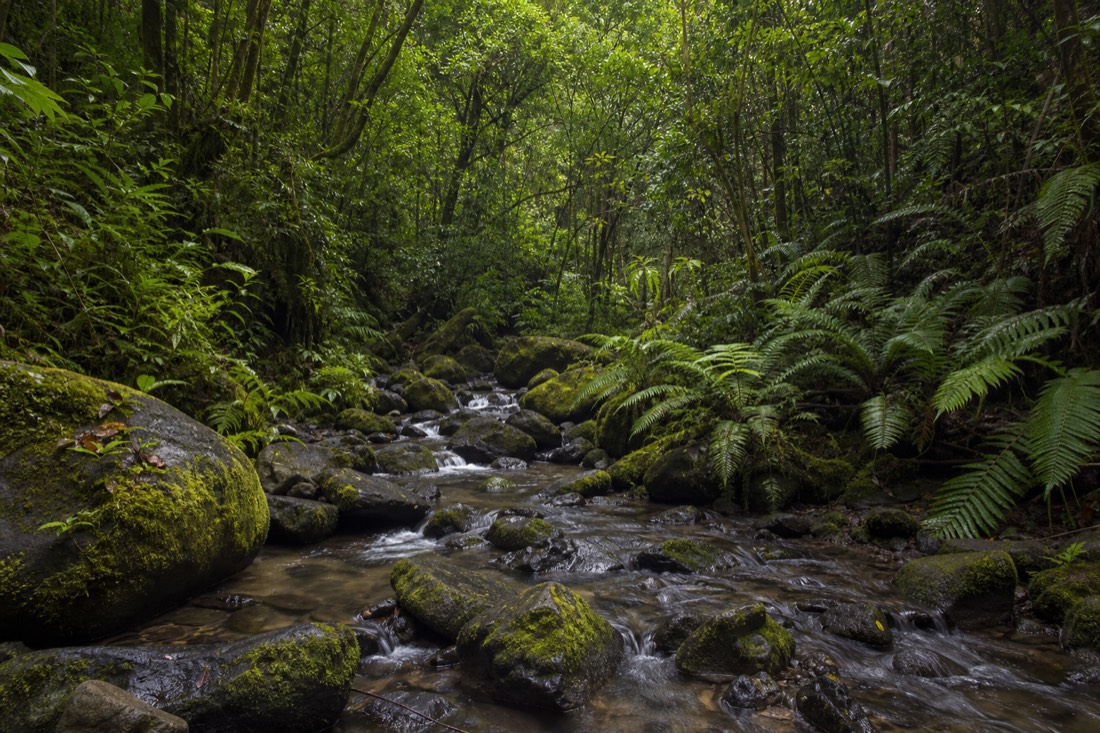
The sand itself is soft underfoot near the waterline, but both ends of the cove transition quickly into lava rock, which is uneven, sometimes sharp, and unpleasant to walk on barefoot. Even with scheduled lifeguard coverage, open-water precautions apply: check conditions before entering, do not swim alone, and treat any visible current or churn as a reason to stay closer to shore. Do not assume the pond is a designated or safe swimming area for children. Follow posted park rules and current lifeguard advice.
| Condition | What to know |
|---|---|
| Lifeguard | Scheduled coverage; confirm on site |
| Entry surface | Sand at the center, lava rock at both ends of the cove |
| Currents | Can be present and are not consistently marked; use caution |
| Better option for young kids | Stay on shore when conditions or supervision are unsuitable |
Sun exposure is the other real consideration, separate from the water itself. Black sand absorbs and radiates heat far more than pale sand does, and by midday the beach can be uncomfortably hot underfoot even in sandals. Timing a visit for the morning or later afternoon, when both the sun and the sand are less intense, makes the whole stop more comfortable, particularly with children.
What's at the park?
Hawaii County's park has parking, restrooms, outdoor showers, a couple of covered pavilions, and a boat ramp. There is no food concession on site, so bring water and snacks, or plan a stop in nearby Pāhala or Nāʻalehu.
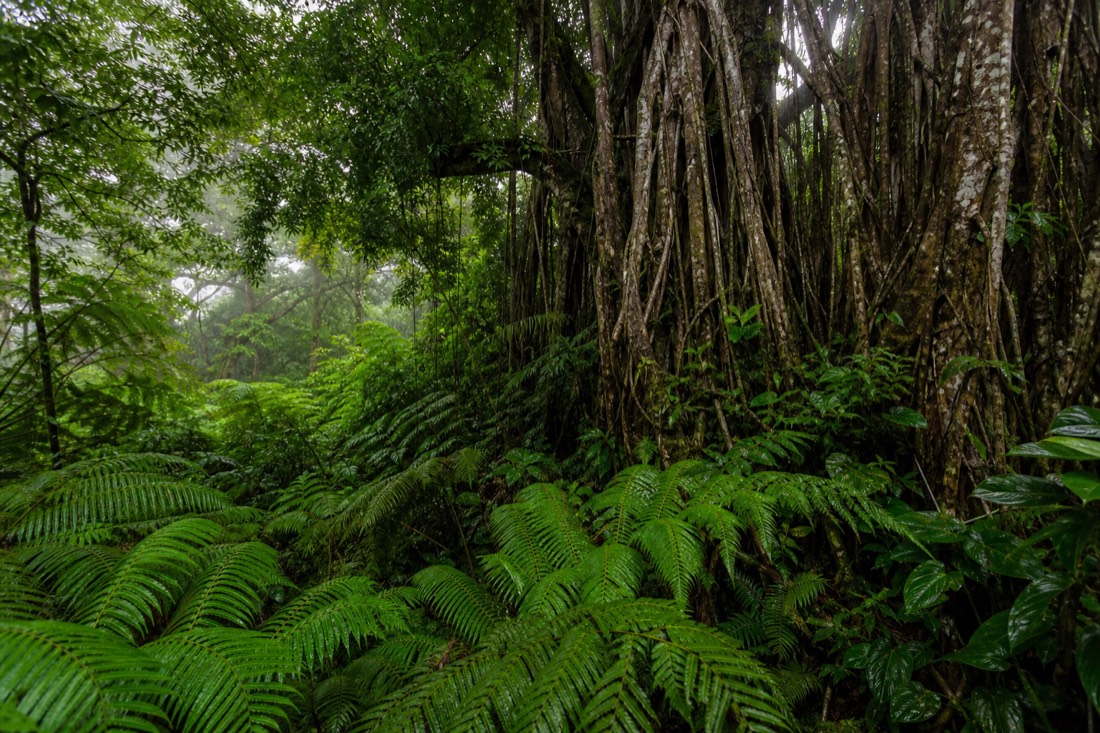
The palm grove behind the beach gives real shade, which matters given how exposed the sand itself is at midday. Picnic tables under the pavilions are first-come, though day camping is possible with a county permit if that is part of your plan. None of the facilities are elaborate, and that is broadly consistent with the rest of Kaʻu, a quieter, less commercialized stretch of the island than the Kona or Hilo resort areas.
| Facility | Available |
|---|---|
| Parking | Yes, free lot |
| Restrooms | Yes |
| Showers | Yes, outdoor |
| Picnic pavilions | Yes, first-come |
| Food concession | No, bring your own or stop in Pāhala/Nāʻalehu |
What should you pack?
Reef-safe sunscreen, closed-toe water shoes for the lava rock at either end of the cove, and your own food and water, since there is no concession on site. A dry bag or towel for the drive back is worth the small effort.
Water shoes matter more here than at a typical sand beach: the transition from soft black sand to lava rock happens quickly at both ends of the cove, and bare feet or thin flip-flops make that stretch genuinely uncomfortable. Because the beach sits well outside any town center, there is no gift shop or last-minute convenience stop nearby, so bringing everything you need for a couple of hours, water especially, avoids an unnecessary drive back toward Pāhala. Reef-safe sunscreen is worth the small extra cost given how much marine life, turtles included, spends time in these waters.
How do you get there?
From Hilo, Punaluʻu is about 55 miles and an hour and a half by car via Highway 11. From the Hawaii Volcanoes National Park entrance it is closer, about 30 miles and 40 to 45 minutes, which is why most visitors see the two together rather than as separate trips.
The drive itself runs through the Kaʻu district's open ranchland and past small former plantation towns, a noticeably different landscape from the rainforest closer to Hilo, a contrast the state tourism board's own Kaʻu region page also highlights. There is no public transit option that makes this a practical independent trip without a car; a rental car or a guided tour are the two realistic ways to get there. Our full-day volcano tour from Hilo is one option that already builds in a Punaluʻu Bake Shop stop right next to the beach.
| From | Distance | Drive time |
|---|---|---|
| Hilo | ~55 miles | ~1.5 hours |
| Hawaii Volcanoes National Park entrance | ~30 miles | ~40–45 minutes |
| Kailua-Kona | ~70 miles | ~1.75–2 hours |
How does it pair with a Hawaii Volcanoes National Park day?
Because the drive from the park to Punaluʻu is short, a single day that covers Hawaii Volcanoes National Park in the morning and the beach in the afternoon is the most efficient way to see both without backtracking to Hilo twice.
This is exactly the itinerary shape our Punaluʻu Black Sand Beach, Volcanoes National Park & Hilo tour is built around, and it reflects how the geography actually lays out rather than an arbitrary bundling: craters and steam vents in the morning while the light and crowds are easier, then the turtles and black sand as an unwinding stop before the return drive. If you are planning the volcano side of the day in more depth first, our best volcano tours guide covers the park itself.
Doing this as a single guided day removes the two biggest headaches of the do-it-yourself version: timing the long drive loop correctly, and finding a way to fit a real lunch stop in without losing daylight at either end. A guide who already knows the route can also read the day's conditions, at the park and at the beach, and adjust the order or the pace accordingly, something that is hard to replicate on a first visit with a rental car and a paper itinerary.
| Time | Stop |
|---|---|
| Morning | Hawaii Volcanoes National Park: craters, steam vents, Ch a i n of Craters Road |
| Midday | Drive south via Highway 11 (~40–45 min) |
| Afternoon | Punaluʻu Black Sand Beach: turtles, black sand, freshwater pond |
| Late afternoon | Return drive to Hilo (~1.5 hours) |