Black Sand Beaches on the Big Island, Compared
Every one of the island's black sand beaches is doing the same trick, lava meeting ocean and shattering into fragments, but they are not the same beach. Some formed centuries ago. One of them formed within living memory, in an eruption people on this island watched happen.
Does Hilo have black sand beaches?
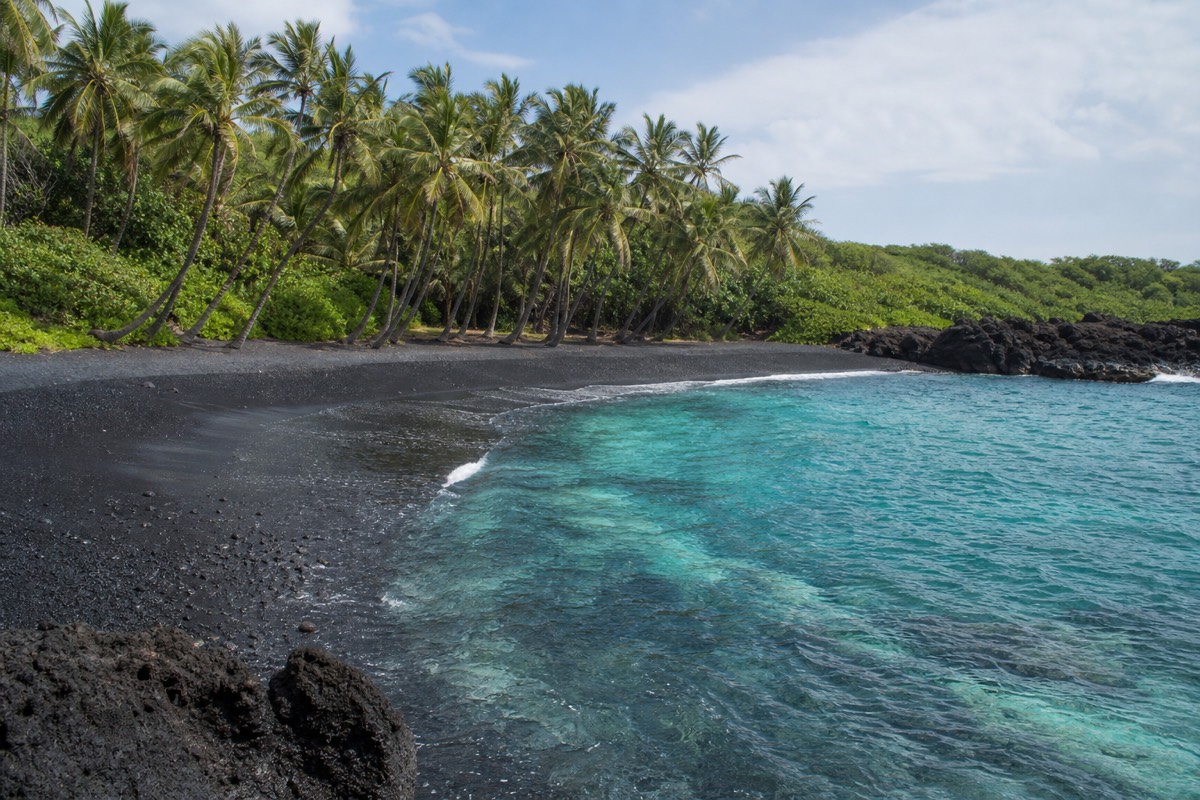
Not directly downtown, but yes on the surrounding coast. Richardson Ocean Park, about ten minutes from Hilo, has genuine black sand mixed with green olivine grains. The larger, more famous black sand beaches, Punaluʻu, Kaimū and Pohoiki, sit further south, closer to Hawaii Volcanoes National Park.
This is worth clearing up early because it is the single most common confusion in this search. Hilo's own bayfront is not black sand and is not a swimming beach at all, covered in our Hilo beaches guide. The black sand beaches people actually picture, the ones on postcards, sit thirty minutes to an hour south, along the coastline shaped by Kīlauea's more recent eruptions.
| Beach | Formed | Best known for |
|---|---|---|
| Punaluʻu | Centuries ago | Reliable turtles, easy access |
| Kaimū | 1990 eruption | Walking across genuinely new lava ground |
| Pohoiki | 2018 eruption | The island's newest black sand, by decades |
| Richardson's | Older flows | Mixed black and olivine sand, near Hilo, best snorkeling |
| Kehena | Older flows | A quiet, undeveloped cove |
Is Punaluʻu Black Sand Beach worth it?
Yes. It is the island's most established black sand beach, with reliable sea turtle sightings, a genuinely dramatic coconut-palm shoreline, and easy access from the main highway. It is also the one most visitors have already heard of, which is exactly why it gets a full guide of its own.
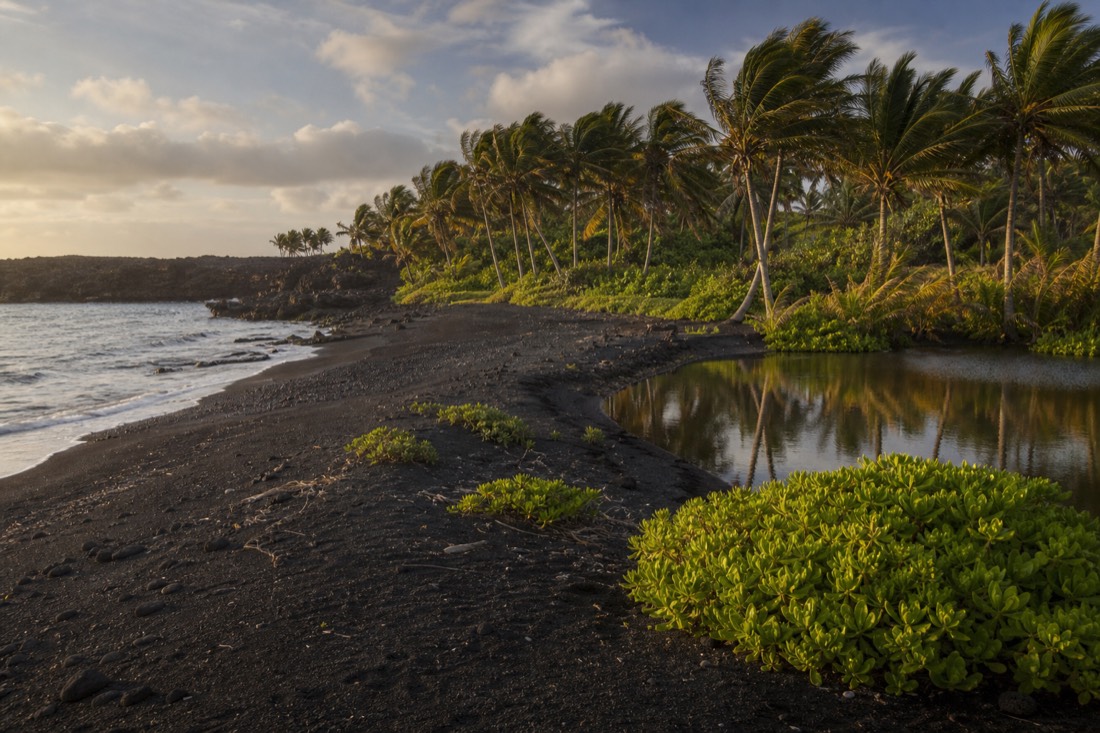
Punaluʻu sits roughly on the drive between Hilo and the southern tip of the island, palm-backed and framed by older lava flows that have had centuries to weather into fine black grains. Turtles haul out on the sand regularly enough that it is one of the more dependable sightings on the island. For the full breakdown, parking, turtle rules, what the sand is actually made of, our dedicated Punaluʻu Black Sand Beach guide covers it in depth. This page's job is different: showing you how it compares to the others.
How far apart are these beaches, and can you see more than one in a day?
Yes, and most visitors doing the south side of the island end up seeing at least two. Punaluʻu and Kaimū sit roughly forty minutes apart by car, with Pohoiki further north along the Puna coast and Richardson's back near Hilo in the opposite direction entirely.
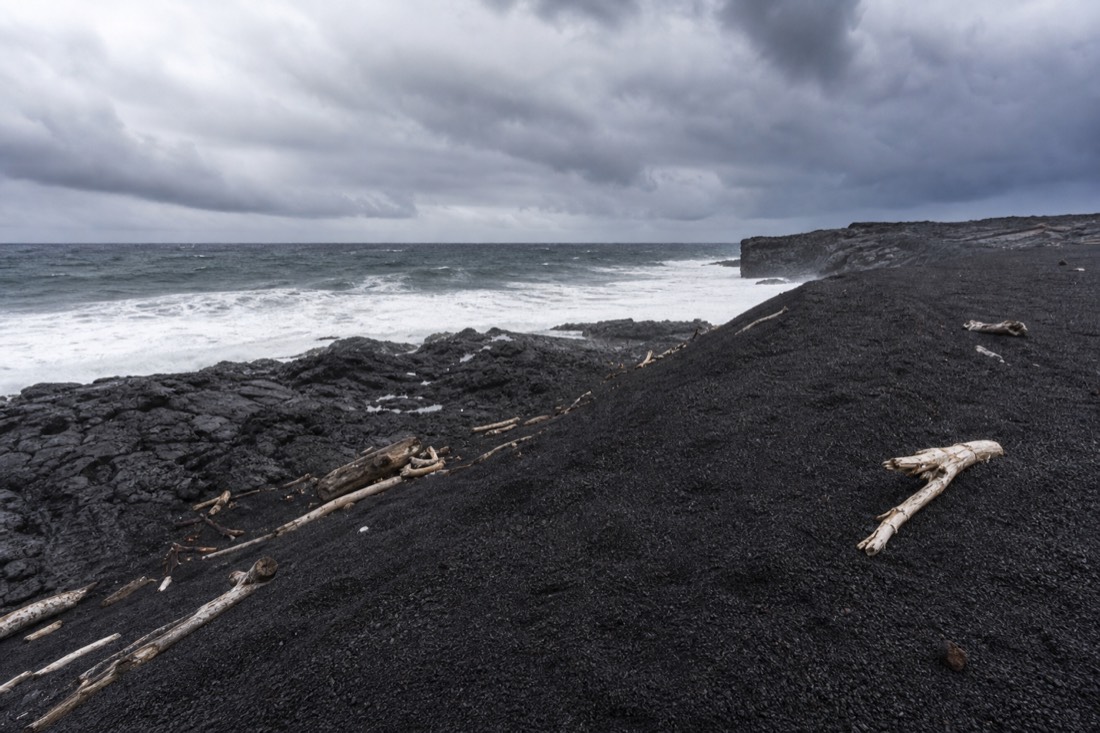
Think of these as two separate trips rather than one loop. Punaluʻu, Kaimū and the green sand beach at South Point all sit along the southern drive between Hilo and Kona, easily combined in a single long day. Pohoiki and the Puna coast sit on a different road entirely, east of Volcanoes National Park, and pair more naturally with a Kalapana or lava-viewing day than with the South Point run.
| Beach | Roughly from Hilo | Pairs naturally with |
|---|---|---|
| Richardson's (mixed black/olivine) | 10 minutes | A standalone Hilo beach morning |
| Kehena | 45–50 minutes | The Puna coast, Pohoiki, Kalapana |
| Pohoiki (Isaac Hale Beach Park) | 50 minutes | Kehena, a lower Puna coastal day |
| Kaimū | Roughly 1 hour | Kalapana, the Puna coast |
| Punaluʻu | Roughly 1 hour, south route | Volcanoes National Park, the green sand beach |
What is Kehena, and is it worth the detour?
Kehena is a small black sand cove tucked below a cliff along the same lava coastline as Kaimū and Pohoiki, reached by a short, steep unmarked trail rather than a parking-lot walk-in. It is quieter than any of the named beaches on this list and has no facilities at all.
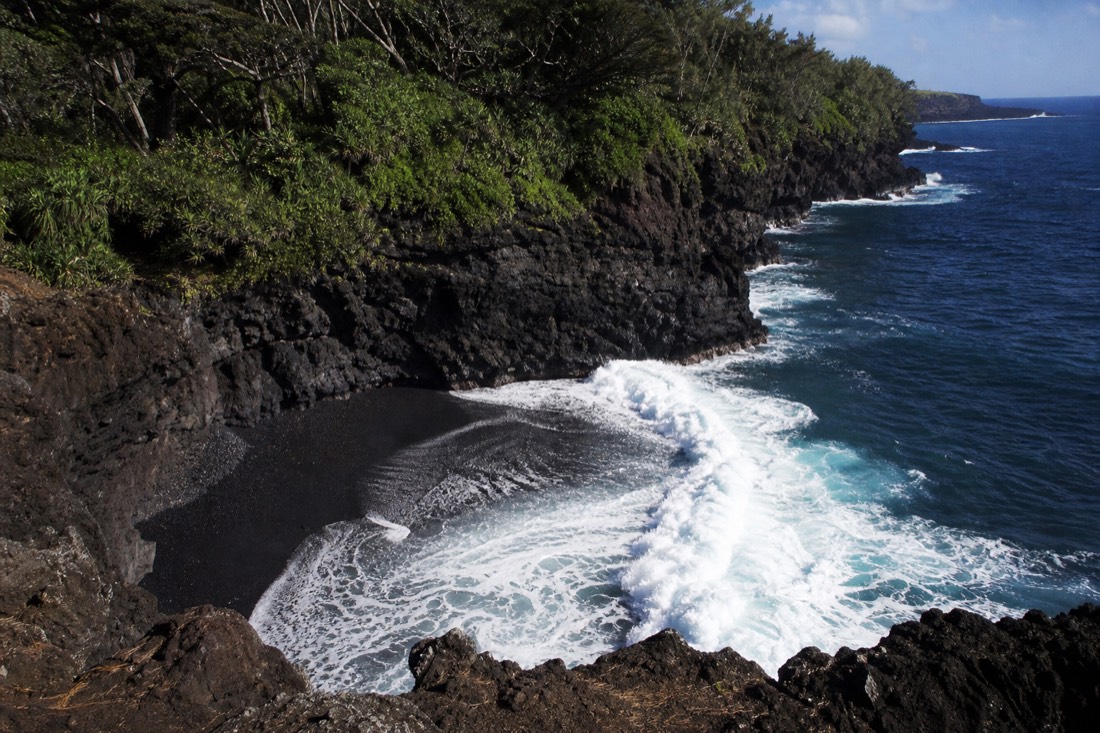
There's no signage pointing casual drivers toward it, which is exactly why it stays uncrowded. The trail down is short but genuinely steep, loose in places, and not signed for accessibility. Once you're down, it's a small, dramatic pocket of black sand with no lifeguard, no restroom and no vendor of any kind, which suits people who have already done the more developed stops and want something quieter.
How does Kaimū compare to Punaluʻu?
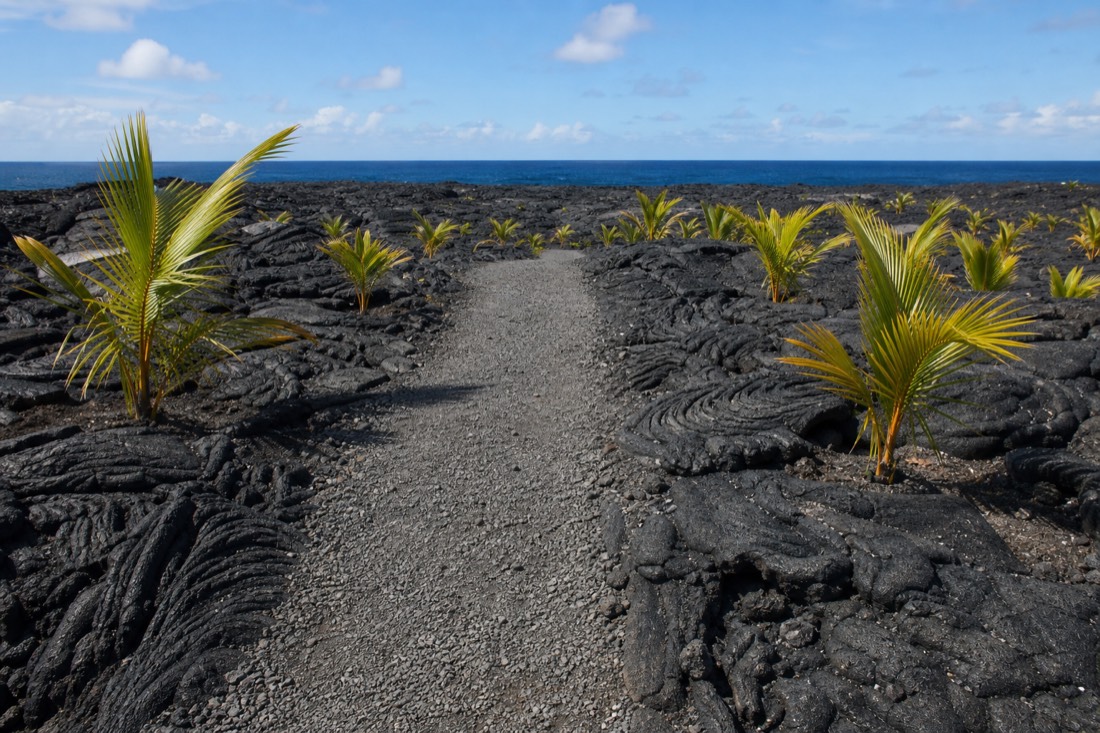
Kaimū is younger, flatter and far less swimmable. It sits on top of the lava that buried the original village of Kaimū and much of Kalapana during Kīlauea's Puʻu ʻŌʻō eruption in 1990, and the coconut grove growing across the flow today is entirely new growth on entirely new ground.
Where Punaluʻu feels established, with palm trees old enough to lean dramatically over the sand, Kaimū feels raw. You are walking across a lava field with a young grove taking root in cracks, and the beach itself sits at the ocean's edge with strong currents that make it a photograph-and-walk spot rather than a swimming beach. Locals lost homes, a church and a black sand beach that existed before this one in that eruption; the new shoreline is a genuinely different piece of ground from the one that came before it.
| Punaluʻu | Kaimū | |
|---|---|---|
| Formed | Older flows, centuries of weathering | 1990 Puʻu ʻŌʻō eruption |
| Swimming | Caution, but people do wade in | Not recommended, strong currents |
| Turtles | Regular, reliable sightings | Occasional |
| Shade | Mature coconut palms | Young palms just establishing |
| Feel | An established beach park | A walk across a young lava field to the sea |
What is Pohoiki, and how is it different from the others?
Pohoiki, also known as Isaac Hale Beach Park, has the youngest black sand on this list by decades. It was created by Kīlauea's 2018 lower East Rift Zone eruption, the same event that reshaped miles of Puna coastline, and the sand there is still settling and shifting.
Before 2018, this spot was a boat ramp and a modest beach park. The eruption filled in part of the channel with new land and deposited black sand where there had been none, effectively building a new beach in a matter of months. It now draws a mix of local surfers and curious visitors, and because the sand is so recently formed, it reads finer and looser underfoot than the more compacted, older sand at Punaluʻu.
Pohoiki still functions as a working boat ramp alongside the new beach, and it has become one of Puna's more popular surf breaks since 2018, drawing a small, dedicated local crowd rather than the tour-bus traffic Punaluʻu sees. There's parking and a boat ramp, but no lifeguard and no real visitor infrastructure, this stays a locals' beach that happens to be open to everyone.
The larger process behind all of this, lava hitting seawater and exploding into fragments, is what geologists call a littoral explosion, and it is the same mechanism whether it happened in 2018 or a thousand years ago. The USGS explanation of littoral cones covers the physics if you want the full mechanism.
What about Richardson's, near Hilo itself?
Richardson Ocean Park has a mixed black-and-olivine sand, meaning it carries some of the same green mineral that makes the famous Green Sand Beach at South Point green, just in a much smaller concentration. It is the closest black sand you'll find to downtown Hilo, and it doubles as the area's best snorkeling spot.
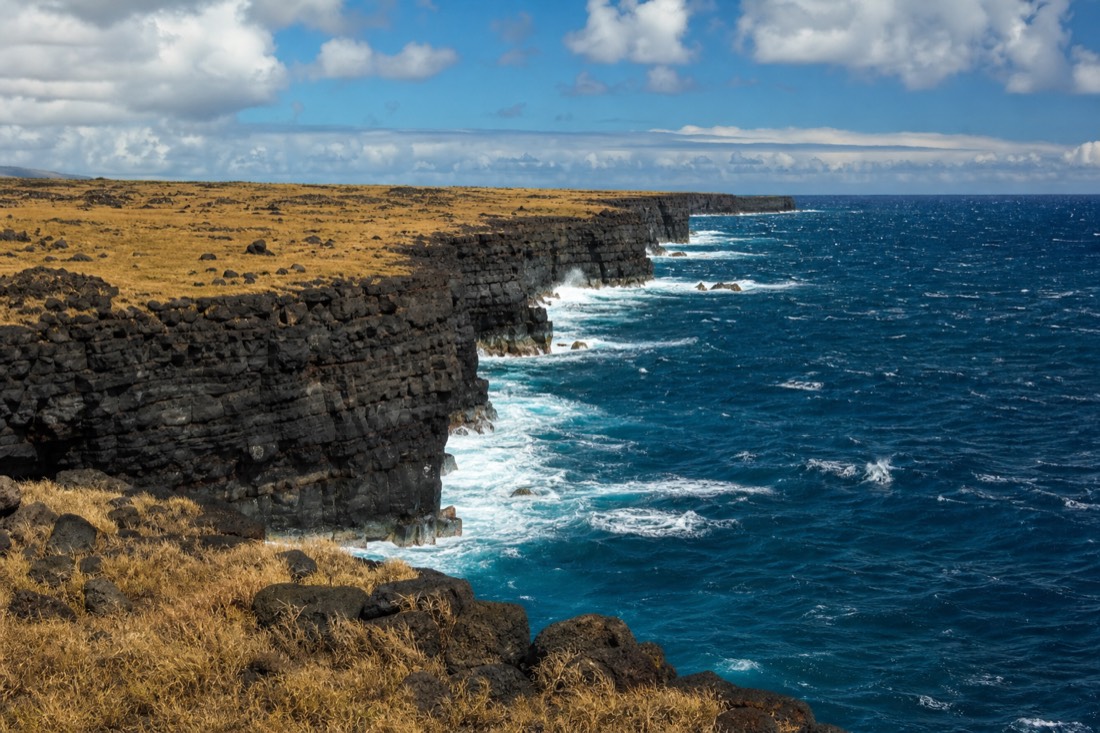
Because it sits so close to town, Richardson gets treated more as a swimming and snorkeling destination than a black-sand landmark, but the geology is genuinely the same story playing out at a different scale. Hawaiian green sea turtles haul out here about as reliably as they do at Punaluʻu, which makes Richardson the practical choice for visitors staying in Hilo who don't want to give up an hour of driving each way just to see turtles on black sand. Our Hilo beaches guide covers Richardson's swimming conditions, turtle-viewing rules and how it stacks up against the other Hilo-area beaches in full.
Which of these beaches can you actually swim at?
Richardson's is the strongest all-around swimming option of the group. Punaluʻu allows cautious wading. Kaimū and Pohoiki both carry real currents and are better treated as look-and-walk stops than swimming beaches.
This is worth separating clearly from which beach is prettiest, because the two questions have different answers. A beach being young and dramatic, like Kaimū or Pohoiki, doesn't make it safe to swim at, freshly formed coastline often has steeper drop-offs and less predictable currents than a shoreline that has had centuries to settle.
| Beach | Swimming | Why |
|---|---|---|
| Richardson's | Good, sheltered coves | Established coastline, tide pool protection |
| Punaluʻu | Caution, wading only | Some current, rocky patches |
| Kaimū | Not recommended | Strong currents at the water's edge |
| Pohoiki | Surfers only, experienced | Real surf break, no protection |
| Kehena | Caution, no lifeguard | Undeveloped, no oversight |
How does black sand actually form?
Molten lava reaches the ocean, seawater flash-boils the surface, and the glassy basalt shatters into fragments that waves grind down into sand over years to centuries. Fresh black sand starts coarse and gravelly and gets finer the longer waves work on it.
That is why the beaches on this page look different from each other even though they are made of the same basic material. Pohoiki's sand, barely a few years old at the time of writing, is coarser and looser. Punaluʻu's has had far longer to grind down into the fine, dark sand people picture when they imagine a Hawaiian black sand beach. Kaimū sits somewhere in between, older than Pohoiki but younger than Punaluʻu.
| Beach | Roughly how old | Sand character |
|---|---|---|
| Punaluʻu | Centuries | Fine, well-compacted black sand |
| Kaimū | Since 1990 | Coarser, still developing over the flow |
| Pohoiki | Since 2018 | Loose, still actively shifting |
| Richardson's | Older flows | Mixed black and green olivine grains |
Is it okay to take black sand home as a souvenir?
No, leave it on the beach. Removing sand, rocks or coral from Hawaiʻi's shorelines runs against both state conservation guidance and basic beach etiquette, and every grain taken is one fewer contributing to a beach that, in Kaimū's and Pohoiki's case, is still actively forming.
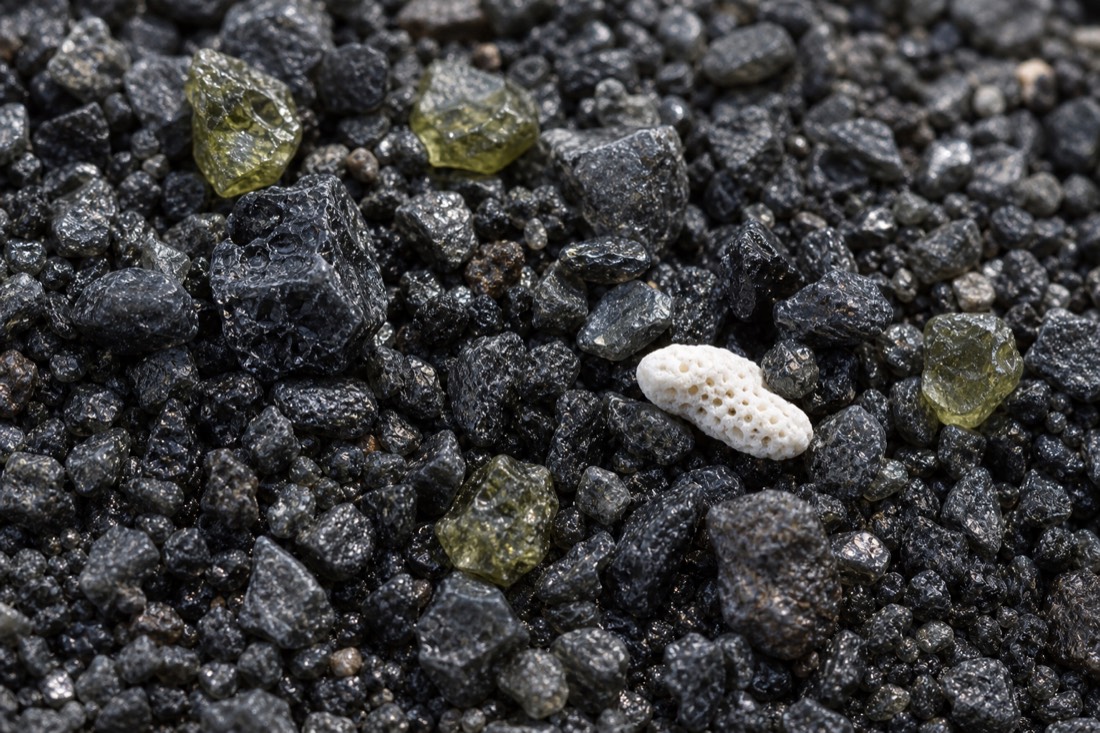
This isn't really about legal enforcement so much as a shared, practical norm on this island: these beaches took either centuries or, in Pohoiki's case, a single eruption to exist at all, and they hold together as a system only if visitors treat them as something to look at rather than take from. Photos hold up fine as souvenirs; a jar of sand does not need to.
What should you bring to a black sand beach day?
Reef-safe sunscreen, water shoes, and more water than you think you'll need, especially at Kaimū and Pohoiki, where there is no shade structure or facility of any kind. Punaluʻu and Richardson's both have basic amenities; the newer beaches genuinely do not.
Black sand runs hotter underfoot than lighter sand under direct sun, it absorbs heat noticeably faster, so sandals or water shoes matter more here than at a typical beach. Reef-safe sunscreen isn't optional politeness at any of these spots either, the near-shore reef and tide pool systems, especially at Richardson's, are living and genuinely affected by regular sunscreen runoff.
| Beach | Facilities | Shade |
|---|---|---|
| Punaluʻu | Restrooms, parking | Mature palms |
| Richardson's | Restrooms, showers, lifeguard | Limited, some trees |
| Kaimū | Basic parking only | Young palms, minimal |
| Pohoiki | Parking, boat ramp | None |
| Kehena | None | None |
Which one should you actually visit?
Punaluʻu for the classic, reliable black sand beach experience with turtles and easy access. Kaimū or Pohoiki if you want to see land that is geologically almost brand new. Richardson's if you're staying near Hilo and want black sand without the drive south.
Most visitors doing a south-island day end up combining Punaluʻu with either Kaimū or the tide pools and hidden coastline further along, rather than trying to see all four in one trip. The Punaluʻu, Volcanoes National Park and Hilo tour pairs the classic beach with the national park in one guided day, and the private tide pools and hidden coast hike goes further off the main road for travelers who have already seen Punaluʻu and want the less-visited stretch of this coastline.
What happened to Kalapana in 1990, and can you visit what's left?
Kīlauea's Puʻu ʻŌʻō eruption buried the village of Kalapana and the original Kaimū black sand beach under lava between 1990 and 1991, destroying roughly 100 homes along with a church and the beach itself. What stands today at Kaimū is entirely new coastline built on top of that flow.
A relocated Star of the Sea painted church, moved out of the flow's path before it hit, now sits near the new Kaimū access point as one of the only physical links to what was there before. Walking the flow today, most visitors have no idea they're crossing what used to be a town, the lava erased roads, foundations and shoreline alike, leaving black rock where there used to be a fishing village. It's a genuinely sobering thing to take in once you know the history, not just a scenic lava field.
Pohoiki's 2018 eruption told a similar story on a smaller scale, dozens of homes lost along the lower Puna coast in an event that ran for months and reshaped the district's entire eastern edge. Both eruptions are recent enough that longtime Big Island residents lived through them directly, which is part of why locals tend to talk about these beaches with a different weight than a typical scenic overlook.
Keep that context in mind while walking either flow. This isn't a themed attraction built to evoke a disaster, it's the literal, unaltered aftermath of one, and treating it with the same quiet respect you'd bring to any site where people lost their homes goes a long way, even if nothing about the place asks for it explicitly.
For visitors weighing whether to include either stop, the honest framing is this: Kaimū and Pohoiki are as much a lesson in how fast this island can remake itself as they are a beach visit. Go expecting that, and both stops land with more weight than a simple photo op would suggest.
| What you want | Go here |
|---|---|
| The classic postcard beach with turtles | Punaluʻu |
| To see land that's geologically brand new | Kaimū or Pohoiki |
| Black sand without leaving the Hilo side | Richardson's |
| A quiet, undeveloped cove | Kehena |
| The whole story handled in one guided day | A guided Punaluʻu and Volcanoes tour |