Hilo Beaches: Where to Actually Swim and Snorkel Near Town
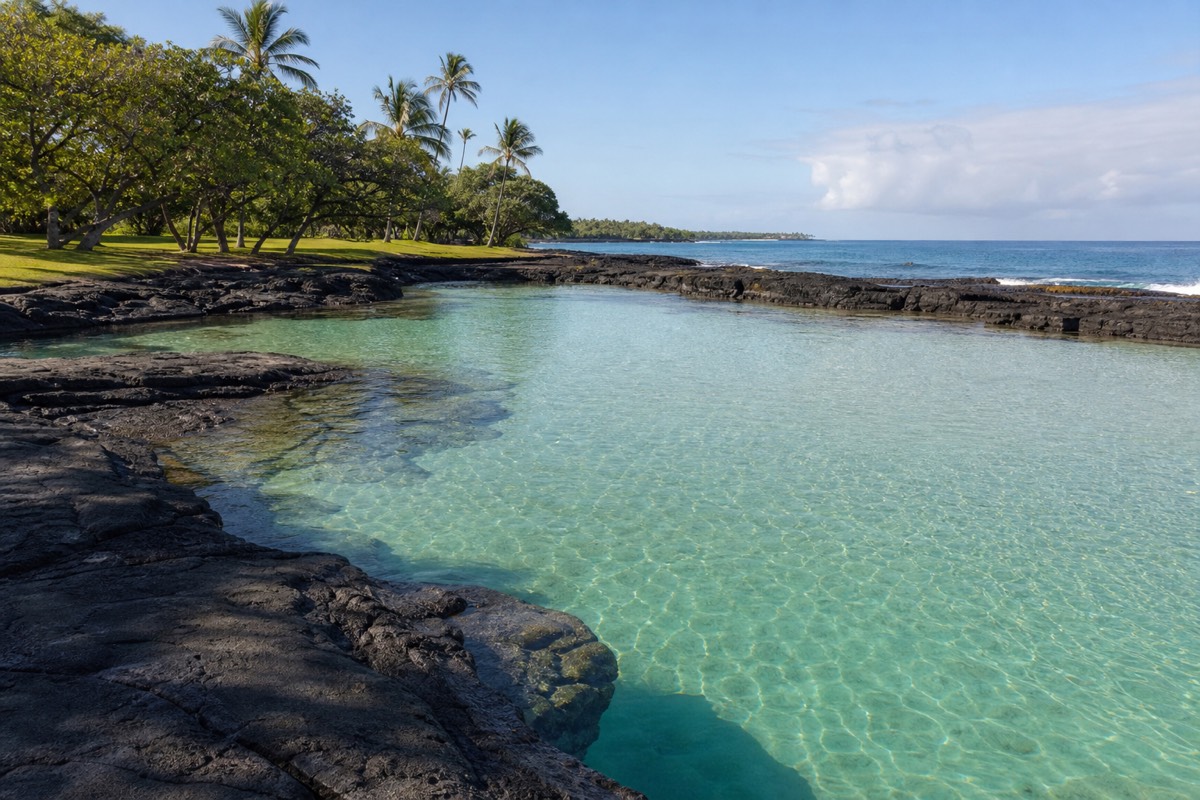
Hilo Bay looks like a beach on a map and reads like one from a hotel balcony. It isn't. The real swimming spots sit a few minutes further out, along a shoreline where cold spring water meets the Pacific and turns the water a strange, hazy blue.
Is Hilo Bay a swimming beach?
No. The bayfront in downtown Hilo is a park, a seawall and a running path, not a place people swim. The real swimming and snorkeling spots sit two to fifteen minutes further along the coast, at a handful of parks purpose-built for getting in the water.
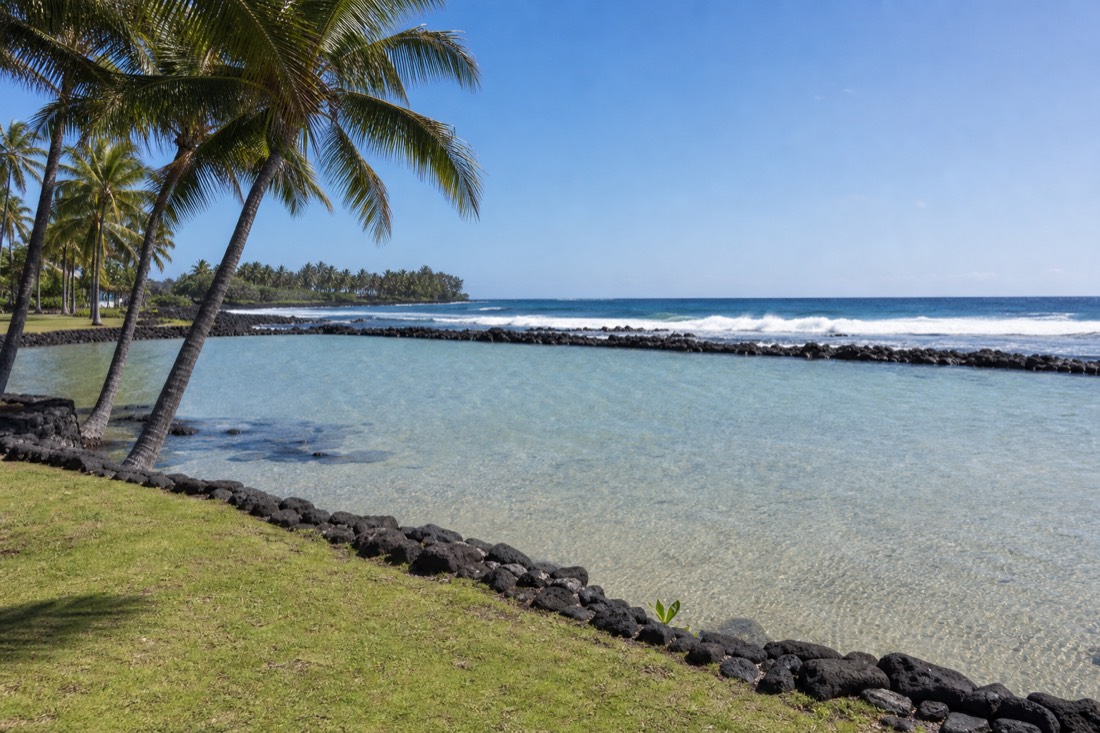
This trips up first-time visitors more than almost anything else on this list. Photos of Hilo Bay look inviting, especially with Mauna Kea in the background, but the shoreline directly downtown is mostly rock, boat channel and open water with no protected entry point. Nobody local swims there, and the beach parks that exist for exactly that purpose are a short drive away.
Where do you actually swim near Hilo?
Three parks cover almost everyone's needs: Onekahakaha for families with small children, Carlsmith for calm, easy swimming, and Richardson for snorkeling and the best odds of seeing a sea turtle. All three are within about ten minutes of downtown.
None of the three is a secret. They are the beaches locals actually use on a weekend, which is a better signal than any ranked list. Each one solves a slightly different problem, and picking the right one for your group matters more than picking the "best" one in the abstract.
| Beach | Best for | Distance from downtown |
|---|---|---|
| Onekahakaha Beach Park | Small children, shallow protected water | ~5 minutes |
| Carlsmith Beach Park | Calm all-around swimming | ~10 minutes |
| Richardson Ocean Park | Snorkeling and turtle sightings | ~10 minutes |
| Leleiwi Beach Park | A quieter, rockier stretch of the same coast | ~10 minutes |
| Honoliʻi Beach Park | Watching surfers, not swimming | ~10 minutes north |
Which beach is best for families with young kids?
Onekahakaha. A wide seawall breaks the ocean swell before it reaches the main lagoon, creating a shallow, sandy-bottomed pool that is about as protected as ocean water gets on this coast. It is the beach Hilo parents actually bring toddlers to.
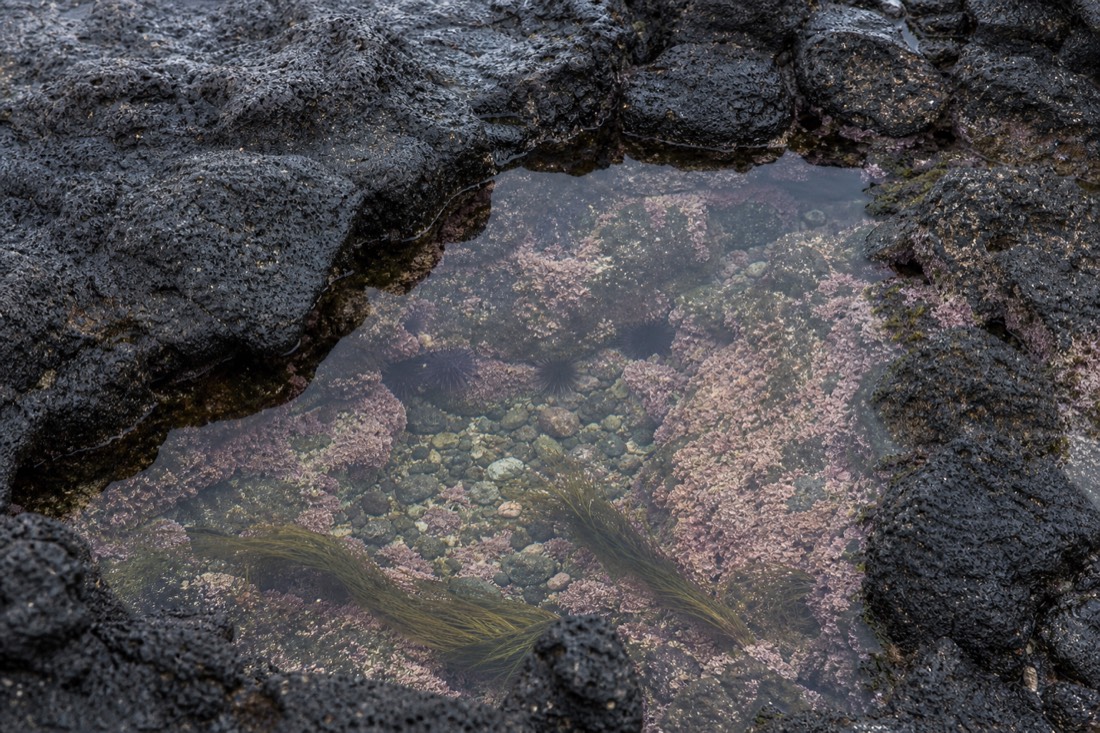
The protected lagoon is genuinely calm on most days, a rarity on a coastline that otherwise deals with real Pacific swell. There is a grass shoreline for setting up a base, and the shallow water extends far enough out that small children can wade without an adult needing to be in swimming depth the entire time. It gets busy on weekends with local families, which is honestly a good sign rather than a downside.
The park itself is set up for a full day rather than a quick dip: restrooms, showers, picnic tables and a grass lawn that stays shaded for part of the afternoon. Parking is free and rarely a problem outside of holiday weekends. Bring your own shade if you're staying more than a couple of hours, since the lawn area is only partly covered.
What about Carlsmith and Leleiwi?
Carlsmith is the calmer, more all-purpose option, a spring-cooled lagoon protected enough for confident swimmers of any age without the rocky entry of Richardson. Leleiwi, part of the same coastline as Richardson, is quieter and rockier, better suited to experienced swimmers who want fewer people around.
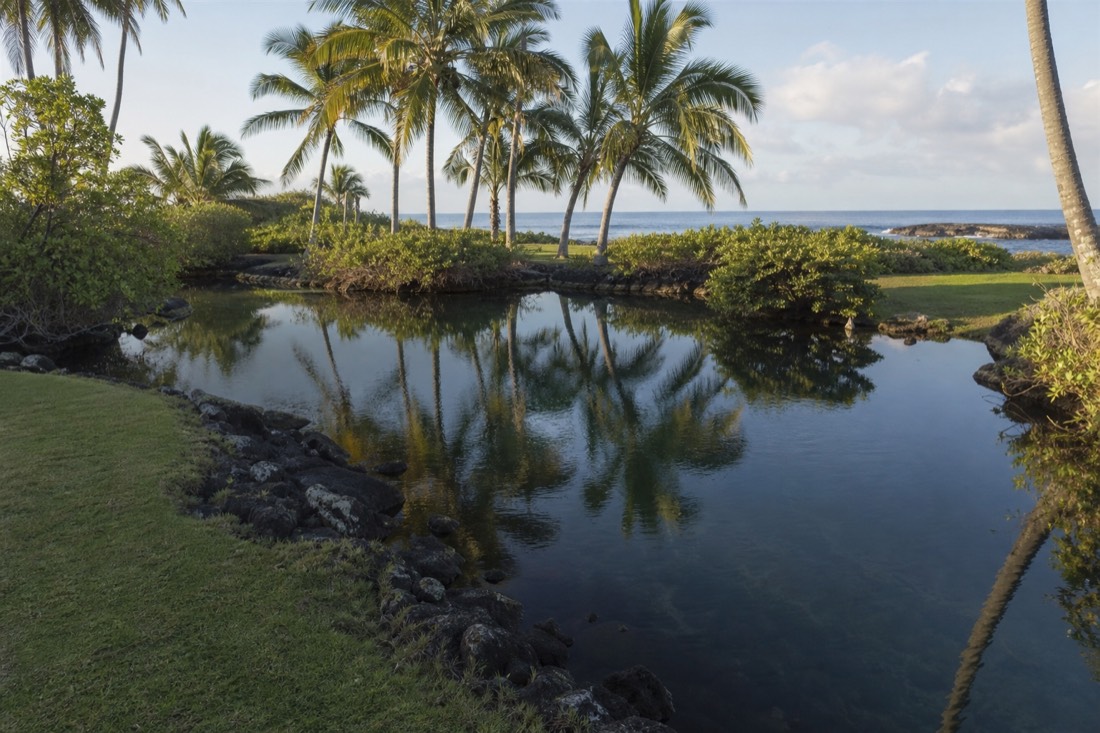
Carlsmith earns its reputation as the coast's easiest swimming spot. The lagoon stays sheltered by a natural rock shelf, and the same spring water that cools Richardson and Onekahakaha keeps it clear even after rain. It draws a mixed crowd of local families and visitors rather than skewing toward one group, and there's enough shoreline that it rarely feels crowded even on a busy day.
Leleiwi sits between Richardson and Onekahakaha geographically and gets a fraction of the visitors either one does. The entry is rockier and the water more exposed, which is exactly why it stays quiet. Confident swimmers who want the same coastline without the crowds at the more famous stops tend to end up here.
Do you need to rent snorkel gear, or go with a guide?
Neither is required. Independent snorkelers with their own mask and fins have full free access at every beach on this list. A guided snorkeling tour adds equipment, instruction and someone who knows where the turtles have been that week, which matters most for first-timers or anyone nervous about ocean conditions.
Gear rental shops operate in Hilo town, so arriving without your own equipment is not a dealbreaker. What a guided outing actually buys is confidence and local knowledge rather than access: a guide fits your mask properly, walks new snorkelers through breathing and finning before the water gets deep, and identifies what you're looking at in real time instead of leaving you to guess at a fish ID app afterward.
| DIY with your own gear | Guided snorkeling tour | |
|---|---|---|
| Cost | Free entry to any beach | Paid, gear and instruction included |
| Best for | Confident, experienced snorkelers | First-timers, nervous swimmers, families |
| Local knowledge | None built in | A guide who knows where turtles have been recently |
| Equipment fit | Your own or a rental shop's stock | Fitted and checked before you're in the water |
Which beach is best for snorkeling and turtles?
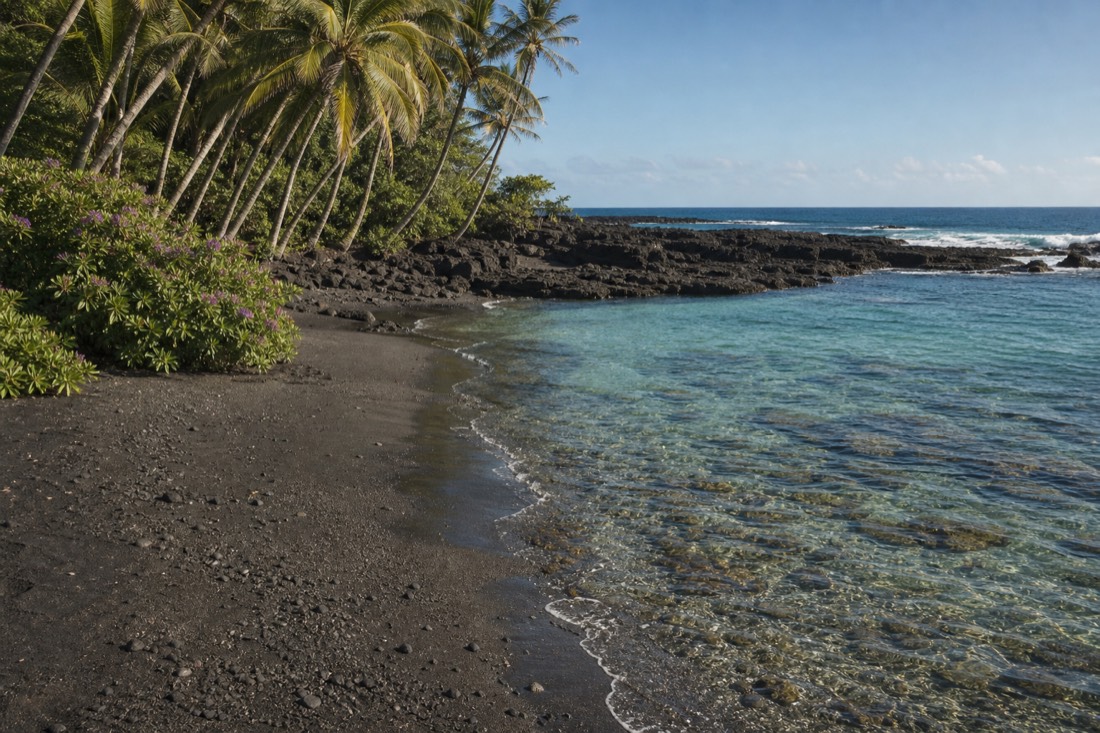
Richardson Ocean Park. Its tide pool coves and rocky point create sheltered pockets where Hawaiian green sea turtles regularly rest and feed, and the mixed black-and-olivine sand gives it a genuinely different look from the other Hilo beaches.
Turtles at Richardson are not a rare sighting, they are a routine one, especially in the morning before the beach fills up. That is exactly why the viewing rules matter here more than almost anywhere else nearby. NOAA Fisheries guidance asks visitors to stay at least 10 feet from sea turtles in the water and on land, never touch or chase one, and let the animal set the distance. It is not a suggestion; harassing a protected species is enforceable under federal law, and turtles that get crowded simply stop hauling out where people are.
| Turtle-viewing rule | Why it exists |
|---|---|
| Stay at least 10 feet away | NOAA Fisheries guidance for Hawaiian green sea turtles (honu) |
| Never touch or chase | Federally protected species; stress affects feeding and resting behavior |
| Let the turtle set the distance | Turtles that feel crowded stop returning to a spot |
| Best viewing time | Morning, before the park fills up |
Why does the water feel cold and look hazy?
Fresh groundwater, chilled by rain that fell miles upslope and filtered down through porous lava rock, seeps out along this stretch of coast and mixes with the warmer Pacific. The two bodies of water have different temperatures and densities, which is what creates the shimmering, slightly hazy look right where they meet.
It is one of the more interesting things happening on this coastline and most visitors never get an explanation for it. Rain falling on the slopes above Hilo percolates down through young, porous lava for years before it reaches the ocean, emerging cold at multiple points along the shore rather than through a single visible stream. Swim through one of those seams and the temperature genuinely drops for a few strokes. It is completely normal and not a sign of anything wrong with the water; if anything, the fresh water tends to keep these spots clearer after heavy rain than beaches without it.
Is it safe to swim at these beaches?
Generally yes at the developed parks, with normal ocean caution. Onekahakaha and Carlsmith are both calm most days; Richardson has more exposed rock and a slightly stronger entry point. None of the three carries the rip-current risk of an open sand beach on the island's other coasts.
Lifeguards are present at the main developed parks on a scheduled basis rather than around the clock, so check conditions and posted signage on the day rather than assuming coverage. Reef and rock entries mean water shoes are worth packing even at the calmer spots, and swell can pick up with little warning, so a flat morning is not a guarantee for the whole afternoon.
Hawaiian monk seals turn up occasionally at any of these beaches, far less predictably than the turtles at Richardson, but they do happen. If one hauls out to rest, the same distance principle applies: give it space, keep dogs and children well back, and never approach for a photo. Winter swell, roughly November through March, also runs noticeably stronger along this whole coast, which is worth factoring in if you're visiting outside the summer months.
| Beach | Typical water conditions | Entry |
|---|---|---|
| Onekahakaha | Calm, shallow, protected by a seawall | Sandy, gentle |
| Carlsmith | Calm, spring-cooled lagoon | Sandy with some rock |
| Richardson | Calm in the coves, more exposed at the point | Rocky, wear water shoes |
| Leleiwi | Rockier, more open | Lava rock, more experienced swimmers |
What facilities does each beach actually have?
Onekahakaha, Carlsmith and Richardson all have restrooms, showers and free parking. Leleiwi has more limited facilities, and none of the five beaches on this list has a snack bar, food truck or drinking water for sale on-site.
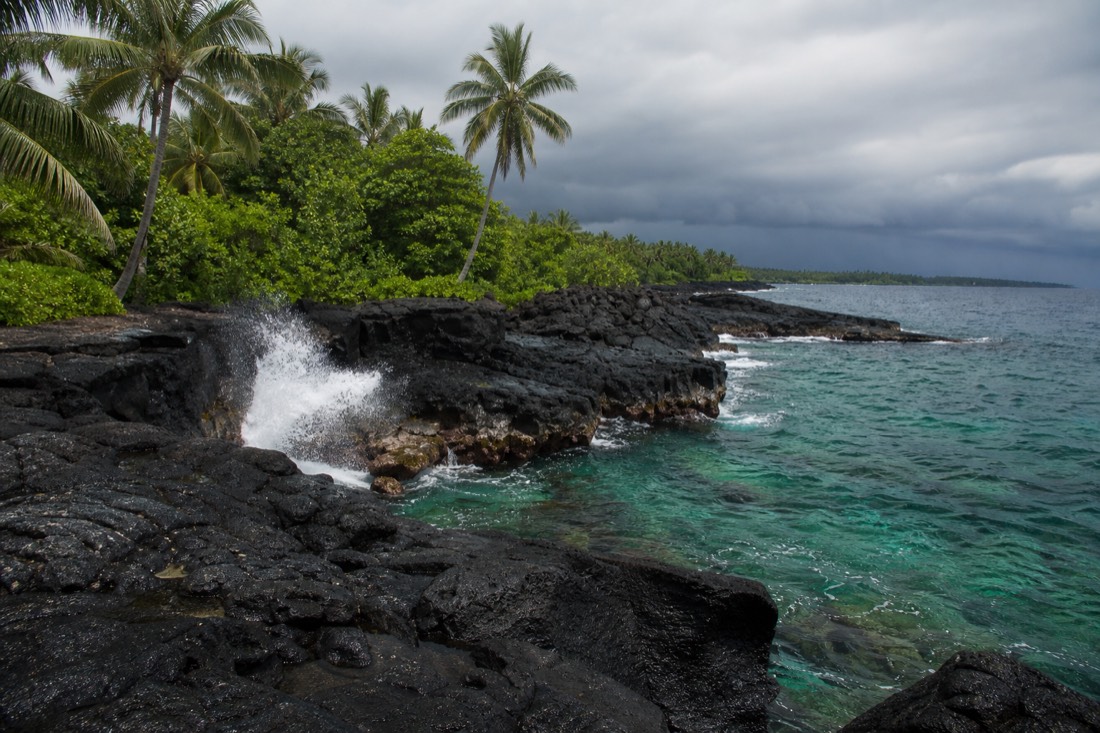
Pack water and snacks before you leave town. It's a small detail that catches out visitors used to resort beaches with a bar steps from the sand; a Hilo beach day is closer to a state park outing than a hotel pool day, in the best way, but plan accordingly.
| Beach | Restrooms | Showers | Lifeguard | Shade |
|---|---|---|---|---|
| Onekahakaha | Yes | Yes | Scheduled | Partial, grass lawn |
| Carlsmith | Yes | Yes | Weekends, holidays, summer | Limited |
| Richardson | Yes | Yes | Scheduled | Limited, some trees |
| Leleiwi | Limited | No | Not staffed | Minimal |
What's the honest way to plan a Hilo beach day?
Pick one beach that matches your group rather than trying to hit all of them, go in the morning before the wind and crowds build, and bring water shoes regardless of which one you choose. None of these beaches has food service on-site.
A single beach, done properly with a few hours of daylight, beats a rushed tour of three parking lots. If snorkeling and turtles are the priority, Richardson wins outright. If you have kids under six, skip straight to Onekahakaha and don't second-guess it. For a guided version that adds the marine biology and handles the gear, the Hilo guided snorkeling tour with a nature walk covers two bays on this stretch of coast with an instructor who knows exactly where the turtles have been showing up that week.
| Your priority | Go here |
|---|---|
| Toddlers or non-swimmers | Onekahakaha |
| Easiest all-around swim | Carlsmith |
| Snorkeling and turtles | Richardson |
| Fewer crowds, more experienced swimmers | Leleiwi |
| Watching surfers, not swimming yourself | Honoliʻi |
| Want the gear and instruction handled | Hilo guided snorkeling tour |
If beaches are one piece of a longer stay, our Hilo with kids guide and best nature tours guide cover how this fits around the rest of a family or nature-focused itinerary.
Does the season matter?
Yes, more than most visitors expect. Summer, roughly May through September, brings calmer water across all of these beaches. Winter swell, November through March, can make Richardson's exposed point genuinely rough and pushes more serious surf into Honoliʻi.
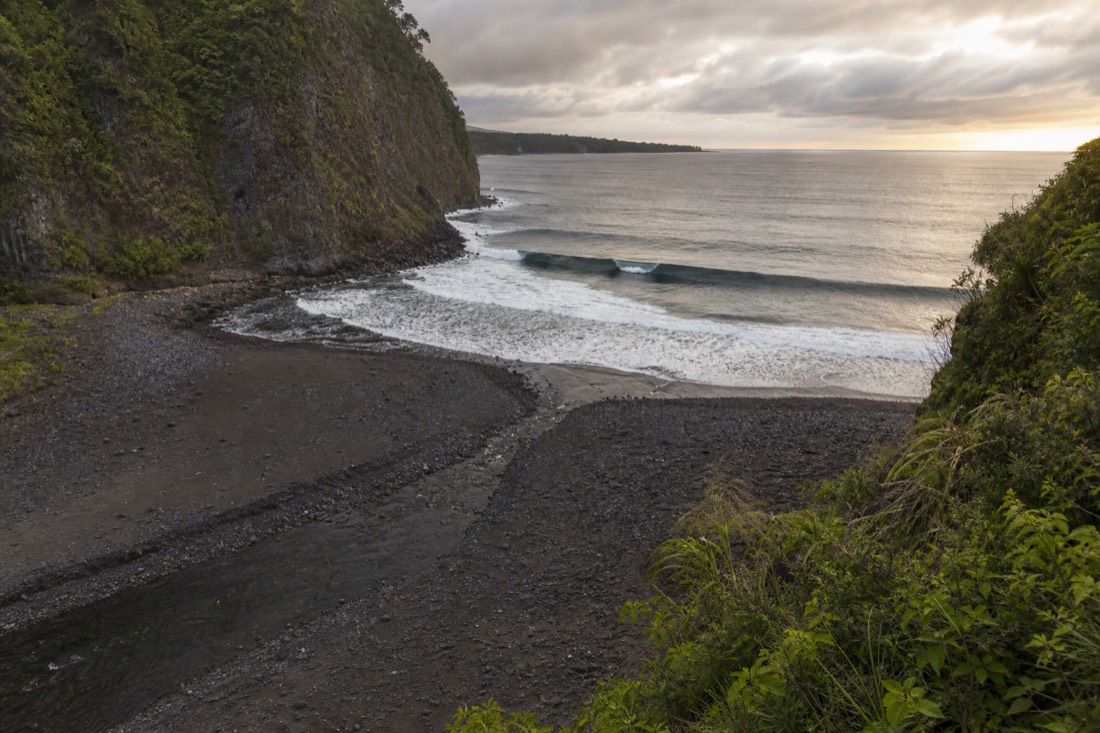
None of this means winter beach days are off the table, Onekahakaha's protected lagoon holds up reasonably well year-round precisely because the seawall does its job regardless of season. It just means checking conditions matters more in winter than it does in July, when a calm morning is closer to the default. Local surf and ocean safety reports, checked the morning of, beat any seasonal generalization on a specific day.
Rain follows its own pattern separate from swell: Hilo's wettest months tend to bring short, heavy afternoon bursts rather than all-day washouts, so a rainy forecast doesn't necessarily rule out a beach morning if you're flexible on timing and go before early afternoon.
How does getting there actually work?
All three main beaches, Onekahakaha, Carlsmith and Richardson, sit along the same general stretch of coast east of downtown, each with its own free parking lot a short walk from the water. None require a reservation, a permit or any advance planning beyond checking the weather.
Google Maps handles directions to all of them without trouble, they're established public parks with clear addresses, unlike some of the island's more obscure natural sites. The one practical note worth flagging: parking lots are modest in size, not the sprawling lots of a resort beach, so a holiday weekend can mean circling for a spot at the more popular stops, Richardson especially.
What do people ask about most before their first Hilo beach day?
Whether the water is actually swimmable given how rainy Hilo's reputation is, and whether it's worth the drive out from a hotel downtown. Both questions have the same honest answer: yes, and the reputation for constant rain oversells how much it actually affects a beach morning here.
Hilo's rain mostly arrives in afternoon bursts rather than steady all-day soaking, which is exactly why locals plan beach mornings and save indoor time for later in the day. As for the drive, none of these beaches sits more than about ten minutes from a downtown hotel, closer than the equivalent drive to a swimmable beach on several other parts of the island. The reputation for rain and remoteness both undersell how workable this side of the island actually is for a real beach day.
The second most common question is simpler: which beach first. If nothing else on this page sticks, that single decision, matched honestly to who's actually in your group, matters more than any packing list or timing tip that follows it.
Visitors who assume Hilo has nothing to offer beach-wise because the bayfront isn't swimmable are working from an incomplete picture. The actual swimming coast, spread across these five parks, holds up well against anywhere else on the island for the specific mix of calm water, real marine life and genuinely free, uncrowded access.
What it doesn't offer is the resort-strip feel of the Kona side, a beach bar within walking distance, sun loungers, a concierge handing out towels. What it offers instead is a coastline that still functions primarily as a set of neighborhood parks rather than a tourism product, which for a lot of travelers turns out to be the more memorable version of a Hawaiian beach day, once they know where to actually go.