Hilo Helicopter Tours: Volcano Flight vs. Waterfall Flight Compared
Two real helicopter tours leave from the same small terminal at Hilo Airport, and they show almost nothing in common: one flies over an active volcanic caldera, the other over a rainforest valley and a coastline of waterfalls. Here's what each one actually covers, what it costs, and how to pick.
Two Hilo helicopter tours, one terminal
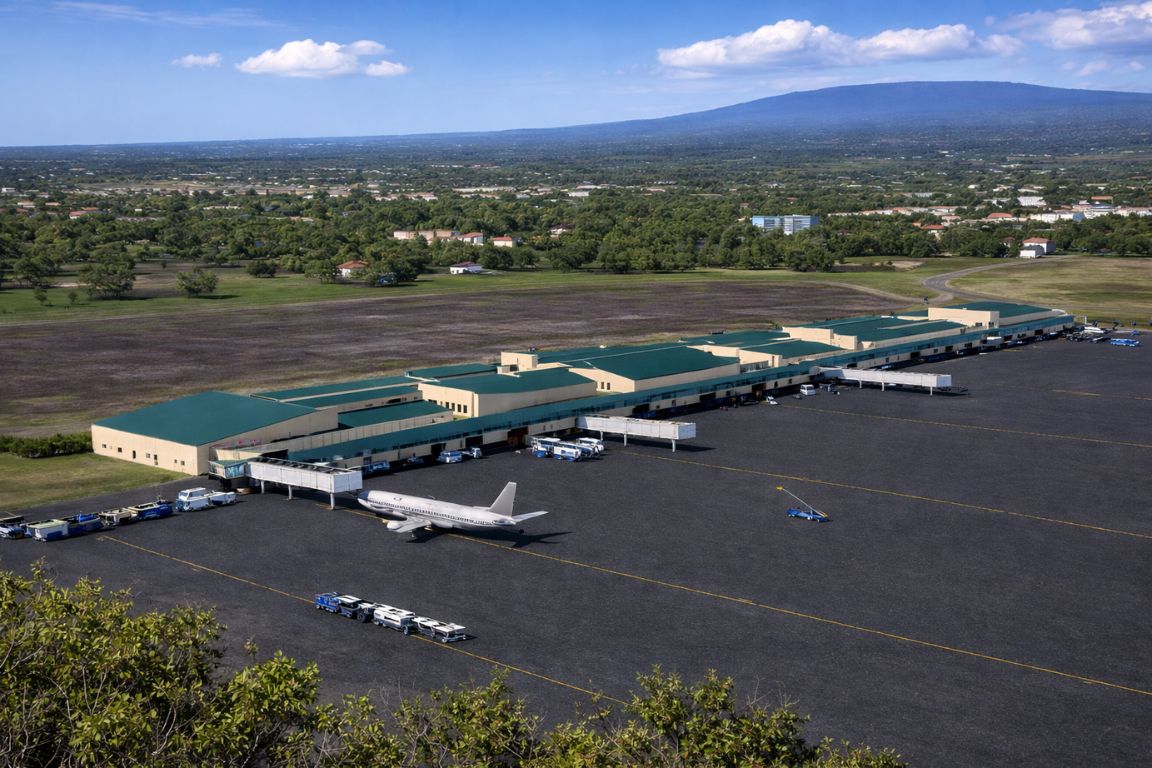
Both tours check in at the small commuter terminal at Hilo International Airport, both fly about an hour, and both cost more than any ground tour on this site. Past that, they're built for different trips: one over Hawaii Volcanoes National Park, the other over Waipiʻo Valley and the Kohala coast.
Until this year, every helicopter option listed on this site started from Oʻahu as part of a longer, flight-inclusive combo day. These two are different: they're standalone flights that depart from Hilo itself, run about an hour, and don't require a separate inter-island flight to reach. That makes them a genuinely new category on this site rather than a repackaged version of something already here.
The Hawaii Volcanoes National Park Flight is operated by Safari Helicopters and costs $406 per person, rated 4.2 stars across 267 reviews on GetYourGuide. The Hilo Waterfall Experience is operated by Blue Hawaiian Helicopters and costs $511 per person, rated 5.0 stars, though that rating currently sits on a single review rather than a long track record. Neither number should be read as more settled than it is: 267 reviews is a real sample size, one review is not, and it's worth saying plainly rather than letting a perfect score do the talking.
Hilo is the obvious departure point for both, not just because it happens to have an airport. It sits closer to Hawaii Volcanoes National Park than any other airport on the island, and it sits on the windward coast, the same wet, green side that feeds the waterfalls dropping off Waipiʻo Valley and the Kohala coast to the north. A helicopter based in Kona would need to cross the island's dry, leeward side before reaching either subject; from Hilo, both routes start close to the airport fence.
The Hawaii Volcanoes National Park Flight
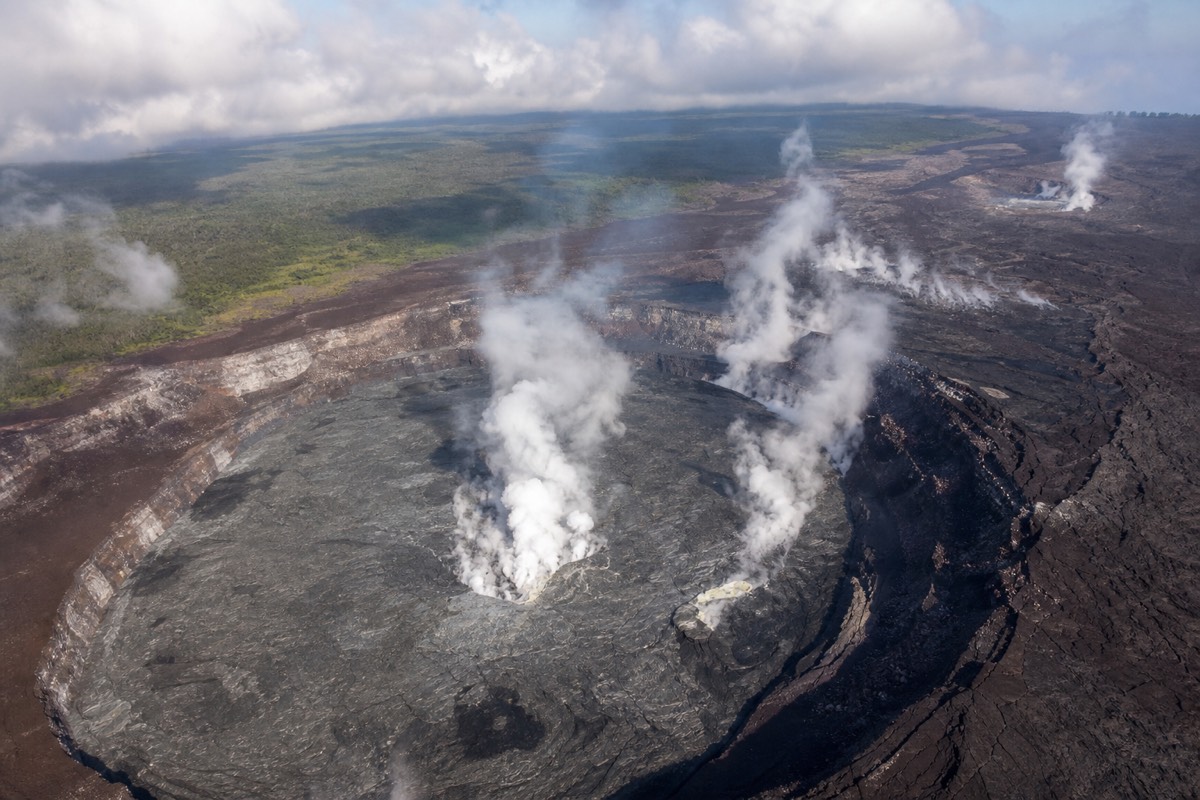
A 1-hour Safari Helicopters flight that crosses the steaming Kīlauea caldera and the Puʻu ʻŌʻō cone, with Mauna Kea and Mauna Loa on the horizon, then drops toward the coast for black sand beaches, lava fields, and rainforest waterfalls on the way back to Hilo.
Check-in is one hour before departure at the Safari Helicopters counter, and the cabin holds a maximum of six passengers with a live English-speaking guide narrating throughout. It's the more established of the two products by review count, and the more restrictive on who can fly: not recommended for children under 2, pregnant travelers, anyone with claustrophobia, a fear of heights, vertigo, a current cold, or motion sickness concerns, and passengers over 250 lbs (113 kg) may need to purchase an additional seat.
What you actually see depends heavily on the day. Kīlauea's eruption status changes, sometimes measured in weeks, and cloud cover over the summit is common enough that a clear crater view is a genuine highlight rather than a given. Full pricing, current departure times, and the complete review history are on the tour page.
The route's other landmark, the Puʻu ʻŌʻō cone, is worth knowing the history of before you fly over it. It erupted almost continuously for 35 years, from 1983 to 2018, one of the longest-lived rift eruptions ever recorded on Kīlauea, feeding lava flows that repeatedly reached the ocean and added new land to the island's coastline. Activity shifted away from Puʻu ʻŌʻō in 2018, when the lower East Rift Zone eruption near Leilani Estates and the collapse of Kīlauea's summit caldera reshaped the park's geology in a matter of months. What you see from the air today is a quiet, ash-dark cone rather than an active vent, but the scale of it, a mountain built entirely by one eruption within living memory, is still the kind of thing a ground overlook can't fully convey.
The Hilo Waterfall Experience
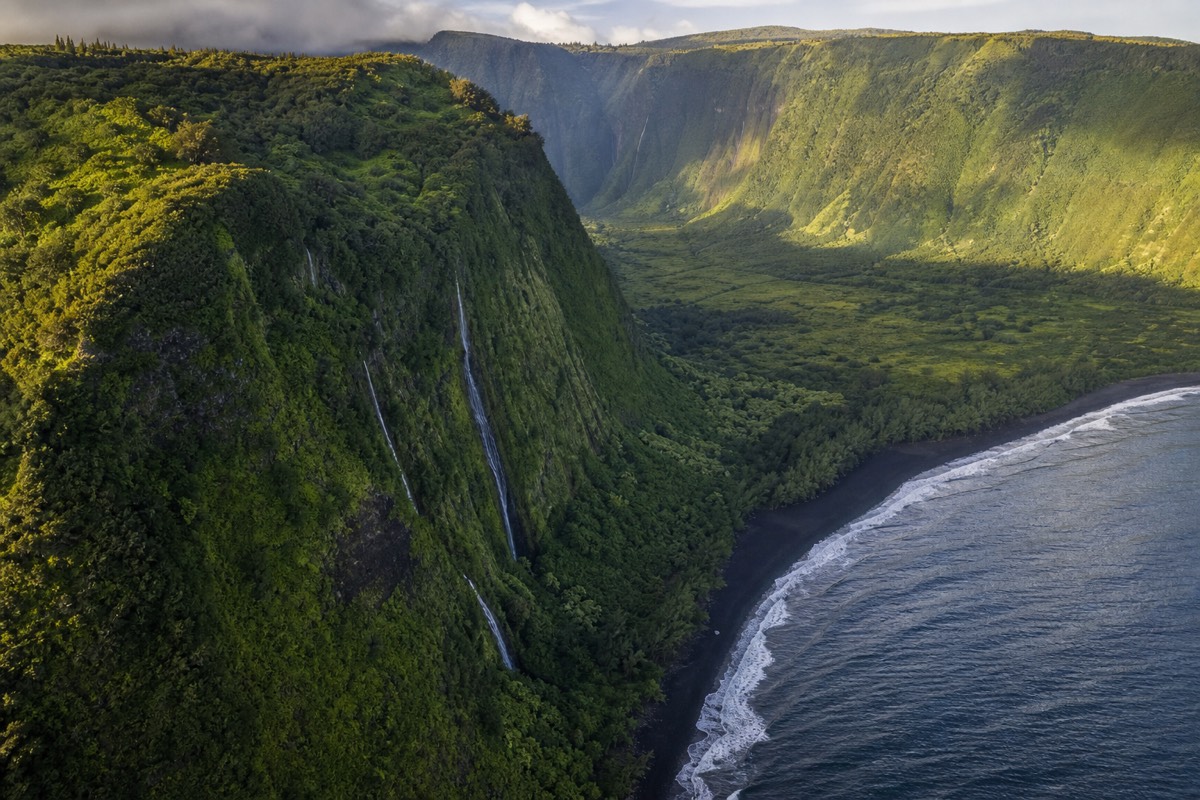
A 1-hour Blue Hawaiian Helicopters flight in an Eco-Star (EC-130), a wide-cabin aircraft with large windows, tracing the cliffs above Waipiʻo Valley and the waterfall-streaked Kohala coast, with Bose noise-cancelling headsets wired for two-way talk with the pilot.
Check-in is 45 minutes before departure at the Blue Hawaiian Helicopters counter, transportation to and from the heliport is included, and a State of Hawaii certified pilot handles both flying and narration. Passengers over 240 lbs are seated next to an empty seat at 50% of the fare, standard weight-and-balance practice rather than a penalty. No scuba diving is allowed in the 24 hours before the flight, the usual rule for any pressurized-cabin ascent after a dive.
This is the newer listing of the two, at least on GetYourGuide, and the honest way to describe the 5.0 rating is a strong first impression rather than a proven track record. The aircraft, certification, and route are standard for this operator; the review count just hasn't caught up yet. Full pricing and live availability are on the tour page.
Waipiʻo Valley is worth the flight on its own reputation. Hawaiians called it the Valley of the Kings, home to a line of aliʻi and the site of Kamehameha I's own upbringing before he unified the islands, and it once supported a far larger population growing taro on the valley floor than the handful of residents who live there today. Getting there by land means a single-lane access road with roughly a 25% grade, steep and narrow enough that most rental car companies forbid driving it, so a helicopter is one of the few ways to see the full sweep of the valley, its black sand beach, and the waterfalls threading down its cliff walls without hiking in on foot. That restricted ground access is a genuine reason to see it from the air rather than a sales pitch dressed up as one.
Side by side: comparing the two tours
The two flights differ on operator, aircraft, price, and what's underneath you, not on duration or where they depart from.
| Hawaii Volcanoes National Park Flight | Hilo Waterfall Experience | |
|---|---|---|
| Operator | Safari Helicopters | Blue Hawaiian Helicopters |
| Price | $406 / person | $511 / person |
| Rating | 4.2★ (267 reviews) | 5.0★ (1 review) |
| Duration | 1 hour | 1 hour |
| Route | Kīlauea caldera, Puʻu ʻŌʻō, black sand beaches, lava fields | Waipiʻo Valley cliffs, Kohala coast, rainforest waterfalls |
| Aircraft | Not specified on the listing | Eco-Star (EC-130), wide cabin, large windows |
| Headset | Live narration, standard headset | Bose noise-cancelling, two-way talk-back |
| Check-in window | 1 hour before departure | 45 minutes before departure |
| Weight rule | Extra seat required over 250 lbs | Adjacent seat at 50% fare over 240 lbs |
| Cancellation | Free up to 24 hours before | Free up to 24 hours before |
Neither tour includes hotel pickup and drop-off from your accommodation; both check in at the same commuter terminal at Hilo Airport, so plan your own transportation there. If you're weighing price against experience, the $105 gap roughly tracks the aircraft: the Eco-Star's cabin and Bose headsets are a genuine upgrade in comfort, not just a higher number for the same product.
| What's included | Volcano Flight | Waterfall Experience |
| Live guide narration | Yes, English-speaking | Yes, certified pilot-guide |
| Headset | Standard, live narration | Bose noise-cancelling, two-way talk-back |
| Heliport transportation | Not included | Included |
| Photo/video package | Not offered on the listing | Available to purchase separately |
| Hotel pickup | Not included | Not included |
| Gratuities | Not included | Not included |
Why helicopter tours over the park are limited
Hawaii Volcanoes National Park operates under a federal Air Tour Management Plan that the National Park Service and FAA finalized in December 2023. It caps total commercial air tours across the park at 1,548 a year, a steep drop from the roughly 11,300 flights a year operators flew before the plan.
The plan designates three specific air routes, none of which crosses directly over the Kīlauea summit itself, and sets at least 60 no-fly days a year, including every Sunday. It exists to protect the park's natural and cultural resources, Native Hawaiian sacred sites, and the experience of visitors on the ground, who were dealing with nearly constant rotor noise before the restrictions took effect. General Hawaii air tour rules add a further layer: operators must fly at least 1,500 feet above the surface unless separately authorized to descend lower, and single-engine rotorcraft can't fly beyond the shore of any island.
| Rule | Detail |
| Annual cap | 1,548 commercial air tours across the park (down from roughly 11,300 a year before the plan) |
| Approved routes | 3 designated corridors; none crosses directly over the Kīlauea summit |
| No-fly days | At least 60 per year, including every Sunday |
| Minimum altitude | 1,500 feet above the surface, unless separately authorized lower |
| Single-engine rule | No single-engine rotorcraft flight beyond the shore of any island |
| In effect since | December 2023 (NPS/FAA record of decision) |
None of this affects the Hilo Waterfall Experience, which flies the Kohala coast rather than park airspace, but it's the single biggest reason the volcano flight is worth booking ahead of time rather than treating it as a walk-up activity.
Beyond the park-specific limits, both operators fly under the FAA's general oversight of commercial air tours, which covers aircraft maintenance schedules, pilot certification, and training specific to avoiding and escaping instrument weather conditions if a flight runs into cloud unexpectedly. The FAA has also been working through updated Hawaii-wide air tour safety guidance in recent years, covering pilot training requirements and the process operators use to get authorization for any route that departs from the standard rules. None of that shows up on a GetYourGuide listing page, but it's the regulatory layer both of these flights operate inside, on top of the park-specific caps above.
Weather, clouds, and why lava is never guaranteed
Hilo sits on the wettest side of the Big Island, and both flights are genuinely weather-dependent: pilots cancel or reroute around cloud cover, wind, and visibility, not just heavy rain.
Hilo averages around 130 inches of rain a year, among the highest of any city in the United States, though most of it falls in short tropical bursts rather than sustained all-day storms. That pattern matters for flight planning: a wet morning in town doesn't necessarily mean a canceled flight, since conditions over the caldera or the Kohala coast can differ from what's happening at the airport. Morning flights tend to have calmer air and a better shot at clear summit views before trade-wind cloud builds up over the afternoon. Neither operator can promise you'll see active lava, and that's not a hedge, it's physics: Kīlauea's eruption status shifts on its own schedule, and even an active flow can be hidden by cloud or steam on a given day. If a flight is canceled for weather, both listings offer free rescheduling or a full refund; this isn't a case of losing your money to conditions no one controls.
| Season | Months | Typical Conditions | Trade-off |
| Winter | Dec – Feb | Clear summit views on stable trade-wind days; waterfalls run fullest after rain | More frequent storm fronts can force delays or cancellations |
| Spring | Mar – May | Rain tapers off; rainforest and waterfall sections look their greenest | Afternoon cloud can still build over both the caldera and the coast |
| Summer | Jun – Aug | Longest daylight window and the most consistent trade-wind pattern | Peak season; morning slots book out first, and waterfalls run lower |
| Fall | Sep – Nov | Transitional season; mornings tend to be the clearest on both routes | Less predictable than summer, so flexible dates help |
Altitude, motion sickness, and who should skip it
Neither flight climbs to an altitude that causes altitude sickness on its own, but the combination of a small cabin, banking turns, and rotor vibration is enough to trigger motion sickness in some passengers who are fine on a plane.
A few practical points that apply to both flights: eat something light beforehand rather than flying on an empty stomach, stay hydrated, and if you're prone to motion sickness, ask about a front seat next to the pilot, since seeing the horizon directly ahead helps the inner ear track the aircraft's movement. Over-the-counter options like non-drowsy Dramamine or Bonine, taken well before boarding, are a reasonable precaution if you know you're susceptible. Anyone with a medical condition affected by altitude, vibration, or motion, including severe vertigo, recent surgery, cardiovascular conditions, or significant anxiety, should talk to a doctor before booking and tell the operator in advance.
Worth clarifying since the two get confused: this is a different kind of altitude exposure than Hilo's other well-known aerial experience, the Mauna Kea summit tour, which drives guests to 13,796 feet in an unpressurized vehicle and warns about genuine altitude effects, thin air, headaches, shortness of breath. Neither helicopter tour climbs anywhere near that height; the volcano flight and the waterfall flight both stay low enough over the terrain that altitude sickness isn't a real concern. What gets people on a helicopter is motion, not thin air, and the two call for different preparation.
| Who should think twice | Why |
| Children under 2 | Explicitly excluded on the volcano flight's listing |
| Pregnant travelers | Explicitly excluded on the volcano flight's listing |
| Claustrophobia or fear of heights | Small cabin, banking turns, open views straight down |
| Current cold or ear congestion | Pressure changes at altitude are uncomfortable with a blocked ear |
| Passengers over 250 lbs (volcano) / 240 lbs (waterfall) | Weight-and-balance rules may require an extra or adjacent seat |
| Scuba divers | No diving in the 24 hours before either flight, due to decompression risk |
Helicopter tour vs. ground-based volcano tours
A helicopter shows you the caldera's scale in about an hour; a ground tour gets you inside the park for several hours, walking the lava tube and standing at overlooks a flight only passes over.
Hilo Tours already lists several ground-based ways to see Hawaii Volcanoes National Park, and the price and time commitment vary a lot more than the two helicopter options do. The Hilo Elite Volcano Hike puts you on foot inside the park for a full day at $189. The Hawaii Volcanoes National Park Safari Adventure is actually a third helicopter option, a 55-minute flight from the same Hilo Airport terminal at $389, closer in price and format to the volcano flight covered here than to a van tour. The Hilo Day Tour combines the park with waterfalls and a black sand beach over 7 hours at $197.
| Tour | Format | Duration | Price |
| Hawaii Volcanoes National Park Flight | Helicopter | 1 hour | $406 |
| Hawaii Volcanoes National Park Safari Adventure | Helicopter | 55 minutes | $389 |
| Hilo Day Tour | Guided van, ground | 7 hours | $197 |
| Hilo Elite Volcano Hike | Guided hike, ground | 12 hours | $189 |
| Best Full-Day Volcano Tour from Hilo | Flight + guided van, ground | 10 hours | $540 |
Neither format replaces the other. A helicopter gives you the geology at a glance, the scale of the caldera and the lava fields laid out at once in a way no ground overlook can match. A ground tour gets you inside the Nāhuku lava tube, close enough to the steam vents to smell the sulfur, and gives a guide time to explain what you're looking at rather than narrating past it in thirty seconds. Visitors with two days in Hilo often do one of each rather than treating it as a choice between them; the full range of ground options is on the best volcano tours from Hilo guide.
One logistics note that applies regardless of which helicopter you choose: neither operator lists hotel pickup, and both check in at Hilo Airport's commuter terminal, a short drive from downtown Hilo, not the main passenger terminal most arriving flights use. Budget time to find the right building and to park, since neither listing includes parking fees, and plan to arrive with the full check-in window (one hour for the volcano flight, 45 minutes for the waterfall flight) rather than cutting it close.
Frequently asked questions
Which Hilo helicopter tour should I book?
If Hawaii Volcanoes National Park and lava geology are the priority, book the Hawaii Volcanoes National Park Flight. If waterfalls, green cliffs, and Waipiʻo Valley matter more, book the Hilo Waterfall Experience. Both run about an hour and depart from the same Hilo Airport commuter terminal, so the choice comes down to what you want underneath you, not logistics.
Will I see active lava on the volcano flight?
Not guaranteed. Sighting depends entirely on Kīlauea's eruption status and cloud cover on the day you fly, and no operator can promise it in advance.
How many helicopter tours are allowed over Hawaii Volcanoes National Park?
The National Park Service and FAA's Air Tour Management Plan, finalized in December 2023, caps commercial air tours over the park at 1,548 a year, down from roughly 11,300 before the plan, and sets at least 60 no-fly days annually, including every Sunday.
Is there a weight limit for Hilo helicopter tours?
Yes. On the volcano flight, passengers over 250 lbs (113 kg) may need to buy an additional seat. On the waterfall flight, passengers over 240 lbs are seated next to an empty seat billed at 50% of the fare. Both are standard weight-and-balance rules for small aircraft, not a penalty.
Is a helicopter tour better than a ground-based volcano tour?
They show different things. A helicopter gives you scale and a caldera-wide view in about an hour; a ground tour lets you walk the Nāhuku lava tube, stand at crater overlooks, and spend several hours in the park itself. Many visitors do both on separate days rather than choosing one over the other.