Hilo Farmers Market: What to Expect, When to Go, and What's There
Downtown Hilo's market corner has been trading produce, flowers, and plate lunch since 1988, and the day of the week you show up changes the experience more than almost anything else about it.
At a glance: vendor turnout by day
Figures are approximate and can shift with weather, holidays and the season. The market's own hours page is the source to check before you go.
What is the Hilo Farmers Market?
The Hilo Farmers Market is an open-air market at the corner of Kamehameha Avenue and Mamo Street in downtown Hilo, trading in tropical produce, cut flowers, prepared food and local crafts since 1988. It runs every day of the year except Christmas, with the vendor count swinging widely by day.
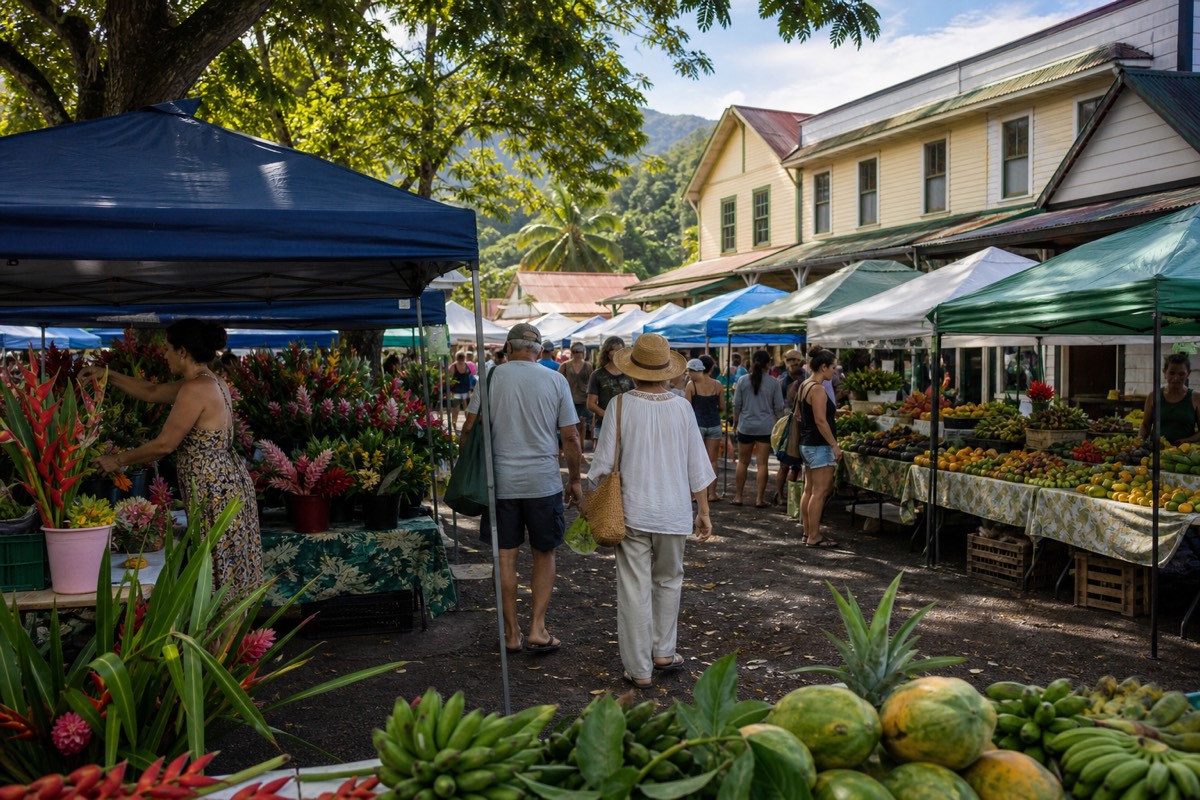
It is not a single building or a fenced lot. Stalls spread across a corner site under a patchwork of canopies, spilling a little further along the sidewalk on the busiest mornings. There is no admission fee and no gate; you walk in from the street the same way you would walk into any open block of downtown. What changes the character of the place entirely is timing, which is the subject of the next section, because a Tuesday visit and a Saturday visit can feel like two different markets.
The market predates most of downtown Hilo's tourist infrastructure. It grew out of a handful of local growers selling directly off trucks and folding tables, and that informality still shows in the mix: alongside the produce stands you will find handmade soap, wood carving, T-shirts, and the occasional table of shells or jewelry. Nothing about it is curated for visitors specifically. Locals shop here too, which is part of what makes it worth a stop rather than a photo-only detour. The Hawaii Tourism Authority's own statewide farmers market listing singles it out as one of the Big Island's better markets, which matches what most repeat visitors already say about it.
That local usage is easy to underestimate from a distance. Watch the market on a big day and you will see just as many Hilo residents filling reusable bags as visitors with cameras, stopping to chat with vendors they clearly already know. Growers here tend to be small-scale, often selling what came off their own few acres that week rather than restocking from a wholesale supplier, which is part of why the selection shifts noticeably through the year. It gives the market a working, unpolished feel that a purpose-built tourist market rarely manages, and it is one of the few genuinely free things in Hilo that locals and visitors do side by side rather than in separate lanes.
When is the market actually open?
The market operates seven days a week, but Wednesday and Saturday are the real event: roughly 150 to 200-plus vendors set up, compared with around 30 to 80 on the other five days. Hours run through the morning into early-to-mid afternoon, with the big days sometimes starting earlier.
This is the single most useful fact for planning a visit, and it is easy to miss if you only see "open daily" in a search result and assume every day is the same. It is not. A Tuesday-morning visit gets you a real but modest market: fruit, a few flower vendors, one or two food stalls, enough to make the stop worthwhile if you happen to be nearby. A Wednesday or Saturday visit gets you the market people mean when they recommend Hilo's farmers market as a destination in its own right, with rows of stalls and a genuinely busy, sociable atmosphere.
| Day | Approximate vendor count | What to expect |
|---|---|---|
| Wednesday | 150–200+ | Full market: produce, flowers, food, crafts, busiest morning energy |
| Saturday | 150–200+ | Same scale as Wednesday, often the busiest single day |
| Sunday, Monday, Tuesday, Thursday, Friday | 30–80 | A real but smaller market, mostly produce and a food stall or two |
Hours vary a little depending on the source and the season, generally starting early morning and running into the early afternoon, with the big market days sometimes opening earlier than the rest of the week. Because the market can adjust its hours around holidays and events, checking the market's own hours page the week of your trip is worth the thirty seconds it takes, rather than relying on a fixed number here.
What will you find at the stalls?
Produce is the backbone: tropical fruit that is genuinely local, not shipped in, at prices well below a hotel breakfast buffet. Around it sits fresh-cut flowers, prepared food and plate lunch, and a smaller lane of crafts, soap and souvenirs.
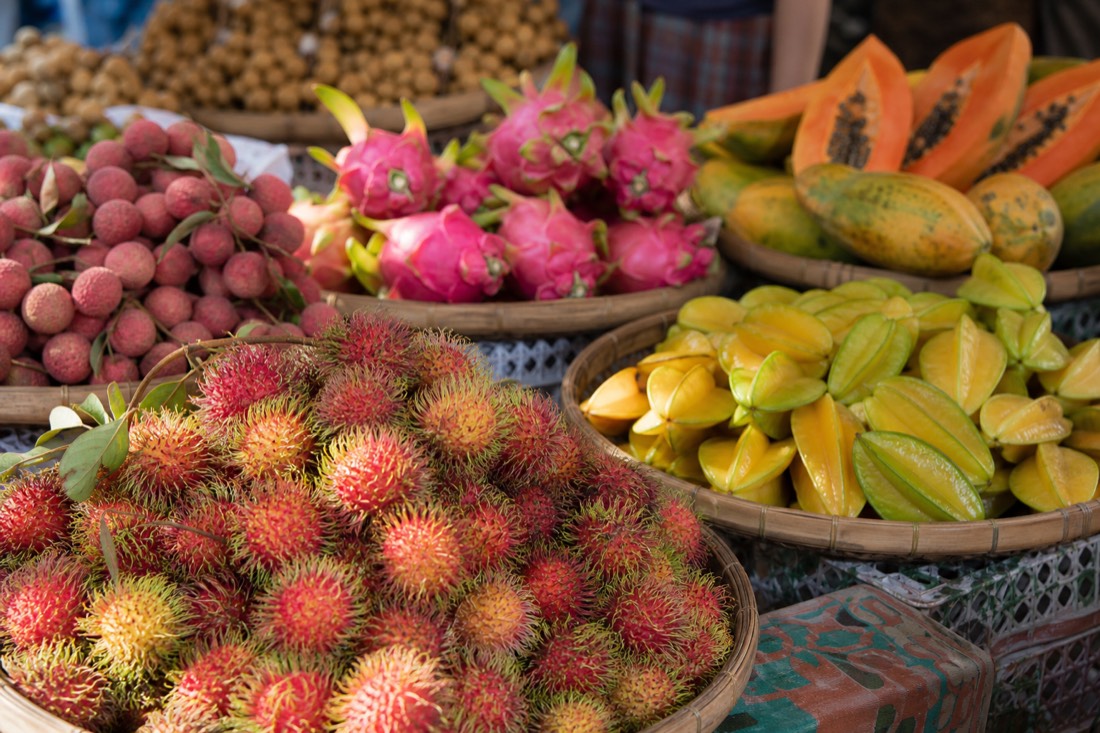
The fruit stalls are the reason most first-time visitors remember this market fondly. Rambutan, lychee, dragonfruit, starfruit and papaya show up depending on season, often at a fraction of what the same fruit costs bagged and flown to the mainland. Vendors are generally happy to explain what something is and how to eat it if you ask, which matters for fruit most visitors have never handled before.
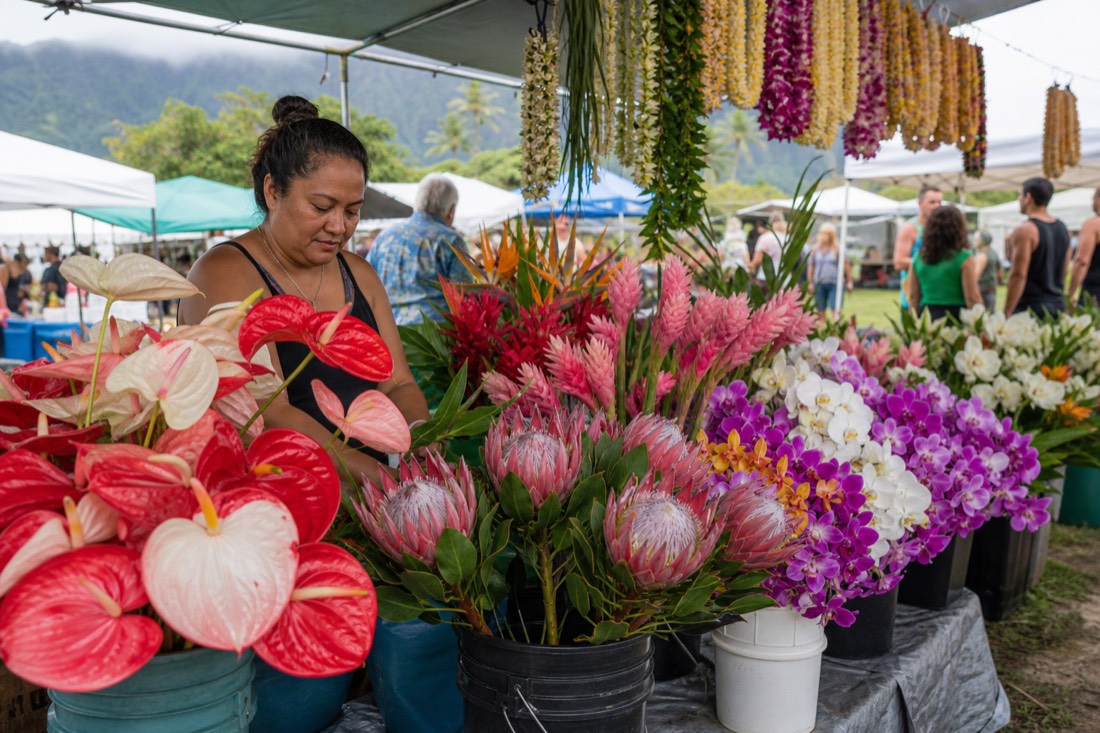
Flowers are the other visual centerpiece: anthurium, orchids, protea and ginger sold in bundles, cheap enough that buying a small arrangement for a hotel room is a genuinely reasonable impulse rather than a splurge. The food side ranges from simple plate lunch to malasadas (Portuguese-style doughnuts) and fresh coconut water served straight from the shell. Crafts and souvenirs sit at the edges: wood bowls, T-shirts, jewelry, the occasional shell necklace, none of it the market's main draw but worth a slow pass if you have the time.
Because the Big Island's growing regions sit at wildly different elevations and rainfall levels within short driving distances, the produce table changes more through the year than a mainland farmers market typically does. A given Wednesday might lean heavily into one fruit that just came into season and barely feature it a few weeks later, so a specific item you read about online is never fully guaranteed. Asking a vendor what is best that particular week tends to produce a better result than arriving with a fixed shopping list.
| Category | Examples | Typical price range |
|---|---|---|
| Tropical fruit | Rambutan, lychee, dragonfruit, starfruit, papaya | $1–$3 per piece |
| Flowers | Anthurium, orchids, protea, ginger | $5–$15 per bundle |
| Prepared food | Plate lunch, malasadas, fresh coconut water, shave ice | $3–$12 per item |
| Crafts & goods | Wood carving, soap, T-shirts, jewelry | $5–$30 |
Wednesday or Saturday: which is better?
Both days run the same full-scale market, so the honest tiebreaker is your own schedule rather than a real quality difference. Saturday tends to draw the heaviest local foot traffic; Wednesday is the better bet if your ship or itinerary happens to land that day and you want the full market without a weekend crowd.
If you are on a cruise, the calculation changes: it is worth checking your ship's actual arrival day before building a Hilo morning around the market, because a big-name market on a small-vendor day is a genuine letdown next to what people describe online. Cruise ships that dock mid-morning also tend to send a wave of passengers straight to the market, so arriving before roughly 8:30am, or waiting until early afternoon, gives a noticeably calmer version of the same Wednesday or Saturday market. Our Hilo cruise day guide works through this timing question for a full port day, not just the market.
| Wednesday | Saturday | |
|---|---|---|
| Vendor count | Full (150–200+) | Full (150–200+) |
| Crowd | Busy, more local shoppers mid-week | Often the busiest single day |
| Good for | A calmer full market if your schedule allows | Maximum atmosphere, weekend visitors |
How does the market fit into a Hilo day?
It works best as the opening move of a town-focused morning, not a standalone trip. Pair an hour at the stalls with the short walk to Liliʻuokalani Gardens and the historic downtown blocks, and you have a genuinely full half-day without a car.
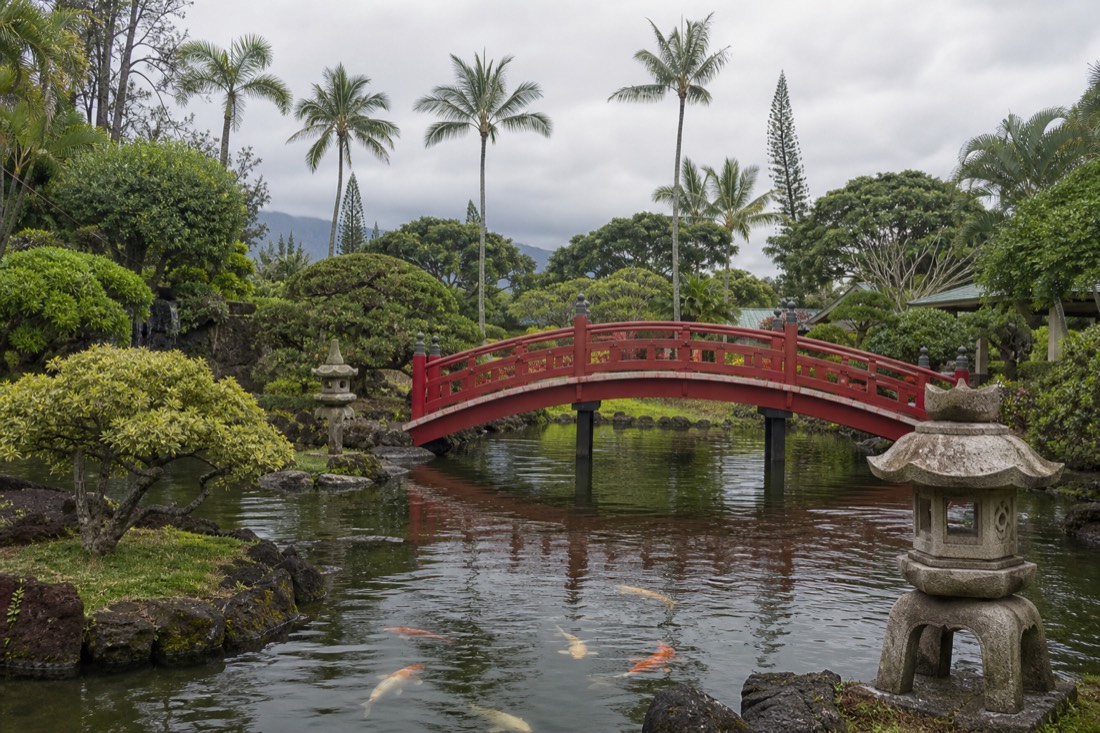
A practical order: start at the market itself while the produce is freshest and the morning is still cool, then walk the few downtown blocks along Kamehameha Avenue, then continue toward the bayfront for the gardens and, if you have the energy, the footbridge across to Coconut Island. None of this requires a rental car or a tour; it is walkable, flat, and free apart from whatever you buy. Our full guide to things to do in Hilo lays out the whole downtown-and-bayfront route in more detail if you want to build a longer day around it.
If your day includes the volcano rather than just downtown, it helps to know the market already shows up on at least one popular itinerary: the Big Island volcano day tour from Oahu stops at the Hilo Farmer's Market as part of its morning loop before heading into Hawaii Volcanoes National Park, so a guided day and an independent market visit are not mutually exclusive if you time it around a tour that already includes the stop.
| Time | Stop | Notes |
|---|---|---|
| 7:30–8:30am | Hilo Farmers Market | Best before the mid-morning cruise-passenger wave on Wed/Sat |
| 8:30–9:00am | Downtown Kamehameha Avenue | Historic storefronts, short walk |
| 9:00–9:45am | Liliʻuokalani Gardens | Free, flat, formal Japanese-style garden |
| 9:45–10:15am | Coconut Island (Mokuola) | Short footbridge, calm bay swimming |
How far is it from the cruise pier and Banyan Drive hotels?
From the cruise pier, the market is roughly two miles by road, walkable in theory but unpleasant on foot along an industrial port stretch, so a short taxi or rideshare is the practical choice. From the Banyan Drive hotels it is closer to a mile and a genuinely comfortable walk.
The distance itself is not the obstacle; the route is. Cruise passengers who try to walk straight from the pier often find the road unshaded and not built for pedestrians, which is why most guides (including our own) suggest a short taxi rather than treating it as an easy stroll. From the hotel strip on Banyan Drive, the walk into the market threads through the bayfront and downtown blocks and is genuinely pleasant rather than merely doable.
| Starting point | Distance | Best way there |
|---|---|---|
| Cruise pier | ~2 miles | Taxi or rideshare (walk is unsheltered and unpleasant) |
| Banyan Drive hotels | ~1 mile | Walkable along the bayfront |
| Downtown Hilo generally | Within the same half-mile radius | Walkable |
What should you budget?
A full breakfast of fruit, a pastry and a drink from the market stalls typically runs $8 to $12 per person, cheaper than almost any sit-down option in town. A flower bundle, a plate lunch and some fruit to carry with you can round out to $20 to $30 for two people without feeling rushed.
Because the market has no entry fee, the only cost is what you choose to buy, and it is genuinely possible to browse for half an hour and spend nothing. Cash is useful for the smaller stalls, though many vendors now take cards; bringing a mix avoids any awkward moment at checkout. If you are traveling on a tighter budget more broadly, our Hilo on a budget guide covers how the market fits into a near-free day in town.
| What you buy | Approximate cost |
|---|---|
| Fruit breakfast for one | $8–$12 |
| Flower bundle | $5–$15 |
| Plate lunch | $10–$14 |
| Small souvenir or craft item | $5–$30 |
Tips for a smoother visit
Go early on the big days, bring small bills, wear shoes you don't mind getting a little wet if it has rained, and treat the market as the start of a morning rather than the whole plan.
Parking around the market is street parking and a couple of small lots, tightest exactly when the market is busiest, so arriving on the earlier side solves two problems at once: better parking and a calmer market. If your trip includes the drive out to Hawaii Volcanoes National Park or the waterfalls on the Hamakua Coast, doing the market first thing and saving the longer drives for later in the day keeps the morning from feeling rushed, whether you are driving yourself or joining one of the best-selling Hilo tours that build the volcano into a longer day. Bags for produce are usually available at the stalls themselves, but a spare tote from your hotel room saves a small transaction and is easier on the fruit.
What happens on a rainy day?
The market runs rain or shine. Hilo receives well over 130 inches of rain a year, more than almost anywhere else in the United States, and the vendors know it: most stalls sit under solid canopies, so a passing shower barely slows business down.
This is worth knowing before you write off a Hilo morning because the forecast shows rain, since a quick tropical shower here is often over within twenty minutes and rarely serious enough to change plans. What it does change is footwear and comfort: the ground between stalls can get slick, and an umbrella is more useful than a rain jacket for the stop-and-start showers typical of an East Hawaii morning. If the rain does settle in for longer, the market's canopy cover holds up better than most outdoor stops in town, which makes it a reasonable rainy-morning choice rather than a plan to abandon.